

 Featured
Jeep Safari
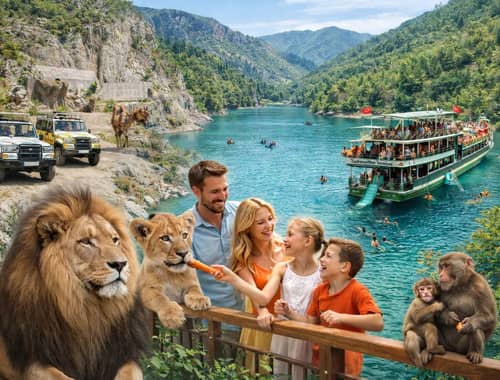
Alanya Mix Safari Tour with Zoo Visit and Boat Trip
Free Cancellation Free Shuttle
From £29.77 £26.91 Per Person



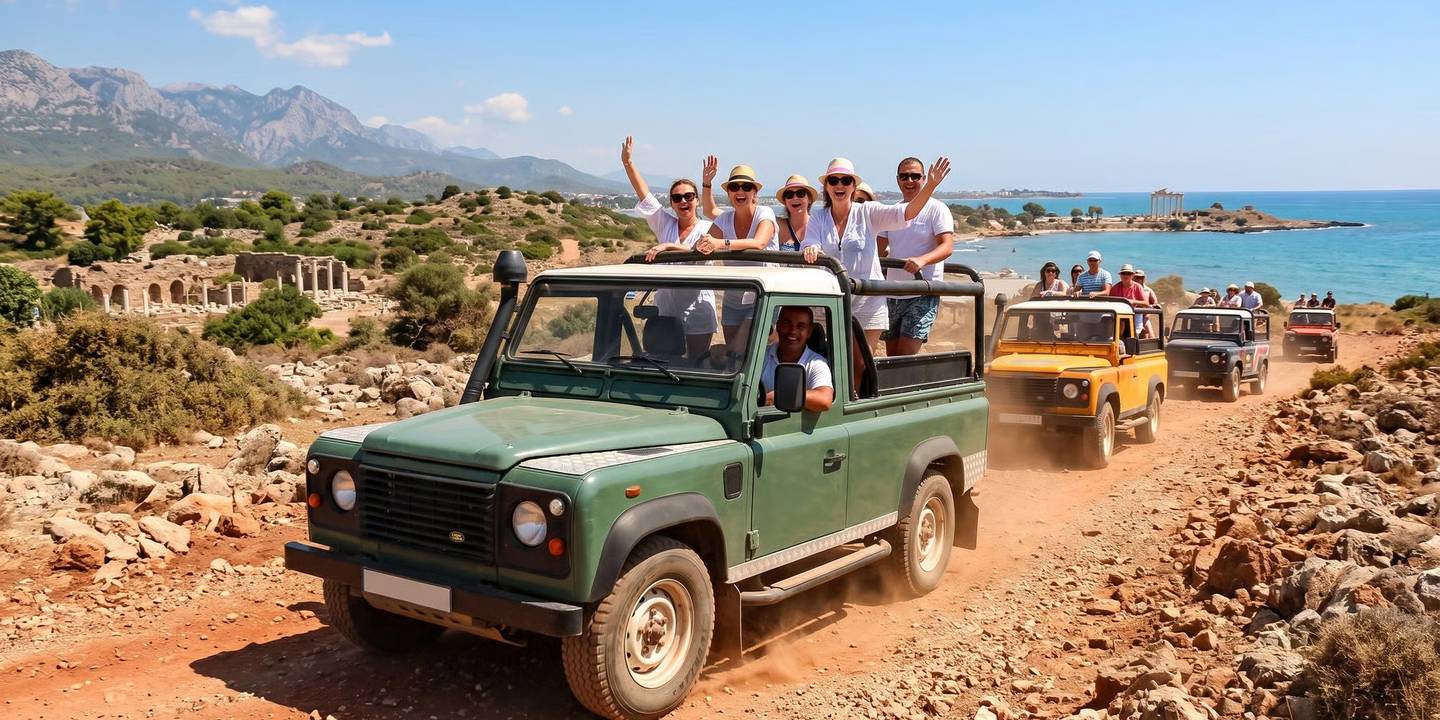
A jeep safari in Türkiye is a full day in the hills by open 4x4. A professional driver does the driving and a guide leads the convoy. The day strings together forest tracks, hill villages, a river or lake to swim in and a long lunch before the drive home. On the tours listed here, hotel pickup is part of the deal.
Tours run from most of the big holiday resorts on Türkiye’s southern and south-western coast, and the day follows much the same pattern wherever you start. What follows covers what a jeep safari is, how the day runs, the landscapes and tour types, the extras, who should skip it, how to stay safe and a straight verdict.
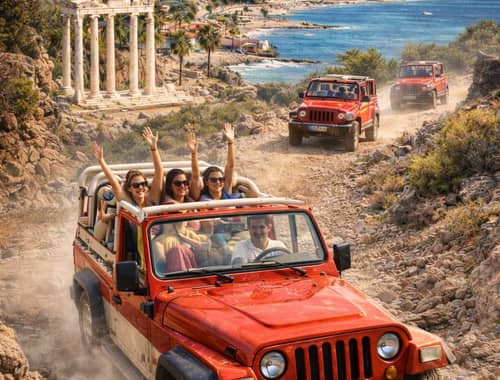
A jeep safari is a guided off-road day trip in open 4x4s, from the coastal resorts into the mountains inland. Despite the name, this is not a wildlife safari and there is no desert. “Safari” here just means a scenic day on rough mountain roads; the only animal park on the programme is the zoo on the “mix safari” days described below.
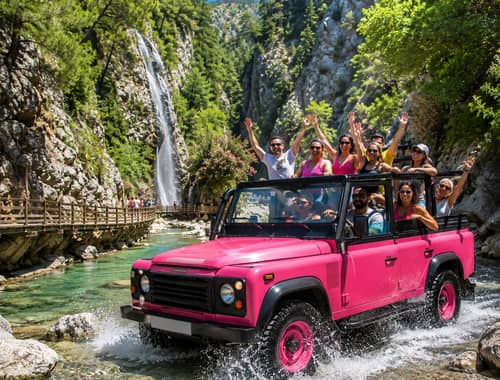
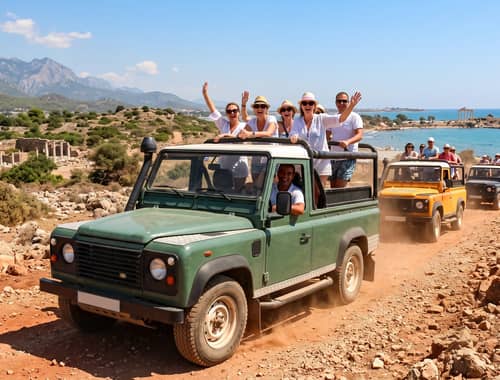
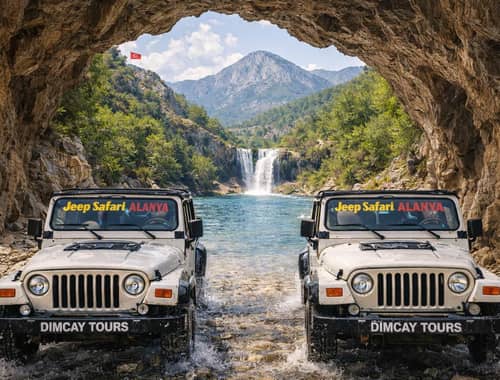
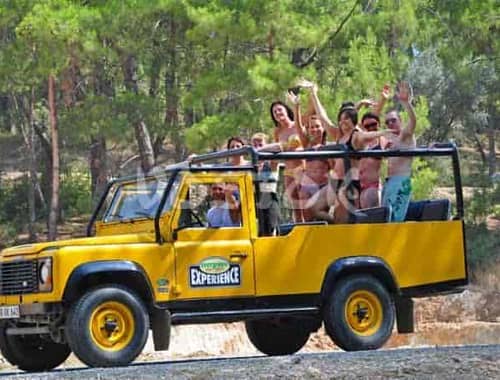
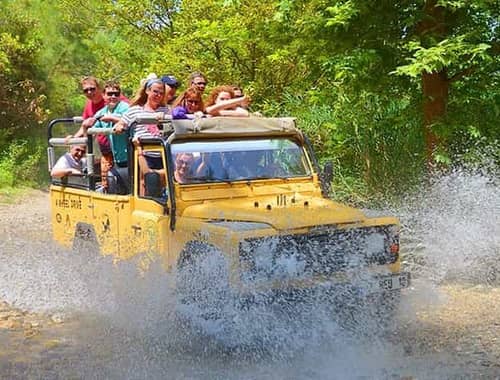
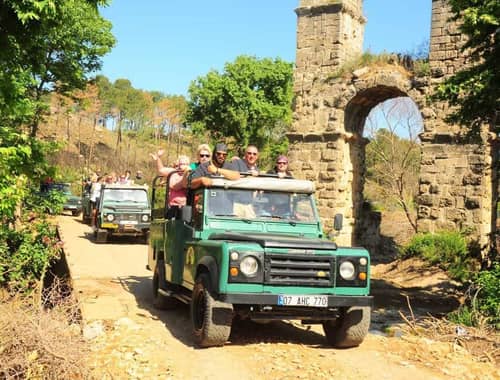
You ride; you don’t drive. None of the tours here is self-drive, so no driving licence is needed. Depending on the tour, you sit in an open-top or open-sided 4x4, sometimes a Land Rover.
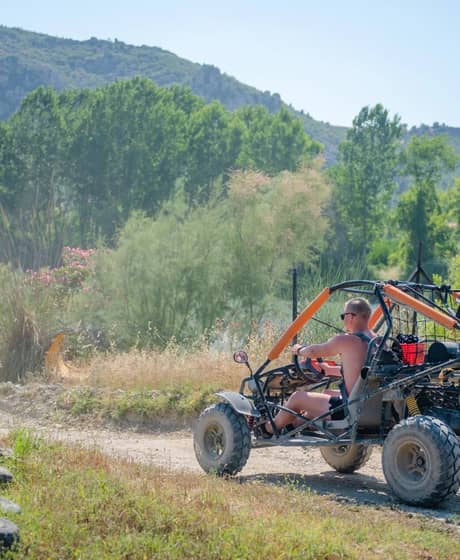
Expect unpaved forest tracks with paved stretches in between. It is dusty, bumpy, loud and a lot of fun. By mid-morning the dust will be in your hair, which makes the swim stop all the more welcome.
Stops vary by route, but most days run like this:
Hotel pickup. You are collected before the listed start time, on some tours by minibus to a safari base; the operator confirms the time after you book.
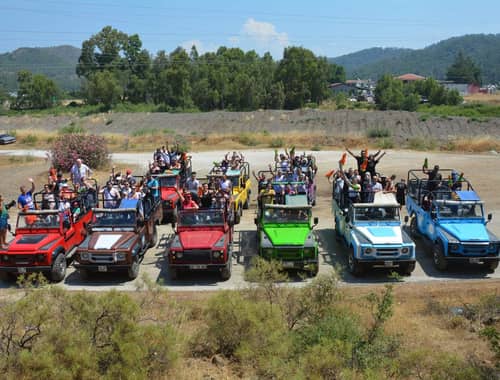
The base and the briefing. The convoy forms up, seats are sorted and, on many tours, the guide gives a short safety briefing.
The climb. Off the main road and uphill on off-road forest tracks, with stops at viewpoints as the sea drops away below.
A village stop. Tea and often gözleme, Turkey’s filled flatbread. Snacks here are often extra.
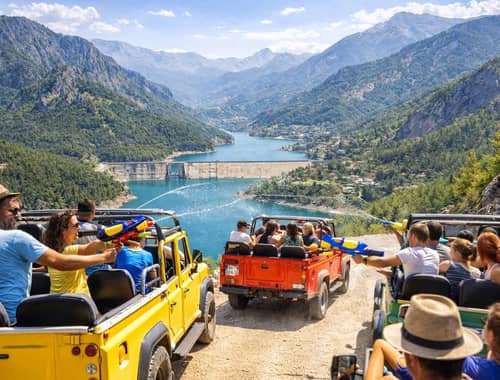
Water fights. In the warm months, passengers in neighbouring vehicles soak each other.
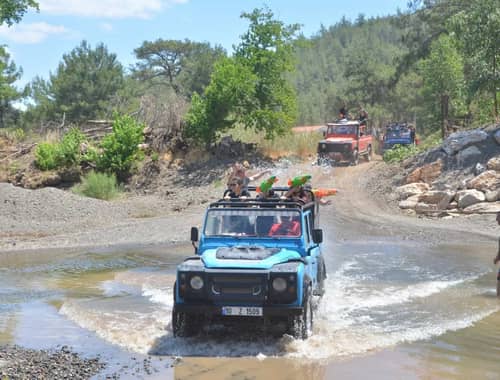
The swim. A river, a lake or a waterfall pool, weather and conditions permitting.
Lunch. Included, often beside a river or lake. Drinks are extra.
The return. Back down, sometimes by another track and with a last stop, then the hotel transfer.
Plan for a full day. The day tours listed here start between about 09:00 and 10:00 and finish between about 15:00 and 16:30, roughly five to seven hours of touring; evening tours run into the night instead. Transfers come on top, and the drive back to some hotels alone takes one to two hours. Exact times are on each listing.
Every route is different, but most follow the same idea: leave the coast road, climb into the hills behind the resorts on forest tracks, and come back down to water for a swim and lunch. Along the southern coast that means the Taurus Mountains, which rise directly behind the beaches: limestone country full of caves, canyons and springs, with Turkish red pine on the lower slopes. On the south-western, Aegean side, the tours stay in the pine forests and national-park hills close to the coast.
Depending on the route, the day can take in:
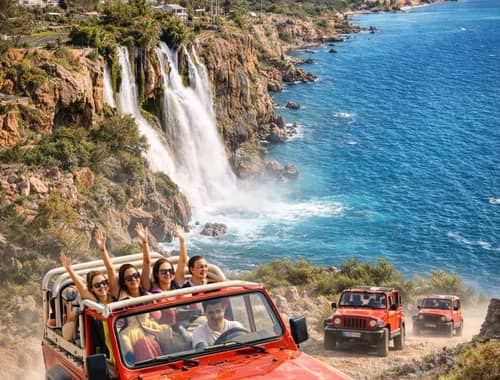
Viewpoints high above the coast, where the sea and the resorts spread out below.
Mountain villages, with tea, gözleme and a look at rural life far from the hotels.
Farmland on the lower slopes, such as citrus groves and, in the warmest corners, banana plantations.
Rivers and waterfall pools for the swim stop, often with lunch at a riverside restaurant or trout farm.
Caves and canyon walkways on some routes, some with their own small entry fee.
A reservoir boat trip on some routes, where the tour pairs the drive with an hour or so on a lake.
Which of these you get depends on the resort and the tour you choose, so read the stops on each listing. Within each resort, some tours are paced for families and others are sold as adrenaline days, and the listing title usually says which.
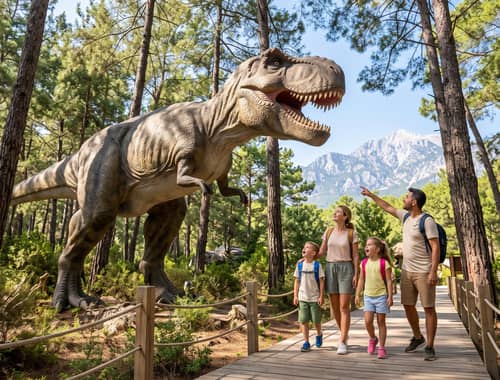
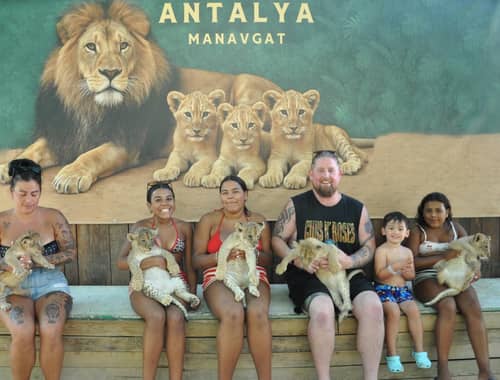
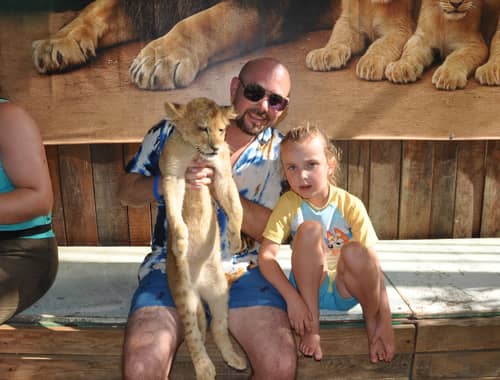
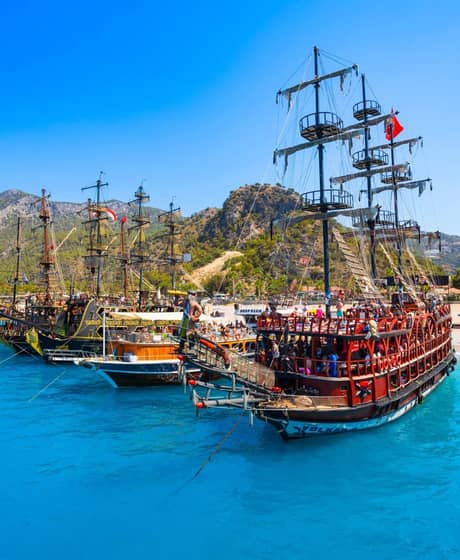
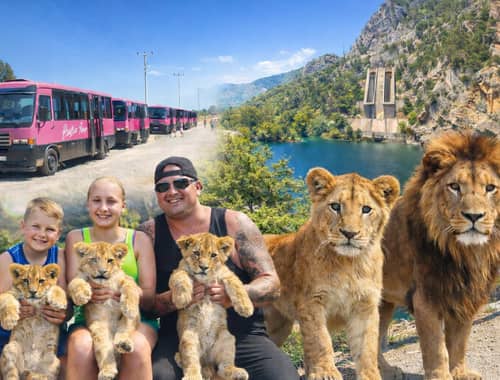
Some tours sold as safaris work differently. “Mix safari” days pair a safari drive with a zoo visit (entry included), a boat trip and a swim, and some add a foam party or a mud bath. They usually run in open safari trucks or cabrio buses rather than jeeps, but they are no gentler: they still climb into the hills and carry the same warnings about pregnancy and back problems.
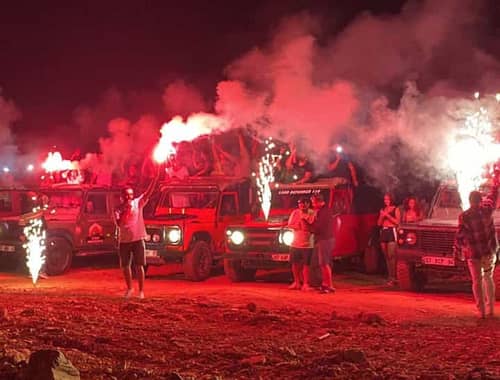
There are also evening tours, sold as night jeep safaris: a ride into the hills after the heat of the day, with sunset viewpoints, a boat trip and dinner. Pack a light layer for after dark.
Hotel pickup, lunch, a driver and guide and a swim stop, weather permitting, are included on the tours here, while drinks, water guns, crew photos and some entrance fees are paid on the day. Insurance is listed on most tours, and some routes and the mix-safari days add a boat trip. Prices vary with the route, the inclusions and the season.
What usually costs extra:
drinks, and on at least one tour even bottled water
water guns
crew photos and videos
some entrance fees, for example at waterfalls and caves, paid on site
village snacks such as gözleme
tips
Check the “included” and “not included” lines on each listing, and carry some cash.
In warm weather, you will almost certainly get wet. On most tours the vehicles fight it out on the move with water guns and buckets, and anyone within reach ends up soaked.
If you want to stay drier, tell the guide at the start, take a seat away from the open side, and keep your phone and cash in a dry bag. You will still catch some spray.
Whatever happens, stay in your seat, even mid-battle, because standing in a moving vehicle is dangerous. Aim only at people who are playing, never at villagers, passers-by or passengers who have opted out. Foam parties and mud baths are not part of the classic jeep routes: they appear on some mix-safari days, and the evening tour lists a foam party.
Children are welcome on the tours listed here, and many love the water fights. They usually pay a reduced rate and infants normally travel free, but the age brackets differ from tour to tour: the same child can ride free on one tour and pay on another, or count as an adult on the next. Check the listing, and ask before booking whether a child seat or booster can be fitted.
It is a long, bumpy, noisy day, and small children can find their first water fight a shock, so tell them what is coming and pack spare clothes for them. Pick a gently paced family tour over one sold as an adrenaline day; some listings say which is which in the title, and if yours doesn’t, ask.
Pregnant travellers and anyone with back or neck problems should think twice: most listings advise against the trip, and some also name heart conditions. A listing that says nothing is no promise of a smoother ride. The day can also be hard going with:
Limited mobility. You climb in and out of a high vehicle several times, and some stops have steps or walkways.
Motion sickness. Winding gravel roads are a stern test; see the tips below.
Contact lenses or asthma. There is a lot of dust.
For a gentler day, try a boat trip or an unhurried day by a mountain river instead.
Safety depends on the operator and on you, because open vehicles on mountain tracks carry real risk. The UK Foreign Office warns that jeep safaris can be dangerous and advises choosing a reputable company. Before you book, check the listing for a safety briefing and insurance (at least one lists third-party cover only), and make sure your own travel insurance covers the activity. Then, on the day:
Wear your seatbelt. Keep it on whenever the vehicle is moving; local authorities on the Antalya coast have said drivers and passengers in safari vehicles must wear one.
Stay seated, even in a water fight. Gendarmerie inspections fine safari vehicles carrying standing passengers.
Speak up. If the driving feels too fast, tell the driver or the guide.
Swim only where the guide says. Keep your own eye on children in the water.
Respect the forest. Don’t smoke and don’t leave anything behind. In the summer fire season, forest-access rules can also change the route.
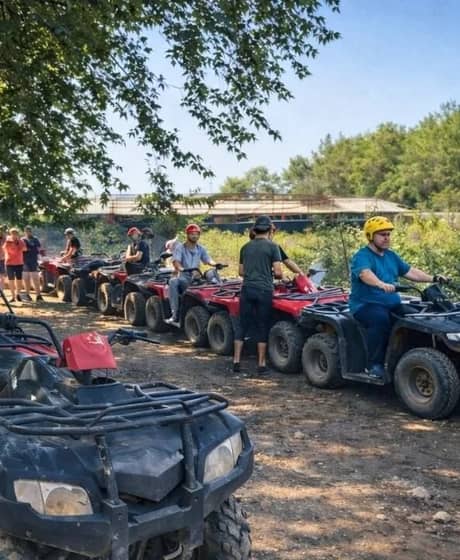
The real difference is who drives. On a jeep safari you are a passenger; on a quad or buggy safari you drive, which is the main draw, under age and licence rules that vary by operator. All three are noisy and dusty, but at the controls your eyes are on the track, not the view.
If you want to drive, a quad or buggy safari is the better fit; read up on how ATV and buggy safaris differ.
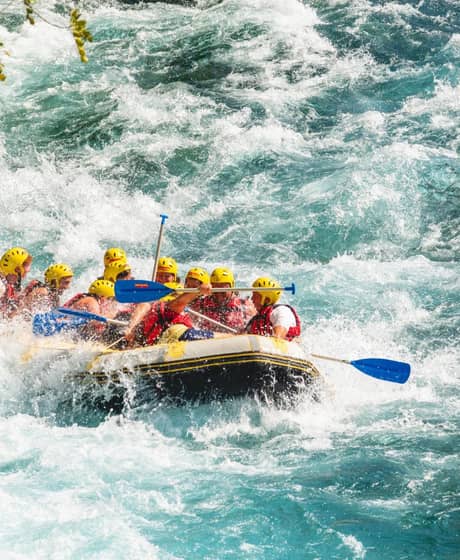
Rafting is a different kind of wet: you paddle down a mountain river with a guide instead of driving up to one. None of the jeep routes includes rafting, but combo tours that pair both on one day exist in several resorts.
For most active holidaymakers on the Turkish coast, yes. It gets you off the coast and into mountain villages for a day, with a swim and lunch built in and nobody stuck behind the wheel.
You will probably love it if you want a sociable, noisy day outdoors, have children or teenagers who will relish a water fight, or have spent a week by the pool wondering what lies inland. You probably won’t if you dislike dust, heat and bumpy tracks, want a quiet day, or are after in-depth sightseeing. This is a drive with stops, not a tour of monuments.
To choose well, put seven questions to any listing:
Does the route reach the places you care about?
Is the vehicle a 4x4, a safari truck or a bus?
What is included, and what will you pay on the day?
Is it paced for families or sold as an adrenaline day?
Which languages does the listing give for the guide? Almost all offer English and Turkish, several German and a few Russian, so don’t assume yours is covered.
Will your party ride together, or share a vehicle with other guests?
Does it pick up from your hotel area?
Every jeep safari on this page can be booked on Maxtoria: compare them against the questions above, then pick the one that fits. On the tours listed here:
You get your exact pickup time after booking.
You can book until a few hours before the start, and pay on the day or by card.
Cancellation is free of charge until 24 hours before the start.
If the weather turns, the route may be changed for safety; if the operator cancels, you can move to another day or take a full refund.
Tours are listed by resort, so start with the one nearest your hotel: jeep safaris from Alanya, Side and Manavgat, Antalya and Marmaris. For anything else, see the booking and payment FAQ and our cancellation and refund policy.
Tours and activities in Jeep Safari from licensed local operators.
Swimwear
A quick-drying towel
A full change of clothes, sealed in a bag
A waterproof pouch or small dry bag for your phone, cash and cards
High-SPF sunscreen and sunglasses
A scarf or buff to pull over your nose and mouth on dusty stretches
Plenty of water, as drinks are not included
Some cash for drinks, water guns and entrance fees
Motion-sickness tablets, if you normally take them
On a jeep safari, dress for dust, water and a long day in an open vehicle. In summer, count on being soaked through at least once.
Swimwear under quick-dry shorts and a T-shirt
Old clothes you don’t mind ruining; dark colours hide the dust
Closed shoes, or sandals that strap on securely (not flip-flops)
A hat that fits snugly enough to survive the wind
A light layer outside high summer, as the mountains are cooler than the coast
If your tour stops at a village mosque, cover your shoulders and knees (women usually also cover their hair) and take your shoes off to go inside; a light scarf or sarong in your bag does the job.
It depends on what you want. For water fights and swims, go in the warm months. For comfort, aim for April–May or October, when coastal highs are roughly 21–27 °C; September starts hot and cools towards October. July and August are the hottest, with coastal highs around 34 °C and almost no rain. The mountains are cooler, but you are outdoors all day, so sun protection and water matter most.
Most of the year’s rain falls between November and February, heaviest in December and January. In winter, expect cool mountain air, swims that hinge on the weather, and a route that may be altered for safety.
Prone to motion sickness? Ask for a seat near the front, keep your eyes on the horizon and go easy on breakfast.
Reapply sunscreen straight after the water fight, because the water washes it off and you are in the sun for hours.
Mention vegetarian or halal needs when you book, not at the lunch table.
Ask before photographing people in the villages.
Keep your rubbish with you, plastic bottles and water-gun packaging included, until you reach a bin.
Carry small notes for tea and gözleme at the village stop.
If dust bothers you, ask whether you can ride near the front of the convoy.
Most of a day. The day tours on this page set off at around 09:00–10:00 and wrap up by mid-to-late afternoon, so plan on five to seven hours out on the tour. Your transfer comes on top at each end: you are collected before the listed start, at a time the operator gives you once you have booked, and the ride home to some hotels lasts one to two hours.
Yes. Every jeep safari day tour listed here includes lunch, and the evening tour includes dinner. Depending on the route, expect grilled chicken or fish, a trout-farm meal, a buffet or a village barbecue. Drinks are not included, so keep some cash for them, and flag any vegetarian or halal needs at the time of booking, not on the day.
No. On every jeep safari on this page, the operator’s drivers do all the driving and you stay in the passenger seat, so you need no licence. If being at the controls is the point for you, a quad or buggy safari fits better, since you steer yourself. Each operator sets its own age and licence rules for those.
In warm weather, yes. Most tours include a water fight between vehicles, and every jeep safari listed here stops for a swim when the weather allows. Put swimwear on under quick-dry clothes, bring a full change, and carry your phone in a sealed pouch or dry bag. If you would rather stay drier, tell the guide when you board and sit on the inside; you will still catch some spray.
Yes, with some planning. On most tours here children pay less than adults and babies usually ride free, but each tour sets its own age brackets, so read the listing first. Hours of bumping along in an open vehicle are hard on babies and toddlers. Before booking, make sure the operator can fit a seat or booster for your child, choose a family-paced tour and pack a complete spare outfit.
It can be, with a careful operator and passengers who follow the rules, but it is never risk-free. Wear your seatbelt any time the vehicle is moving, as local authorities on the Antalya coast require for safari vehicles, and never stand up, even in the middle of a water fight. Look for insurance on the listing, make sure your travel policy covers jeep safaris, and say something if the driver goes too fast.
Usually not. Most listings warn against it in pregnancy and for back or neck problems, and some add heart conditions or reduced mobility, because the off-road stretches jolt you hard. Check your tour’s own advice and ask your doctor if you are unsure, or choose a gentler day out such as a boat trip.
Many do. Some listings say they run all year and in most weather, though a few stop taking bookings after a set date, so check the calendar. In winter, December and January are the wettest months, the mountains turn cool, swims depend on the weather and water fights fade out. Bad conditions can mean a safer route, and a cancelled tour can be moved or refunded, as you prefer.
Yes. The tours on this page can be cancelled at no cost up to 24 hours before they start. To change the date, send us your booking reference and the new day; this usually works if there is space. If bad weather forces the operator to cancel, the choice is yours: another day or a full refund. Always check the terms on your listing and voucher.
Our easy-to-use app offers a comprehensive listing of curated tours, activities, and experiences, all in one place. Whether you’re a thrill-seeker looking for an adrenaline-packed adventure or seeking a more relaxed getaway, Maxtoria has got you covered.





© 2026 Maxtoria Turizm Ticaret A.Ş. — All Rights Reserved
v2.1.2