



Horse Riding
Premium Horse Riding in Antalya: Pine Forest to Lara Beach
Free Cancellation Free Shuttle
From £37.85 £31.12 Per Person



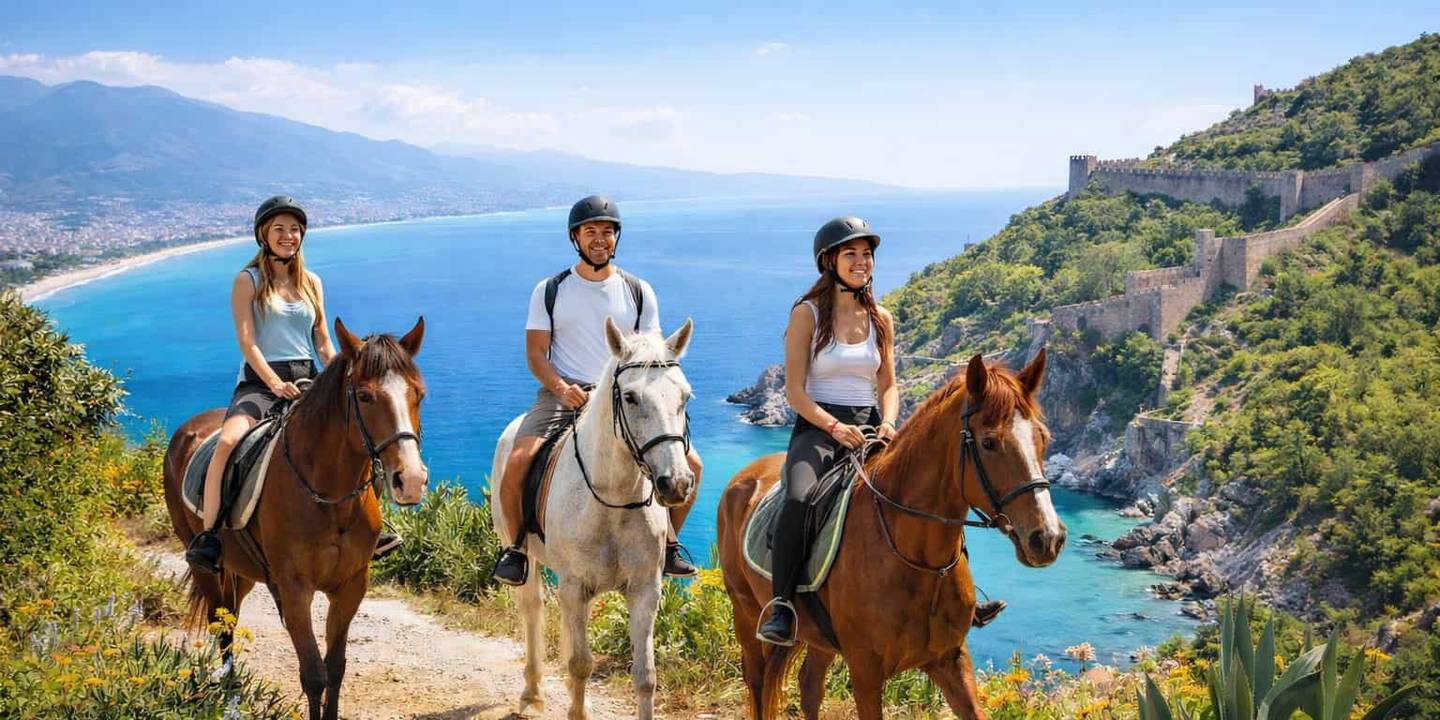
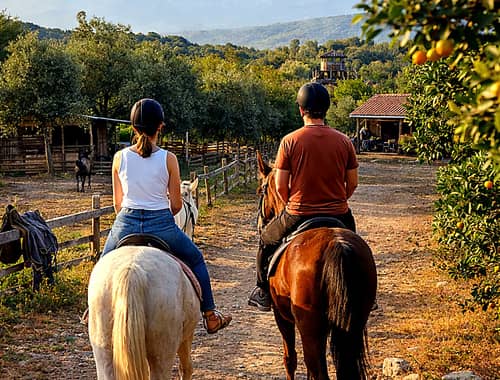
Horse riding on holiday in Türkiye usually means a guided trail ride: a short briefing at the stables, a horse chosen to suit you and an unhurried ride through pine forest, farmland or along the beach, with a guide leading the way. You don’t need to have ridden before, and on most rides listed here the hotel transfer is part of the package.
Maxtoria lists rides from stables, farms and ranches around Antalya, Side, Alanya and Kemer on Türkiye’s southern coast. This guide covers what a ride involves, where the rides go, how they differ, who they suit, how to stay safe around horses and what to check before you book.
A guided horse ride, or trail ride, is an outdoor ride in a small group behind a guide who knows the horses and the route. It is not a riding lesson in an arena and it is not a race. You follow the guide along set paths, mostly at a walk, and your horse has usually done the route many more times than you have.
In the Turkish resorts the same outing is often sold as a “horse safari”. As with a jeep safari, the word simply means a scenic trip into the countryside: there is no wildlife to spot and no desert. Maxtoria files these rides under Horse Riding, and you will see both names on the listings.
Every ride listed here is open to people with no riding experience, starts with a briefing or some basic instruction, and has a guide or instructor with the group from start to finish.
The stables sit a short drive from the resorts, close to forest tracks and quiet country paths. The rides are listed by resort:
Antalya. The Lara Beach ride leaves stables near Lara, spends about an hour in pine forest and then rides onto Lara Beach. The Antalya forest-to-coast ride follows shaded forest tracks to the coast and returns to the ranch. If you are staying in Lara or Belek, start with the horse riding tours in Antalya and check the pickup details on each listing.
Side and Manavgat. The Side ride goes through pine forest and then along the sandy shoreline, sometimes with a short pause near a river. Pickup is from hotels in Side and Manavgat; see horse riding in Side.
Alanya. The rides here are very different. The Syedra ride starts at a farm near Seki village, east of the city, climbs through pine forest, past a village and banana fields into the foothills of the Taurus Mountains, and stops at the ruins of ancient Syedra. It is the ride to choose if you want a historic site on the route. The Avsallar ride is an hour on rural paths around a farm in Avsallar. You will find them on the Alanya horse riding page.
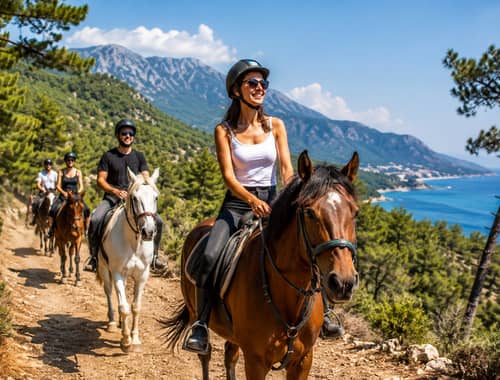
Kemer. The Kemer ride starts from a ranch in the countryside near the Taurus Mountains, on forest and mountain paths, with no beach section. See horse riding in Kemer.
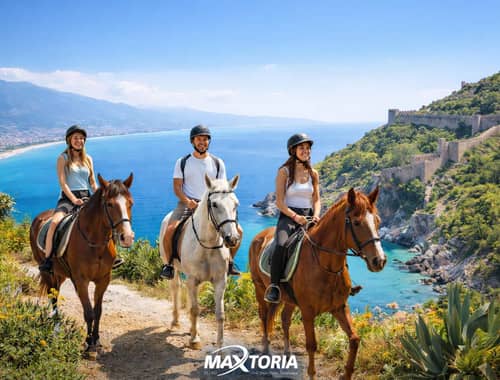
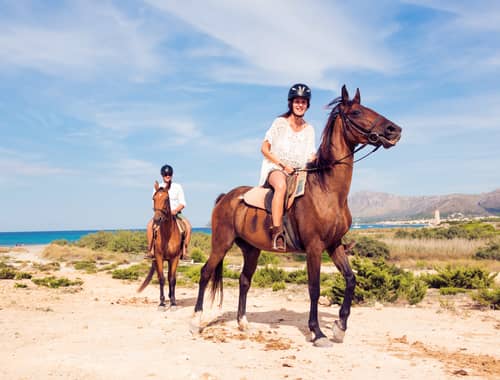
Most rides listed here include forest trails, and several add a beach or coastal stretch: the Lara Beach ride, the Antalya forest-to-coast ride and the Side ride. On those rides, the sand or shoreline section lasts about 20 to 25 minutes, after the forest part of the route.
The two feel different. Forest tracks are shaded, softer underfoot and quiet, with pine on most routes and leafy trees on at least one. The beach is open, bright and breezy, with the sea beside you and little shade. If riding along the sand is the point for you, pick one of those beach rides. The Alanya and Kemer rides stay inland, although the Syedra route shows you the sea from high above.
Not on these rides. None of the listings offers riding into the water, and the Lara Beach ride names swimming in the sea with the horse as not included. On the shoreline rides the horses walk along the beach or beside the water. Whether horses can enter the sea anywhere depends on the tour, local beach rules, the conditions on the day and the horses’ welfare, so don’t book expecting it unless the listing clearly says so.
Details vary by stable, but most rides here follow this pattern:
Pickup. You are collected from your hotel or a meeting point before the session time. The exact pickup time is confirmed after you book.
Arrival. At the stables you meet the team and tell them honestly how much riding you have done.
Briefing. A short safety briefing, typically 10 to 20 minutes, covers the basics: getting on, holding the reins, steering and staying balanced.
Helmet. Most rides provide a riding helmet. Fasten the strap before you get on.
Your horse. On most rides the staff match each rider with a horse that suits their size and confidence. Ask for a hand getting on if you need one.
The ride. The guide leads the group at a calm pace along the route. The longest ride builds in rest stops.
Back at the stables. Wait for the guide’s signal before you dismount, and step away from the horse’s hind legs.
Transfer back to your hotel.
Time in the saddle depends on the tour: from about 50 minutes to around two and a half hours including rest stops. The whole outing takes longer once the transfers are added. Sessions run at set times, with the first starts at 09:00 or 10:00 and the last at 16:00 to 18:00 depending on the ride. Exact durations and times are on each listing.
You can go horse riding in Türkiye with no experience at all. Every ride listed here accepts complete beginners, and the pace is set for them: the horses mostly walk, the guide sets the route, and your horse will usually follow the one in front of it.
A few habits make the first ride easier:
Sit tall and relaxed, with your weight in the saddle and your heels a little lower than your toes.
Hold the reins as the briefing shows you, with a light, steady contact. Don’t wrap them round your hands.
Look ahead along the trail, not down at the horse.
Keep the gap the guide asks for between your horse and the one in front.
Don’t ask your horse to trot or go any faster unless the guide tells you to.
If you already ride, expect a relaxed outing rather than a workout. The rides are paced for mixed groups, and most keep to a walk. One exception is the Side forest and shoreline ride, where the guides may let confident riders pick up the pace while beginners carry on walking, but only when conditions and the group allow. Tell the staff your level when you arrive either way.
A good stable doesn’t hand out horses at random. Staff weigh up each rider’s height, weight, experience and nerves, and pair them with a horse whose size and temperament fit: a steady, patient horse for a nervous first-timer, a more forward-going one for someone who rides at home. Most rides here say they match the horse to your size, confidence or experience.
The system only works if you are honest. Overstating your experience can put you on a livelier horse than you want. If you feel uneasy on your horse before the group sets off, say so; asking for a quieter one is normal.
A walk-paced trail ride is gentle exercise, but it is not nothing. You use your core, lower back and inner thighs to stay balanced, and getting on means lifting one leg high over the saddle. After an hour or more, stiff legs and a sore seat the next day are common for people who don’t ride often. Heat adds to the effort, especially on the longer rides.
Some rides set limits. Several have a maximum rider weight of 95 kg, for the safety of horse and rider. Several listings say the ride is not possible or not recommended during pregnancy, and some also mention back or neck problems or visual impairment. A listing that says nothing is not a guarantee that the ride suits you. Check your tour’s rules, and ask a doctor if you are unsure.
Horses are large, strong and easily startled, even the calmest ones. Most accidents happen on the ground or when a horse is surprised, so a few habits go a long way:
Approach from the side, where the horse can see you, and never walk close behind it.
Move and speak calmly. No sudden movements, shouting or waving things around.
Wear your helmet with the strap fastened for the whole ride.
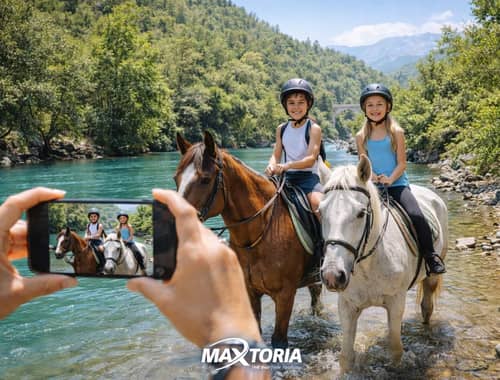
Keep your phone in a zipped pocket. Take photos only when the group has stopped, and never let a strap dangle.
Follow the guide. Stay in line, keep your distance from the horse in front and don’t overtake.
Speak up early if you feel unsafe or uncomfortable, or if your stirrups or saddle feel wrong.
Don’t feed the horses unless the staff say you can.
Only some rides listed here name insurance among their inclusions, so make sure your own travel insurance covers horse riding.
A good ride is good for the horse too. Signs of a well-run stable include horses that look alert, well fed and sound, tack that fits, shade and water between sessions, a steady walking pace in the heat and weight limits that are actually applied. On the Syedra ride, for example, the guides add extra breaks and slow the pace on hot summer days.
You play a part as well. Give your real weight when asked, ride calmly without kicking or pulling hard, don’t push for speed, and leave the horses’ feeding to the staff. If a horse seems to be limping or in distress, tell the guide straight away.
These outings suit different moods rather than different levels, and many visitors do more than one. A horse ride is the quiet option: no engine, a slow pace, close contact with an animal and an outing that fits into a morning or an afternoon.
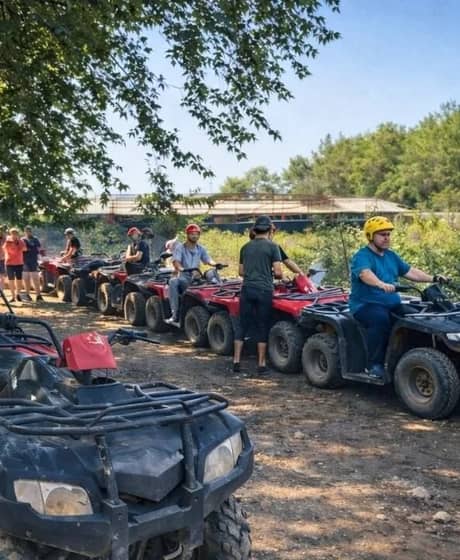
On a jeep safari you are a passenger in an open 4x4 for most of a day, with a swim and lunch along the way; our jeep safari guide explains how the day runs. On a quad or buggy safari you drive yourself on dusty tracks, under age and licence rules that vary by operator; see the quad and buggy safaris in Side. Rafting means paddling down a mountain river with a guide and getting properly wet, often combined with other activities on one day; see the rafting and combo tours from Antalya.
The rides here have a lot in common, but the small print differs, so read the included and not-included lines on each listing.
On every ride: a guide or instructor, and a safety briefing or basic instruction.
On most rides: a hotel transfer. On at least one Antalya ride the listing ties the transfer to buying it, so check.
On most rides: a riding helmet. The Kemer ride lists riding and safety equipment without naming a helmet.
On some rides: insurance, and tea and coffee at the ranch, as on the Kemer ride.
Not included on any ride: photos, which you can usually buy separately, often at the farm; food and drinks, apart from that tea and coffee; and personal expenses.
Pickup areas are limited on some rides. The Syedra ride collects only from the city centre and eastern Alanya, and the Avsallar ride only from hotels between Okurcalar and Dinek, so check that your hotel is covered. Carry some cash for photos and drinks.
Before you book, decide what matters most to you: a beach section or forest shade, a short ride or a long one, and whether your group meets the age and weight rules. Then check the listing for the pickup area and the guide’s languages: all offer English and Turkish, and some add Russian or German. On every ride listed here:
Cancellation is free until 24 hours before the start.
You can book until 5 hours before a session.
You can pay by card online, or pay on the day if you book while signed in to your Maxtoria account.
Your exact pickup time is confirmed after booking. Be ready outside your hotel a few minutes early.
Tours and activities in Horse Riding from licensed local operators.
Comfort and grip matter more than looking the part. You don’t need riding boots or jodhpurs.
Long trousers, such as jeans, leggings or light trousers, to stop the saddle and stirrup leathers rubbing your legs.
Closed shoes with a grippy sole, such as trainers or walking shoes. Not sandals, flip-flops or anything with a thick, chunky tread.
A light, fitted top; a sleeved one gives your arms some sun protection.
Nothing loose or dangling: no long scarves, open jackets or bangles that could catch.
Tie long hair back so it sits under the helmet. Most rides provide a riding helmet, so there is no need to pack a hat for the ride itself.
High-factor sunscreen, especially for rides with an open beach section
Sunglasses, ideally a pair that sits snugly
A hat for before and after the ride
A bottle of water
A phone in a zipped pocket or small bag worn close to the body
Some cash for photos, drinks and tips
Any medication you might need during the outing
Leave large bags, loose jewellery and anything valuable at the hotel. There is little space to carry things on a horse, and whatever you bring has to stay secure while you ride.
For comfort, ride in the morning or the late afternoon, especially from June to September, when midday on the coast is hot and the beach sections offer little shade. Rides run at set session times, from 09:00 on the earliest to 18:00 on the latest; none is sold as a sunset ride.
Spring and autumn are the most pleasant seasons for riding, with warm days and cooler trails. Most of the year’s rain falls between November and February, and winter availability varies: at least one ride’s calendar stops in late November. For month-by-month weather on this coast, see our guide to the best time to visit Antalya.
A walk-paced ride works well for families and couples, but the rules for children differ. Several rides set a minimum age of 6; others state none, so ask before booking a younger child. Where the listings mention children, they ride with an adult nearby or under the guides’ close watch, and at least one ride asks that children under 12 come with an accompanying adult.
Several rides also set a maximum rider weight of 95 kg, and several say the ride is not possible during pregnancy. For couples, a beach ride or the longer Syedra route makes a good half-day out together.
Yes. Every ride listed here accepts people who have never ridden. You get a short briefing on getting on, holding the reins and steering, a horse matched to you on most rides, and a guide who keeps the group at a calm pace. Don’t try to trot or go faster unless the guide tells you to.
No experience is needed on any ride here. If you do ride, tell the staff your level when you arrive so they can match you with a suitable horse. Expect a relaxed trail ride rather than a workout: most rides stay at a walk, and only the Side ride may let confident riders go faster, when conditions and the group allow.
Maxtoria lists rides around Antalya, Side, Alanya and Kemer. The Antalya rides combine forest with a beach or coastal stretch, and are the ones to look at if you stay in Lara or Belek; check the pickup details. Side has a forest and shoreline ride. Alanya has a countryside ride and a longer route to ancient Syedra, and Kemer has a forest and mountain ride.
Yes, on several of the rides listed here: the Lara Beach ride and the forest-to-coast ride in Antalya, and the Side ride. Each spends about 20 to 25 minutes on the sand or shoreline after a forest section. The Alanya and Kemer rides stay inland. Bring sunscreen and sunglasses, as the beach stretch has little shade.
No. None of the rides listed here offers riding or swimming with the horse in the sea, and the Lara Beach ride lists it as not included. On the shoreline rides, the horses walk along the beach or beside the water. Whether horses may enter the sea depends on local rules, conditions and the horses’ welfare.
Often, yes. Several rides set a minimum age of 6, and others don’t state one, so ask before booking for a younger child. Where the listings mention children, they ride with an adult nearby or under the guides’ close watch. Check your ride’s own rules, as they differ from tour to tour.
On some rides. Several rides listed here set a maximum rider weight of 95 kg, for the safety of horse and rider; others don’t state a limit. Weight limits protect the horses’ backs and keep riders balanced, so give your real weight if asked and check the listing before you book.
You don’t need riding boots. Wear long trousers to stop the saddle rubbing, and closed shoes with a grippy sole, such as trainers or walking shoes; sandals and flip-flops are not suitable. Avoid loose scarves or dangling jewellery, tie back long hair, and keep your phone in a zipped pocket.
On most rides, yes: most rides here list a riding helmet among the inclusions, and the Kemer ride lists riding and safety equipment. Wear the helmet with the strap fastened for the whole ride. If you would rather use your own, ask the stables before the day.
It depends on the tour. Time on horseback runs from about 50 minutes to around two and a half hours including rest stops, and the whole outing takes longer once the hotel transfers are added. Most rides fit comfortably into a morning or an afternoon. The exact duration is on each listing.
Yes, on most rides; on at least one Antalya ride the listing ties the transfer to buying it. Pickup areas vary: the Side ride collects from Side and Manavgat hotels, and each Alanya ride covers only part of the resort. Your exact pickup time is confirmed after booking, so be outside your hotel a few minutes early.
None of the rides listed here is sold as a sunset ride. They run at set session times, with the latest starting at 18:00 on the Antalya forest-to-coast ride. For cooler conditions and softer light, choose a late-afternoon session, especially in summer, when midday on the coast can be very hot.
No. None of the rides here includes photos. Where the listing says, photos or videos can be bought separately, often at the farm after the ride. If you take your own pictures, only use your phone when the group has stopped and the guide says it is safe.
You can cancel free of charge until 24 hours before the start on every ride listed here. None of the listings sets out a weather policy, so if heavy rain or strong heat is forecast, contact us with your booking reference. On the Syedra ride, the guides add breaks and slow the pace on hot summer days; bring water whatever the season.
Our easy-to-use app offers a comprehensive listing of curated tours, activities, and experiences, all in one place. Whether you’re a thrill-seeker looking for an adrenaline-packed adventure or seeking a more relaxed getaway, Maxtoria has got you covered.





© 2026 Maxtoria Turizm Ticaret A.Ş. — All Rights Reserved
v2.1.2