

Spa & Turkish Bath
Side Turkish Bath and Massage Experience with Hotel Transfer
Free Cancellation Free Shuttle
From £17.83 £16.94 Per Person



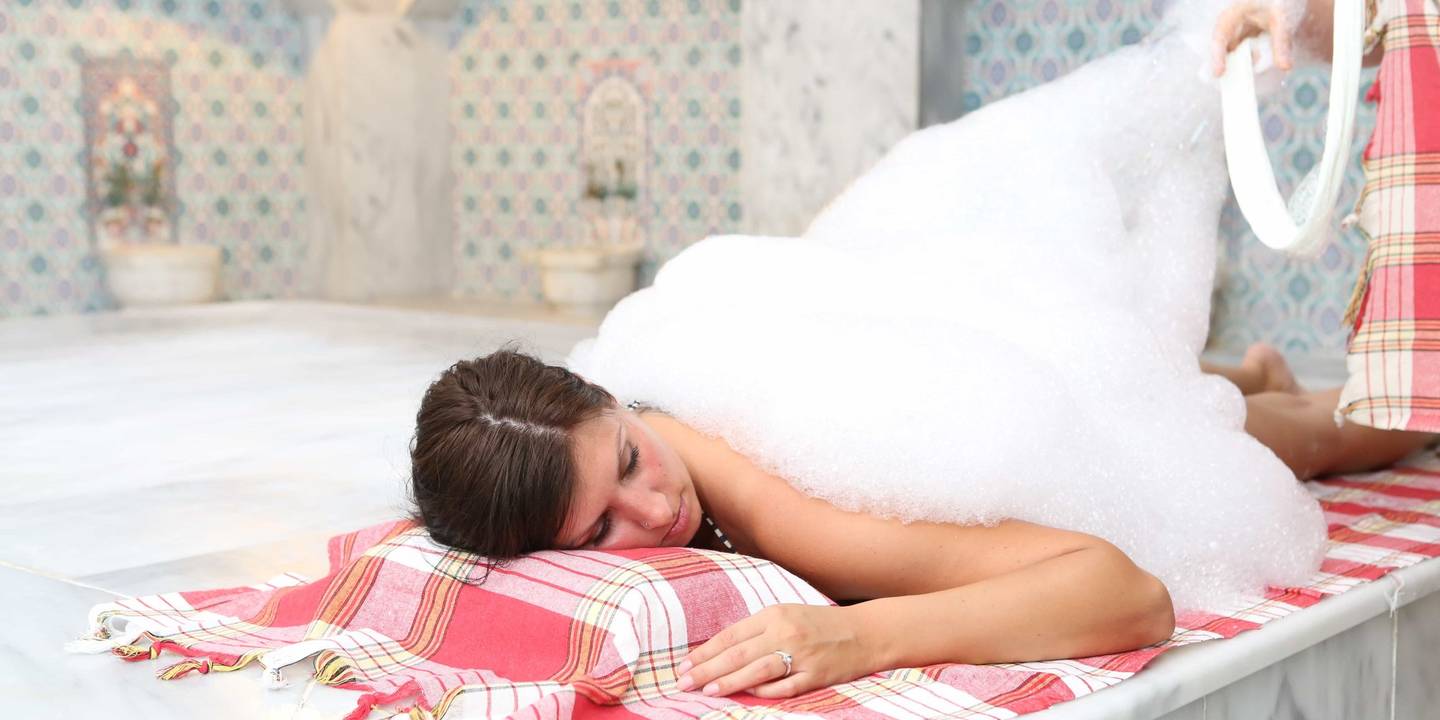
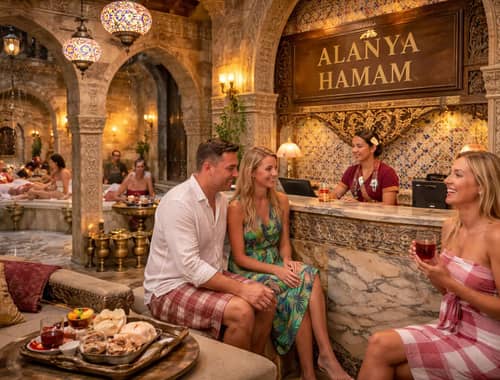
A Turkish bath — hamam in Turkish, usually spelled hammam in English — is one of the easiest ways to slow down on a holiday in Side, Manavgat or anywhere around Antalya. It is not simply a sauna. It is a washing ritual: you warm up, an attendant scrubs you from head to toe with a coarse mitt on a heated marble platform, covers you in soap foam and rinses you with bowls of warm water, and then you rest before you dress. This guide explains each stage, what the Turkish baths listed on Maxtoria include, what to wear, how privacy works and how to stay comfortable in the heat.
Every hammam runs its own programme, so treat the patterns here as a guide and check the tour page before you book.
At a glance
Experience: none needed — staff show you where to go at each stage
The core ritual: warm-up, kese scrub, foam wash, rinse and rest
Massage: every Turkish bath currently listed on Maxtoria also includes one, most often 20 minutes
Time at the hammam: about 75 minutes to two hours, depending on the programme, plus the hotel transfer
What to wear: swimwear, under a pestemal — the thin cotton hammam wrap
Cancellation: free up to 24 hours before the start on every Turkish bath listed on Maxtoria
A hammam is a bathhouse where you are washed with heat, steam and warm water rather than in a tub or a pool. Bathing culture in Anatolia goes back to Roman and Byzantine baths; the Seljuks and then the Ottomans made the hamam their own and built bathhouses beside mosques, in markets and in residential neighbourhoods. For centuries the local hamam was where people washed before religious holidays and weddings, met friends and caught up on news. Many Turkish towns still have a working historic hamam.
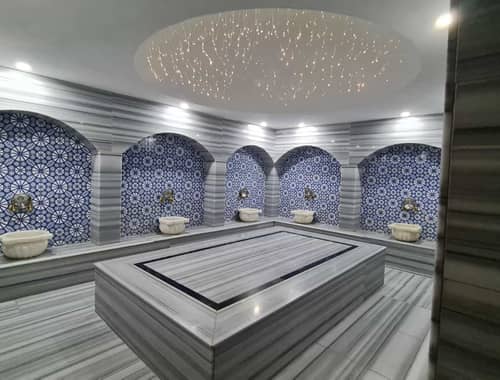
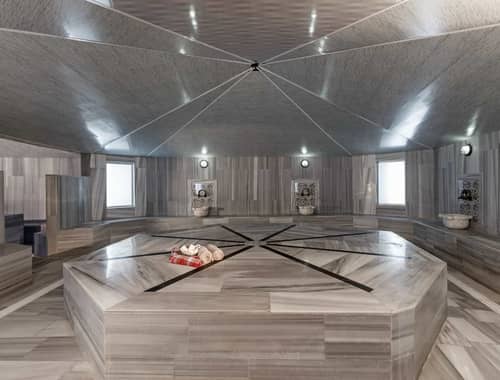
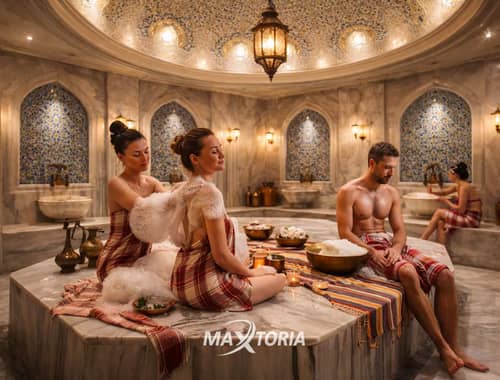
A classic Ottoman hamam leads you through rooms of rising warmth: a cool entrance hall for changing and resting (soğukluk), a warm room (ılıklık) and the hot room (sıcaklık) — a domed marble hall with basins called kurna along the walls and a large heated marble platform in the middle, the göbek taşı or “navel stone”. The hammams that holiday tours visit are usually modern spa buildings styled on this tradition, often with a sauna, a steam room and a pool alongside the marble hall.
Sauna: very hot, dry air in a wood-lined room. You sit and sweat on your own.
Steam room: a lower temperature but humid, misty air. Again, you sit and relax on your own.
Hammam: warm, humid marble rooms where the heat is only the beginning. The point is the washing — scrub, soap and rinse — done for you by an attendant on the heated stone.
Many hammams now have all three, so a Turkish bath programme often starts in the sauna and steam room before you move to the marble.
Traditional hammam | Modern spa | |
|---|---|---|
Setting | A marble hot room with a heated central stone and wash basins | Treatment rooms, pools and relaxation areas |
The heart of it | A washing ritual: scrub, foam and rinse | Individual treatments chosen from a menu |
Exfoliation | A firm kese scrub by hand over the whole body | Usually gentler peels and scrubs with cosmetic products |
Foam | Soap foam spread and massaged over you | Rarely part of it |
Massage | Traditionally part of the wash; holiday hammams add an oil massage | Often the main event, in many styles |
Atmosphere | Warm, humid and traditionally social | Quiet and private |
Neither is better — they are different experiences. Most holiday hammams around Antalya combine the two: the traditional ritual first, then a massage in a quiet treatment room.
The order and timing vary between hammams, but a visit usually runs like this:
Arrival and changing — you are given a pestemal and slippers, change into swimwear and lock your things away.
Warming up — time in the sauna, steam room or hot room. The heat and humidity soften the skin for the scrub; sip water and go at your own pace.
On the göbek taşı — you lie on the warm marble platform while the attendant pours warm water over you.
Kese scrub — the attendant scrubs your whole body with the kese mitt.
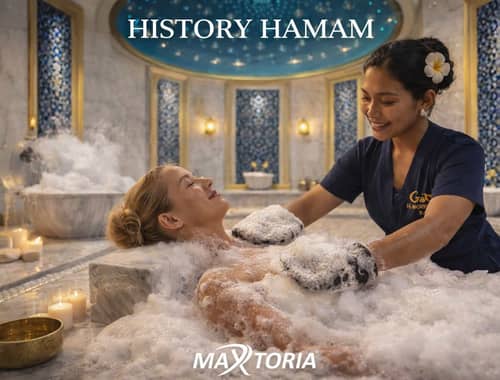
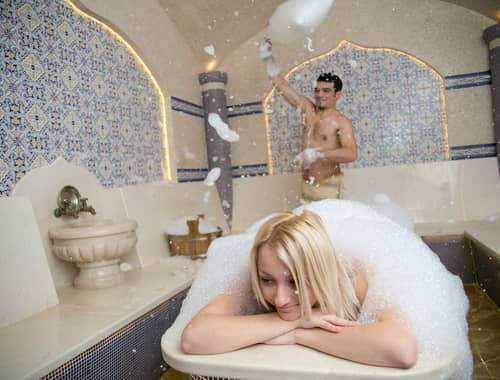
Foam wash — a cloth bag dipped in soapy water is billowed over you until you are covered in foam, which is then worked in with long strokes. Your hair may be washed too.
Rinsing — bowls of warm water, and sometimes a cool splash to finish.
Massage or extras, if included — many programmes continue with an oil massage in a treatment room; some add a face mask or time at the pool.
Cooling down and rest — you wrap up, drink water or tea and let your body temperature settle before you dress.
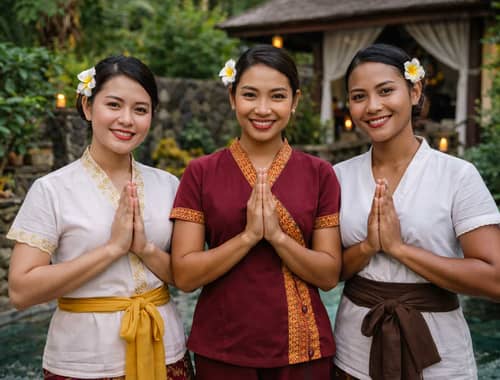
The attendant is traditionally called a tellak in the men’s bath and a natır in the women’s. In holiday hammams the staff are used to first-timers and guide you through each step.
A kese is a coarse exfoliating mitt. Once heat and steam have softened your skin, the attendant rubs it firmly over your arms, legs, back and front, and the outer layer of dead skin comes away in small grey rolls — the moment that surprises most first-timers. It is the heart of traditional hammam washing: a thorough, old-fashioned clean.
It can feel more vigorous than a spa exfoliation because it is done by hand, with real pressure, over the whole body. It should not hurt. If it is too strong, say so — “softer, please” or a simple hand signal is enough, and the Turkish word yavaş means “slowly, gently”. Point out sunburn, cuts, rashes or a fresh tattoo before you start so the attendant can avoid them.
The kese is a cleansing tradition, not a medical treatment. Your skin will feel very smooth afterwards and may be a little pink and more sensitive for a while.
The foam massage — köpük masajı in Turkish — is the picture most people have of a Turkish bath. The attendant fills a thin cotton bag with air and soapy water and squeezes it out over you, building a thick blanket of lather, then works it in with gliding strokes before rinsing it off. It is warm and gentle: more a luxurious wash than a deep massage.
An oil massage is a separate treatment, usually given on a massage table in a quiet room after the hammam, with oil instead of soap. Names differ from place to place: one hammam calls the whole scrub-and-foam stage a “hammam massage”, another sells the oil massage as a classic, relaxing or aromatherapy massage. Read what the programme actually lists, and for how many minutes.
When a programme includes both, the hammam comes first: the heat and the washing are the warming and cleansing part, and the massage follows as a separate relaxation treatment. A massage-only booking skips the heat and the scrub altogether, while a combined package gives you both in one visit. Every Turkish bath currently listed on Maxtoria is a combined package.
Hammams often offer add-ons at the venue: longer massages, aromatherapy, face masks, head or foot massages, salt or coffee scrubs and other spa treatments. On the Turkish baths listed on Maxtoria, extras offered on site are optional and paid separately, so feel free to decline anything you did not plan for. A face mask is included on some programmes and listed as extra on others — the tour page says which.
Side lies in the Manavgat district east of Antalya, and for visitors the two run together along the same stretch of coast, so hammam pickups usually cover both.
Maxtoria’s Side Turkish bath and massage experience is a good example of the classic programme. You are collected from your hotel or a set meeting point in the Side and Manavgat area, or you can drive yourself and receive the location after booking. At the hammam you warm up in the sauna and steam room, have a kese scrub and foam massage on the heated marble, then a 20-minute classic body massage in a private room and 20 minutes at the pool before the ride back.
Included: return transfer, sauna and steam room, kese scrub and foam massage, the 20-minute massage, pool time, towel and slippers, and insurance; lockers are provided
Not included: drinks, optional upgrades, longer or speciality massages, personal expenses and tips
Good to know: the activity starts at 10:00, with pickup earlier; children under six cannot take part; the programme is not suitable during pregnancy or for anyone with heart or breathing conditions; staff speak English, Turkish, Russian and German
Compare every option on the Turkish bath and spa page for Side. Planning the rest of your stay? See the best places to visit in Side and in Manavgat.
Antalya province stretches along the coast from Kemer in the west to Alanya in the east, and Maxtoria lists Turkish baths in several parts of it. Each programme collects guests only from its own area, so check that your hotel is covered.
Belek and Kundu. The Turkish bath from Kundu and Belek picks up from hotels in those two areas only. Its programme takes about 75 minutes: around 20 minutes in the sauna and steam room, a 10-minute kese scrub, a 10-minute foam massage, a 20-minute classic massage and a face mask, with Turkish tea and water free of charge. Men and women share the bathing area, so couples and friends stay together, and swimwear is expected. Sessions start every hour from 10:00 to 16:00. See all options on the Antalya Turkish bath and spa page.
Alanya. Further east, Alanya has several hammam programmes with hotel transfer, lasting from about 90 minutes to about two hours. They keep the same order — sauna and steam room, kese and foam on warm marble, then an oil or aroma massage of 20 to 30 minutes — and some add a jacuzzi or quiet time in a lounge. Compare them on the Alanya Turkish bath page.
On the south-west coast, Maxtoria also lists a spa and Turkish bath in Marmaris.
Each tour page lists its own inclusions. Across the Turkish baths on Maxtoria, the pattern is:
Return hotel transfer within the tour’s area — on some tours only from certain resorts
Sauna, and on most programmes a steam room
Kese scrub and foam massage on heated marble
A massage, most often 20 minutes
A towel or pestemal, and on most programmes slippers
Drinks — the Belek and Kundu programme is an exception, with free tea and water
Longer massages, face masks and other treatments offered at the venue, unless the programme lists them
Personal expenses and tips
Insurance varies. The Side programme lists insurance as included; for other programmes, check the tour page.
Plan on about 75 minutes to two hours at the hammam, depending on the programme, plus the transfer. The time you book is when the treatments begin: hotel pickup is earlier, and the exact time is confirmed after booking, while the drive back depends on traffic and where you are staying. For example, the Belek and Kundu programme spends about 20 minutes warming up, 10 minutes on the kese, 10 on the foam, 20 on the massage and 15 on the face mask. Many programmes run sessions on the hour between 10:00 and 16:00, which makes a hammam easy to fit around a beach day.
Arrangements differ more than anything else between hammams:
Historic neighbourhood hamams traditionally keep men and women apart, in separate sections or at different hours or days.
Many holiday hammams are mixed in the bathing areas, with swimwear worn throughout, so couples, friends and families can stay together.
Changing rooms are often separate even where the bath itself is shared.
Some places offer private sessions.
Among the Turkish baths on Maxtoria, the Belek and Kundu programme says men and women share the hammam area; one Alanya programme has separate changing rooms for men and women, with swimwear worn throughout; and the Marmaris spa describes itself as a private bath, where your booked time is reserved just for you. The other tour pages do not specify. If it matters to you — separate areas, a private session or an attendant of a particular gender — ask Maxtoria support before you book rather than assume.
Heat and humidity can feel intense, especially the first time. Take the warm-up at your own pace.
Drink water before and after, and avoid alcohol and a heavy meal just beforehand — several tours ask for this.
If you feel dizzy, faint, sick or unwell, leave the hot room straight away and tell the staff. Never stay in the heat just to finish the programme.
Tell the attendant if the scrub or the massage is uncomfortable; the pressure can always be lighter.
Mention sunburn, cuts, rashes or a recent tattoo before the scrub.
Wet marble is slippery: keep your slippers on and walk slowly. One Alanya venue also notes stairs that may be difficult for guests with limited mobility.
Follow the hammam staff’s instructions.
Pregnancy and medical conditions. Several Maxtoria listings say the hammam is not suitable during pregnancy or for people with heart, blood pressure or breathing conditions, and all of them ask you to tell the staff about any health condition before the treatments. If you are pregnant or have a medical condition, ask a doctor or another qualified healthcare professional whether heat and massage are right for you, and check the tour’s own rules before booking. This guide is not medical advice.
A Turkish bath is a cleansing and relaxing tradition. It does not treat illness, “detox” the body or replace medical care.
Choose a Turkish bath from the list on this page, pick a date and a session time and add your group; your pickup time is confirmed after booking. The Turkish baths on Maxtoria can be booked up to five hours before the session. You can pay online by card or, if you are signed in to your account, on the day, and every one of them can be cancelled free of charge up to 24 hours before the start. Before you book, check the pickup area, the age rules and what is included, and ask Maxtoria support if anything is unclear.
Tours and activities in Spa & Turkish Bath from licensed local operators.
What to wear. In holiday hammams, swimwear is worn throughout, under the pestemal you are given. Wearing it under your clothes saves time in the changing room. Historic hamams have their own house customs, so follow what the staff tell you.
What to bring:
Swimwear
A change of clothes and dry underwear
A hair tie or clip if you have long hair
Your own shampoo or moisturiser, if you prefer particular products
A little cash for drinks, tips or any extras you decide on
What you can leave behind. Most programmes on Maxtoria provide a towel or pestemal and slippers, and the Side hammam also has lockers, so you do not need to pack them — the tour page lists what is provided. Leave jewellery and valuables at your hotel, and skip sunscreen and body oil on the day so the scrub works on clean skin.
A Turkish bath is an indoor activity that works in any season — as welcome on a cool, windy day in winter as after a hot day in summer, and the Side programme runs throughout the year. Travellers tend to choose one of three moments:
Early in the holiday, to unwind after the journey
After a day of sightseeing, as a slow afternoon or evening
Near the end, as a calm day before the flight home
The hammam and the sun. A thorough kese removes the outer layer of skin, and freshly scrubbed skin can be more sensitive to the sun. Do not have a scrub on skin that is already sunburnt, and avoid long hours of strong sun straight after a vigorous scrub: use a high-factor sunscreen and give your skin time to settle. After a long day in the heat or a strenuous excursion, cool down and drink water before going into the hot room — or choose another day. Follow the attendant’s advice.
For weather and sea temperatures month by month, see the best time to visit Antalya.
First-timers. You do not need to know anything in advance. Staff show you where to go, and you can ask for a gentler scrub at any point.
Couples and friends. Whether you stay together depends on the hammam’s arrangements: on the Belek and Kundu programme, men and women share the bathing area. On other programmes, check the tour page or ask Maxtoria support.
Children. Age rules differ from tour to tour. The Side programme does not accept children under six; some Alanya programmes welcome children at a child rate and adapt or lighten the treatments, and one gives its oil massage only to guests aged 12 and over. Children stay with an adult throughout. Heat affects children more quickly than adults, so keep their time in the sauna and hot room short, and check the exact rule on the tour page before you book.
Older travellers. Wet marble is slippery and the heat can be tiring. Tell the staff if you would like help or a gentler programme, and ask about stairs if walking is difficult.
A Turkish bath, or hammam, is a traditional bathhouse where you are washed rather than simply heated: after a warm-up, an attendant scrubs you with a kese mitt on a heated marble platform, covers you in soap foam and rinses you with warm water.
You change and wrap up in a pestemal, warm up in the heat, lie on the heated marble for a kese scrub and a foam wash, are rinsed, and then rest. Holiday programmes usually add a sauna, a steam room and a massage.
No. A sauna is dry heat that you sit in on your own. A hammam is warm and humid, and its purpose is the washing ritual — the scrub, the foam and the rinse — done by an attendant.
A kese is a coarse mitt used to scrub away the outer layer of dead skin. It feels firm and vigorous but should not hurt. Ask for a softer touch whenever you like.
The attendant billows a cloth bag of soapy water over you until you are covered in thick lather, then works it in with long, gentle strokes and rinses it off. It is warm and relaxing — more a luxurious wash than a deep massage.
On every Turkish bath currently listed on Maxtoria, yes: a massage is part of the booked programme, most often a 20-minute classic or oil massage. Its length and style differ by tour, and on one Alanya programme the oil massage is only for guests aged 12 and over.
Yes. The kese scrub and the foam massage are part of every Turkish bath listed on Maxtoria.
Most programmes include a return transfer within their own area — the Belek and Kundu programme, for example, collects only from hotels in those two areas. On the Side programme you can also drive yourself. Your exact pickup time is confirmed after booking.
Usually not: most programmes on Maxtoria provide a towel or pestemal and slippers. The tour page lists what is provided.
Yes, bring swimwear. In holiday hammams it is worn throughout, under the pestemal. Bring a change of clothes for afterwards.
It depends on the hammam. Historic hamams traditionally separate men and women, while many holiday hammams are mixed, with swimwear. On Maxtoria, the Belek and Kundu programme is shared and one Alanya programme has separate changing rooms; for other tours, ask before you book.
Couples can stay together where the bathing area is shared, as on the Belek and Kundu programme. The Marmaris spa reserves your booked time just for you. For a private session elsewhere, ask Maxtoria support before booking.
That depends on the tour. The Side programme does not accept children under six, while some Alanya programmes accept children at a child rate with lighter treatments. Check the tour page for the exact rule.
About 75 minutes to two hours at the hammam, depending on the programme, plus the hotel transfer before and after.
Several programmes on Maxtoria say the hammam is not suitable during pregnancy. Ask your doctor or midwife first, and check the tour’s rules before booking.
Tell the attendant straight away — in words or with a hand signal. The pressure can be lighter, a sensitive area can be skipped, and you can stop at any time. If the heat is too much, leave the hot room and tell the staff.
Water, above all — the heat makes you sweat. Turkish tea is the traditional drink in the resting area. Avoid alcohol before and straight after.
Not on sunburnt skin, and it is better to cool down and drink water first. After a vigorous scrub your skin can be more sensitive to the sun, so use a high-factor sunscreen for the next few days.
Yes. No experience is needed: the staff guide you through every step, and you can ask for a gentler scrub at any point.
Yes. Every Turkish bath listed on Maxtoria can be cancelled free of charge up to 24 hours before the start.
Our easy-to-use app offers a comprehensive listing of curated tours, activities, and experiences, all in one place. Whether you’re a thrill-seeker looking for an adrenaline-packed adventure or seeking a more relaxed getaway, Maxtoria has got you covered.


© 2026 Maxtoria Turizm Ticaret A.Ş. — All Rights Reserved
v2.1.2