







 Best Price
Scuba Diving
Side Scuba Diving Tour with Lunch and Hotel Transfer
Free Cancellation Free Shuttle
From £31.96 £29.44 Per Person



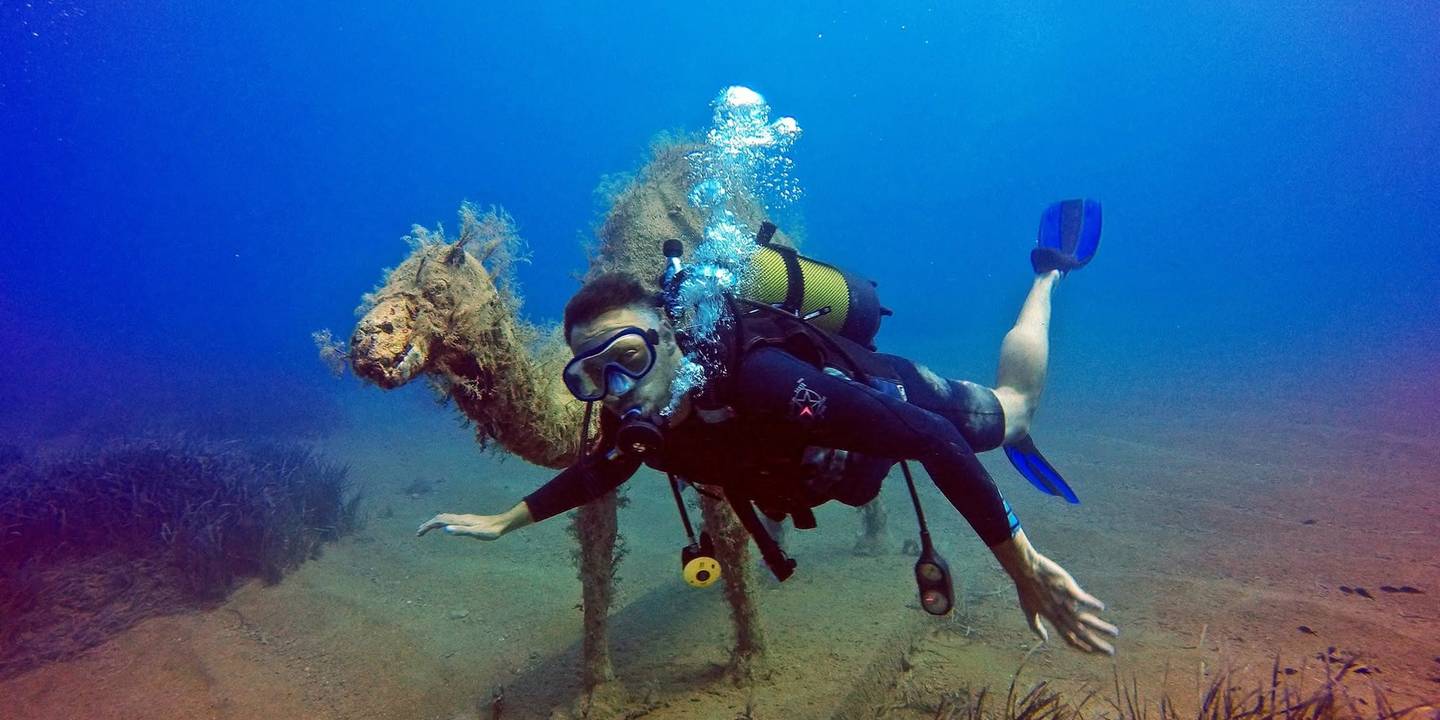
Side Underwater Museum is a themed diving site beneath the Mediterranean Sea, just off the coast of Side in the Manavgat district of Antalya. Promoted as Türkiye’s first underwater museum, the site contains 117 sculptures inspired by Anatolian culture, mythology and the symbols of Side. The works are not displayed inside a building; they stand on the seabed as part of an artificial reef setting. The main museum route lies at a depth of approximately 5–13 metres. A visit is therefore not a conventional museum experience reached on foot from the shore. It is a guided underwater activity organised by an authorised dive centre and involves a boat trip and scuba equipment. First-time divers may also join an introductory dive with an instructor when their age and health are suitable and sea conditions permit. There is no separate museum ticket office or Museum Pass application for Side Underwater Museum. The amount paid is the price of a diving programme, which may vary according to the boat, equipment, guidance, transfer and photography services included. Side Museum, the Side Archaeological Site and Antalya Aquarium are separate attractions; make sure the activity you book specifically names the Side Underwater Museum dive.
Tours and trips that go here, run by licensed local operators.
Side Underwater Museum is a boat-access dive site off the coast of Side in the Manavgat district of Antalya. There is no underwater entrance that visitors can reach independently and no visitor centre on land. Participants go to the meeting point supplied by their dive centre and travel to the site by boat after registration, preparation and a safety briefing.
The following distinction is important when planning transport:
The departure point may vary with the operator, harbour arrangements and sea conditions. A map pin labelled “Side Underwater Museum” should not be treated as a land entrance. Always follow the meeting address on your booking confirmation.
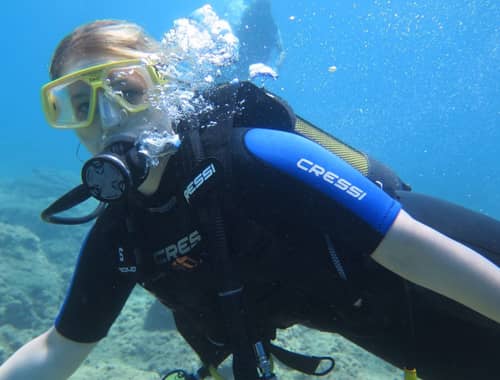
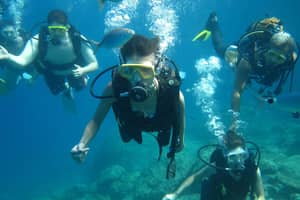
Scuba diving is the principal way to visit because the museum is entirely underwater. A programme normally includes registration and a medical declaration, equipment fitting, a theoretical introduction, a practical briefing on the boat, an instructor-led dive and a controlled return to the surface.
The main museum route is promoted at approximately 5–13 metres. A local dive centre states that the sculptures begin at around 6 metres and descend to 12.7 metres, with 117 sculptures across the site. The actual depth of an individual dive depends on certification, experience, sea conditions and the instructor’s safety decision.
Themes and figures seen around the park include:
The sculptures are more than a visual exhibition. Over time, they also become artificial surfaces on which marine organisms can settle. Divers must not touch, sit on or damage the works and should avoid disturbing marine life.
Side Underwater Museum does not have a fixed entrance ticket in the conventional sense; visitors purchase a diving tour or training service. Prices vary according to the date, season, number of dives, certification level, equipment, hotel transfer, lunch, photo and video package and boat programme.
Confirm the following details in writing before booking:
| Point to check | Detail to ask about |
|---|---|
| Dive site | Does the programme visit the main Side Underwater Museum route? |
| Number of dives | Does the package include one dive or two? |
| Participant level | Are beginners and certified divers assigned separate programmes? |
| Included services | Are equipment, boat, guide, lunch and insurance included? |
| Transfer | Which hotels and resort areas are covered? |
| Images | Are photos and videos included or sold separately? |
| Cancellation | What happens if weather causes cancellation or a site change? |
Türkiye’s Museum Pass is not valid for the dive because the payment is for a privately operated diving service rather than admission to a Ministry-run archaeological site. Confirm the current total on the activity page or directly with the dive centre for your chosen date.

Side Underwater Museum is a distinctive diving park where sculptures inspired by history and art meet the marine environment of the Mediterranean. The underwater works cannot be viewed properly from the surface. Experiencing the museum requires joining an organised dive, using suitable equipment and following the safety procedures set by the instructor.
Search results may describe the site as being 5, 13, 18, 20 or 24 metres deep. These figures differ because the main sculpture route, the Caravan Zone and the TCSG-117 wreck are sometimes presented together. Current local operator information describes the main underwater museum at 5–13 metres, the Caravan Zone at approximately 18 metres and the TCSG-117 wreck at around 24 metres. They are separate dive sites or profiles with different experience requirements.
Side Underwater Museum is a themed dive site composed of 117 sculptures placed on the seabed off Side. Promoted as Türkiye’s first underwater museum, it was developed to combine Side’s cultural identity with underwater tourism and to create an artificial reef environment for diving.
The word “museum” does not refer to a building with galleries, display cases or an audio-guide system. The works are distributed underwater and visitors see them while following a controlled route with a mask, fins, regulator and scuba tank.
Side Underwater Museum lies off the coast of the Side resort area in the Manavgat district of Antalya. Although sources may describe an approximate offshore position, visitors do not travel directly to a set of coordinates. They board a dive boat from the harbour or meeting point specified by the operator.
A map pin may indicate the approximate underwater site rather than a physical entrance. Use the confirmed address of your dive centre when requesting directions so that you do not arrive at the wrong harbour.
The standard way to reach the museum is to book with a dive operator in Side and join its boat programme. Travellers arriving independently go to the operator’s office or the designated harbour, while guests with transfer packages wait at the confirmed pickup point outside their hotel.
Reaching the offshore area on a private boat is not enough to make an independent visit safe. Dive planning, surface support, equipment, guidance and emergency procedures all form part of the professional organisation.
No. Side Underwater Museum is not a land-based museum and cannot be explored from the shore. The sculptures stand on the seabed and cannot be seen in detail from a coastal viewpoint or by walking into a building.
Some programmes may allow non-divers to accompany the boat, but this option is not available on every tour and a place must be reserved. Joining the boat without diving does not guarantee a view of the underwater sculptures.
Side Underwater Museum opened to divers in 2015. The project was initiated by the Antalya Branch of the İMEAK Chamber of Shipping with contributions from relevant local institutions.
Marine life around the works has changed since the original installation, and the sculptures have gradually taken on the character of an artificial reef. Current photographs may therefore look different from the clean surfaces shown in images from the opening period.
Current promotional information from a local dive centre states that the main route contains 117 sculptures. Older pages sometimes give totals of 110 or 115. These differences may reflect earlier stages of installation, counting methods or older promotional copy.
Visitors may not see every sculpture clearly during a single dive. Visibility, the selected route, current, dive time and individual air consumption all affect which areas can be reached.
The works are arranged around Anatolian history, the symbols of Side, mythology and traditional culture. Frequently mentioned subjects include the Temple of Apollo, whirling dervishes, a mermaid, a pomegranate tree, a Türkiye figure, national history scenes and a camel caravan.
The names of individual compositions may be translated differently by tour providers. Unlike a conventional museum, the underwater route does not have long interpretation panels next to every work, so asking about the themes during the briefing can make the dive more meaningful.
The main underwater museum route lies at approximately 5–13 metres. Local operator information describes the route as beginning at around 6 metres and descending to 12.7 metres.
The 18-metre figure found in some results relates to the Caravan Zone, while 24 metres refers to the TCSG-117 wreck dive. The depth available to an uncertified participant is also limited by the relevant training standard and the instructor’s judgement. The maximum depth of the site is not automatically the depth reached by every visitor.
Underwater time is not a single fixed figure; it depends on air consumption, programme type, sea conditions and the participant’s comfort. Introductory dives are generally kept short and controlled, while the plan for certified divers may be different.
Registration, transfers, the boat journey, briefing, equipment preparation, a surface interval and lunch can turn the complete activity into anything from several hours to most of the day. Do not base your return arrangements only on the estimated underwater time.
A diving certificate is not compulsory for every programme because first-time participants may join a supervised introductory dive when conditions are suitable. The depth, route and procedures for an uncertified guest are restricted under the applicable training standard.
Certified divers may be asked to show their physical card or digital certification record. Access to deeper dive sites requires an appropriate certification level and sufficient recent experience.
Yes. Many Side diving programmes accept guests who have never used scuba equipment before. Basic hand signals, mask and regulator use, ear equalisation and underwater behaviour are explained first, and the dive is completed under close instructor supervision.
However, not every beginner follows the same route or reaches the same depth. A dive may be ended in shallow water if the participant cannot equalise, feels intense anxiety or cannot follow instructions. Purchasing the tour does not guarantee that a particular depth will be reached.
Participation by children depends on age, physical development, health and the rules of the training system used by the operator. Minimum age and depth limits may vary between programmes, so provide the child’s date of birth before booking and request written confirmation.
Also ask whether a child who cannot dive may remain on the boat. Continuous adult supervision is required, and the dive crew does not provide childcare.
Scuba diving requires suitable physical and mental health, and participants may need to complete a medical screening form before the activity. Heart, lung, ear and sinus conditions, neurological issues, a history of loss of consciousness, recent surgery, regular medication and pregnancy can require professional assessment.
Answering “yes” to a medical question does not always mean that diving is automatically prohibited, but written clearance from a doctor with appropriate knowledge may be required. Disclose relevant information to the operator before the activity rather than concealing it. Diving under the influence of alcohol or recreational drugs is unsafe and must be avoided.
Some introductory programmes may not demand strong swimming skills, but participants must feel reasonably comfortable in the water and be able to follow the instructor’s directions. Tell the operator clearly if you cannot swim and allow the dive centre to determine whether participation is appropriate.
A boat trip with a life jacket and a scuba dive are not the same activity. Panic, uncontrolled ascent and interference with equipment can create serious risk underwater, so postponing the dive is the right decision if you do not feel ready.
The museum has no fixed ticket-office admission fee; visitors pay for their selected diving package. Old prices presented online as an “entrance fee” may therefore be outdated or may not include comparable services.
When comparing prices, check the currency, number of dives, equipment, transfer, meal, insurance and photo service. A low starting price can increase if essential equipment or hotel pickup is added later.
The cost varies with the season, booking date, boat programme, participant level and included services. A first-time diver and a certified diver may require different equipment, ratios and guidance.
Photos and videos, a private guide, transfer from a distant resort, certification training or an additional dive may be charged separately. Confirm the full total and any payment due on the day instead of relying only on the advertised starting price.
No. Türkiye’s Museum Pass is not valid for a Side Underwater Museum dive. There is no Ministry-run ticket office at the underwater park; the service is organised by private diving operators.
Do not confuse it with Side Museum or the Side Archaeological Site, where separate admission arrangements apply. If you plan to visit both on the same day, check the booking and entrance conditions for each attraction independently.
The underwater museum does not have fixed, year-round opening and closing hours like a land museum. Dives operate according to the boat schedule, daylight, sea conditions and the operator’s seasonal calendar.
Morning meeting times can vary by transfer zone. Wind, waves, visibility or a harbour decision may cause postponement, cancellation or a change of dive site. Avoid placing a flight or intercity journey immediately after the advertised return time.
Yes. Advance booking is recommended so the operator can plan equipment, instructor allocation, boat capacity and the necessary health information. During summer, a same-day booking may not provide a place or correctly sized equipment.
You may be asked for your name, age, height, weight, shoe size, diving experience, certification level, last dive date and relevant medical information. Confirm your meeting time again one day before the programme.
Standard packages may include the boat, basic scuba equipment, an instructor or dive leader and a safety briefing, but not every tour offers the same inclusions. Some programmes include hotel transfers and lunch while charging separately for photos and videos.
Ask whether the mask, fins, wetsuit, buoyancy control device, regulator, tank and weights are included. If certified divers bring their own equipment, the price and responsibility conditions may differ.
Useful items for the day include:
Keep valuables to a minimum and be ready before the confirmed transfer time. Avoid joining the programme after a very heavy meal, alcohol consumption or insufficient sleep.
The busiest diving period in Side generally runs from late spring to autumn, when the sea is warmer and often calmer, but the best day is one with suitable wind, current and visibility. Summer water can feel more comfortable, although boats and dive sites may also be busier.
Morning programmes can offer calmer conditions on some days, but this is not guaranteed. Underwater visibility is affected by rain, waves, currents and disturbed sediment. Sunny weather on land does not necessarily mean that conditions are suitable underwater.
Underwater cameras may be used, but first-time divers should concentrate on buoyancy, breathing and instructor signals instead of handling a camera. Many operators provide a professional photo or video service.
Ask whether the service is included, how the images are delivered and whether purchasing them is optional. Do not hold onto a sculpture to pose or touch marine animals for a photograph.
You should not board a flight immediately after scuba diving. The recommended surface interval varies with the number and depth of dives, decompression status and the standards followed. Tell the dive centre your flight time and follow the current guidance of your certification organisation.
A waiting period is required even after a single no-decompression dive, and it increases after repetitive or multi-day diving. Travel to a significantly higher altitude on the same day should also be considered in relation to pressure change.
Because most of the works are arranged for scuba diving, snorkelling is not an equivalent way to see the whole museum. The view from the surface may be limited by depth, water clarity, boat traffic and safety boundaries.
Ask separately about snorkelling or joining the boat without diving. Never enter the water from a dive boat unless the crew has confirmed an authorised swimming area and appropriate supervision.
Reviews commonly highlight the experience of swimming among sculptures, trying scuba for the first time, instructor attention and underwater photographs. Critical comments may focus on waiting times, a dive that felt short, a crowded boat, an additional image charge or limited visibility.
Check the date of the review and the exact package purchased. A certified diver and a first-time participant can have different routes, depths and expectations, resulting in very different reviews of the same boat programme.
No. Side Underwater Museum and Side Museum are two different attractions. The underwater museum consists of modern sculptures seen while scuba diving in the sea. Side Museum is a land-based archaeological museum housed in an ancient bath complex and displays artefacts recovered from excavations.
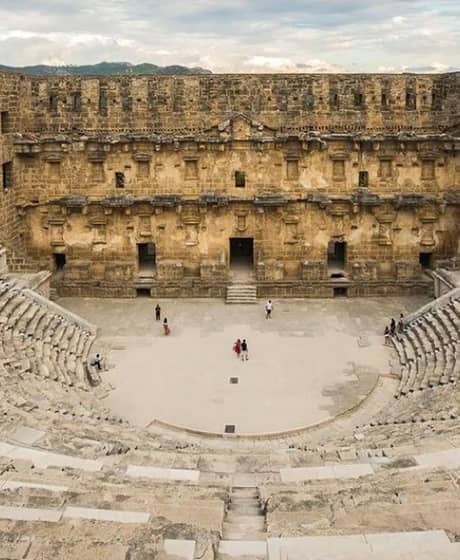
The Side Archaeological Site is also separate. The ancient ruins, theatre and Temple of Apollo area are not included in an underwater diving package.
No. Antalya Aquarium is an indoor visitor attraction in western Antalya city, while Side Underwater Museum lies in the real marine environment off Manavgat. Visitors remain dry while walking through the aquarium; a visit to the underwater museum involves scuba diving.
A search for “Antalya underwater museum” can mix these experiences with other dive sites around the province. Check the district, departure point and activity type before booking.
Before or after diving, visitors can explore Side’s historical peninsula, harbour, beaches and bazaar. Use the best places to visit in Side guide to plan the wider area.
Travellers interested in history can continue to Side Ancient City, while anyone comparing dive programmes can read the beginner’s guide to scuba diving in Side and Antalya. Avoid packing the day too tightly, particularly when fatigue and the required post-dive interval before flying must be considered.
Good planning begins with selecting a reliable diving programme and assessing your own suitability honestly. Because this is not a site that can be entered independently with a museum ticket, the boat, equipment and guidance are integral parts of the visit.
Follow this planning order:
This approach helps first-time divers set realistic expectations and allows certified divers to distinguish the main museum route from the deeper surrounding sites when choosing a suitable programme.
Our easy-to-use app offers a comprehensive listing of curated tours, activities, and experiences, all in one place. Whether you’re a thrill-seeker looking for an adrenaline-packed adventure or seeking a more relaxed getaway, Maxtoria has got you covered.





© 2026 Maxtoria Turizm Ticaret A.Ş. — All Rights Reserved
v2.1.2