











 Featured
Perge Aspendos & Side
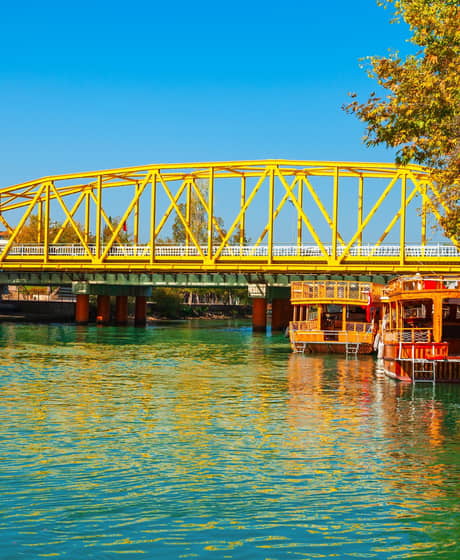
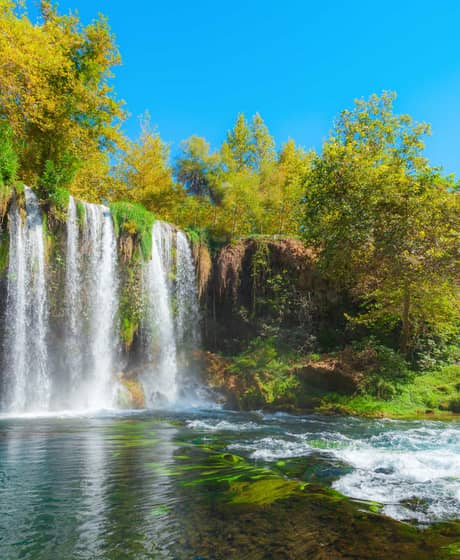
Aspendos, Side and Manavgat Waterfall Tour with Lunch
Free Cancellation Free Shuttle
From £63.92 £56.77 Per Person



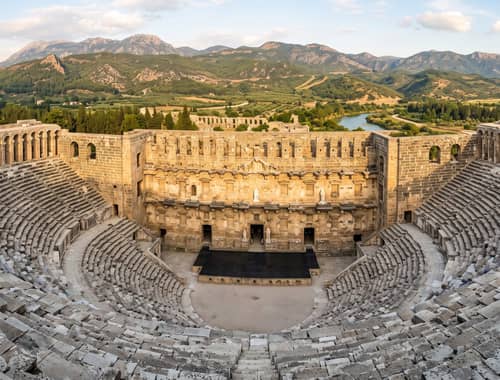
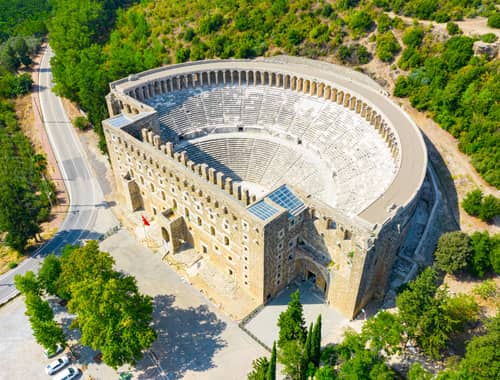
Aspendos Ancient Theatre is a monumental structure in the Belkıs neighbourhood of Serik, Antalya, and is regarded as one of the best-preserved examples of Roman theatre architecture. Built by the architect Zenon during the reign of Roman Emperor Marcus Aurelius in the 2nd century AD, the theatre is believed to have accommodated approximately 15,000 spectators. A visit to Aspendos is not limited to the theatre. On the hill behind it, visitors can see the remains of an agora, basilica, monumental fountain, council building, temple and ancient street. The impressive aqueducts are located nearby. Aspendos is an important archaeological stop that can easily be included in cultural tours from Antalya city centre, Belek, Side and Serik.
Tours and trips that go here, run by licensed local operators.
Aspendos Ancient Theatre is located in the Belkıs neighbourhood of Serik in Antalya Province. Situated approximately 45–50 kilometres east of Antalya city centre, the archaeological site can be reached by road from popular destinations such as Serik, Belek and Side.
The main transport options are:
By car: From Antalya or Side, follow the D400 road towards Serik. Near Serik, follow the signs for Belkıs and Aspendos.
By public transport: Buses and minibuses travelling from Antalya Bus Station towards Serik can be used. From Serik, you may need to change to a local minibus travelling towards Aspendos or Belkıs.
By taxi: Direct taxi journeys are available from Serik, Belek, Kadriye and hotels in the surrounding area.
By organised tour: Some cultural tours departing from Antalya, Belek, Kemer and Side combine Aspendos with Perge and Side.
Approximate distances:
| Starting point | Distance to Aspendos Ancient Theatre |
|---|---|
| Serik town centre | 7–10 km |
| Belek | 18–22 km |
| Kadriye | 22–25 km |
| Side | 35–40 km |
| Antalya Airport | 35–40 km |
| Antalya city centre | 45–50 km |
| Manavgat | 45–50 km |
| Kemer | 85–95 km |
Distances vary according to the route and exact starting point. When using navigation, search for Aspendos Archaeological Site, Aspendos Ancient Theatre or Aspendos Ancient Theater. Because a modern performance venue called Aspendos Arena is also located in the region, confirm that your destination is the ancient theatre and archaeological site.
Aspendos Archaeological Site requires an entrance ticket, and MüzeKart is valid for eligible Turkish citizens. Ticket prices, opening hours and free-entry conditions can change, so visitors should check the official ticket page before travelling.
The main information published on the official websites as of September 2026 is:
| Ticket or visitor category | Price and conditions |
|---|---|
| Turkish citizens aged 8 and over | 200 TRY |
| Turkish citizens aged 0–18 | Free |
| Turkish citizens aged 65 and over | Free |
| Foreign visitors aged 8 and over | €15 |
| Foreign visitors aged 0–8 | Free |
| Eligible archaeology, art history and museology students | Free when the stated conditions are met |
| MüzeKart | Valid for Turkish citizens |
| Concert and special-event tickets | May be separate from archaeological-site admission |
The standard opening hours published on the official website are:
| Period | Opening hours | Ticket office closes |
|---|---|---|
| 1 May–1 October | 08:00–21:00 | 20:30 |
| 1 November–31 March | 08:00–17:00 | 16:30 |
| April and October transition periods | Check the current schedule | Check the current schedule |
Aspendos may be included in seasonal night-museum programmes. Evening admission, MüzeKart conditions and additional ticket charges may differ from standard daytime access. Routes or closing times may also change on days when concerts, festivals or performances are scheduled.
A visit to Aspendos usually begins at the ancient theatre. After examining the seating tiers, stage building, entrance galleries and acoustic design, visitors can walk up the hill behind the theatre to explore the remaining structures of the ancient city.
A recommended route is:
Examine the exterior façade and entrances of the ancient theatre.
View the stage building and overall theatre plan from the seating area.
Explore the upper sections using designated and accessible routes.
Walk up the hill behind the theatre to see the agora, basilica, monumental fountain and other urban remains.
If time permits, visit the Aspendos aqueducts as a separate stop.
Approximately 45–60 minutes may be sufficient for the theatre alone. Allowing 1.5–2.5 hours is more appropriate when the upper city and aqueducts are included.
The archaeological site has uneven, rocky and sloping surfaces. Shade can be limited, particularly during summer, so visitors should bring water, a hat, sunscreen and walking shoes with non-slip soles.
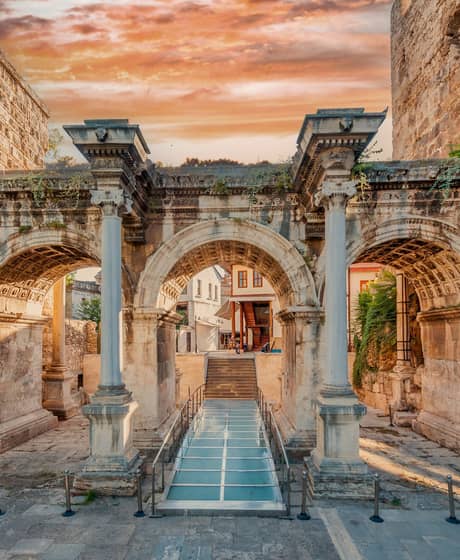
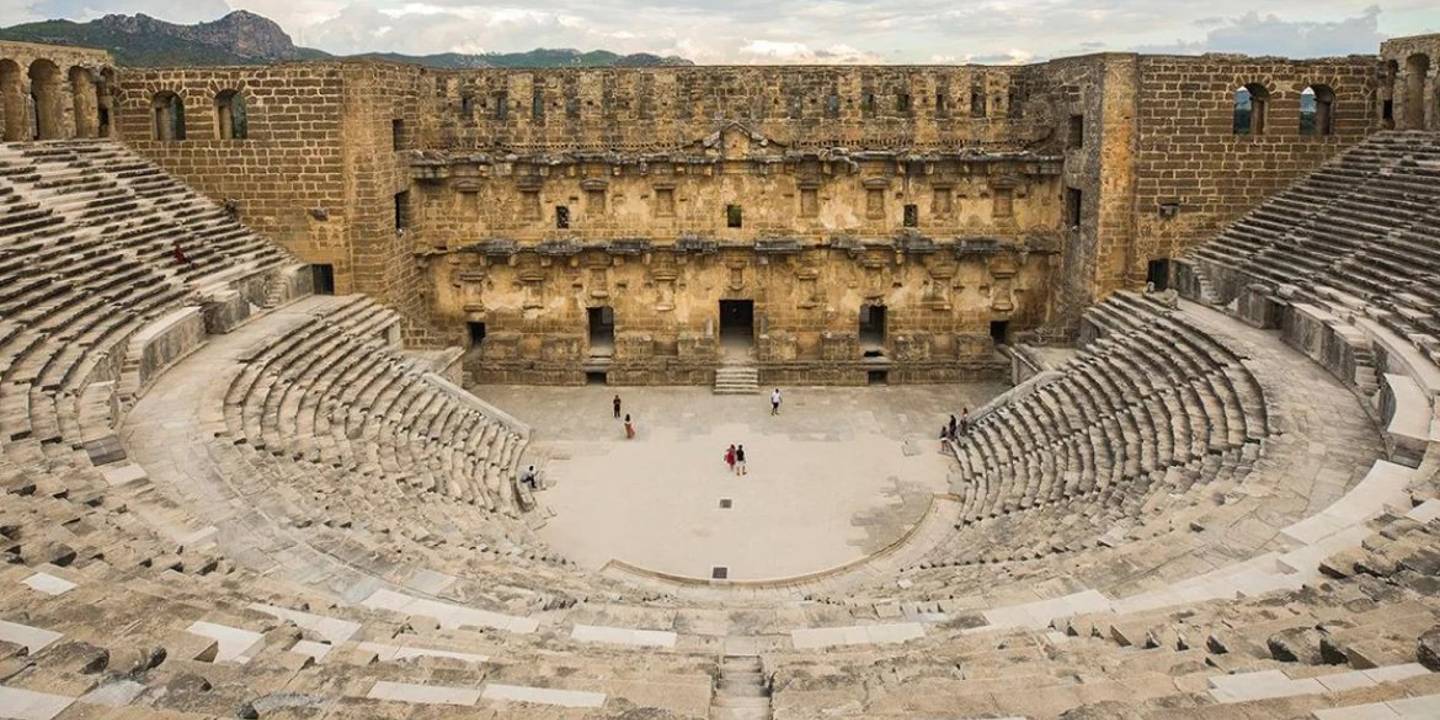
Aspendos Ancient Theatre is one of Antalya’s most recognisable historic structures. Its largely preserved stage building, extensive seating area and remarkable acoustics allow visitors to examine the layout of a Roman theatre in exceptional detail.
The Ancient City of Aspendos covers a much larger area than the theatre alone. Public-building remains on the hill and the monumental aqueduct system extending for approximately one kilometre demonstrate the city’s economic strength and engineering achievements during the Roman period.
Aspendos Ancient Theatre was constructed during the reign of Roman Emperor Marcus Aurelius, between AD 161 and 180. Its architect was Zenon, son of Theodoros.
The theatre could accommodate approximately 15,000 spectators. Some sources estimate its capacity at between 15,000 and 20,000. Its most striking features include the semicircular seating area, the largely preserved stage building, its galleries and sophisticated acoustic design.
Aspendos is considered one of the best-preserved Roman theatres not only in Türkiye but throughout the Mediterranean world.
Aspendos Ancient Theatre is located in the Belkıs neighbourhood of Serik in Antalya Province. It stands east of Antalya city centre in a region that benefited from the transport and agricultural opportunities provided by the Köprüçay River in antiquity.
Its position between Antalya and Side makes Aspendos easy to include in day trips from both areas.
The distance between Aspendos Archaeological Site and the centre of Serik is approximately 7–10 kilometres, depending on the exact starting point. The journey usually takes around 15–20 minutes by car or taxi.
Routes and departure times for local minibuses travelling from Serik towards Belkıs and Aspendos may vary by day and season. Check the return timetable before travelling to the site.
The road distance between Antalya city centre and Aspendos Ancient Theatre is approximately 45–50 kilometres. Depending on traffic and the exact departure point, the journey generally takes 50–70 minutes.
Aspendos is approximately 35–40 kilometres from Antalya Airport. Visitors using public transport from the airport may need to change vehicles in Antalya or Serik.
Direct services from Antalya to Aspendos and their frequency may change. The general public-transport route is:
Take a bus or minibus towards Serik from Antalya Bus Station or another suitable interchange.
In Serik, ask for a local minibus travelling towards Aspendos or Belkıs.
Check the departure time of the final return minibus before travelling to the site.
If the local service is unavailable, consider taking a taxi from Serik.
Visitors travelling from Side or Manavgat can also reach Serik first and continue using local transport. Bus stops and schedules can change, so do not rely solely on old online reviews.
Aspendos Ancient Theatre was constructed between AD 161 and 180, during the reign of Roman Emperor Marcus Aurelius. This places the structure in the 2nd century of the Roman Imperial period.
The history of the city of Aspendos is considerably older than the theatre. It was already an important Pamphylian settlement and trading centre before Roman rule. Many of the monumental remains visible today, however, date from the Roman period.
The architect of the theatre was Zenon, son of Theodoros. Greek and Latin inscriptions near the entrances indicate that two wealthy brothers, Curtius Crispinus and Curtius Auspicatus, financed its construction.
The answer to “Who built Aspendos Theatre?” therefore has two parts:
Architect: Zenon
Patrons who financed the building: Curtius Crispinus and Curtius Auspicatus
The competition story told in local legend should be considered separately from this historical evidence, which is based on surviving inscriptions.
Aspendos Ancient Theatre was built in the 2nd century AD and is approximately 1,850 years old. The exact calculation may vary slightly depending on whether the beginning or completion of construction is used.
In addition to Roman construction techniques, the theatre’s continued use and repair during the Byzantine and Seljuk periods contributed to its exceptional preservation.
Aspendos Ancient Theatre is generally believed to have accommodated approximately 15,000 spectators. Some sources place its capacity between 15,000 and 20,000.
Differences between estimates may result from the methods used to calculate available seating and the assumed amount of space allocated to each spectator.
The main features that distinguish Aspendos Theatre include:
Its status as one of the best-preserved Roman theatres
A largely intact two-storey stage building
A capacity of approximately 15,000 spectators
A semicircular seating area
A vaulted gallery facilitating movement around the upper section
Effective sound distribution between the stage and seating
Greek and Latin construction inscriptions
Architectural traces from the Roman, Byzantine and Seljuk periods
Its historical and modern use for concerts and cultural events
Although Aspendos is sometimes informally called an “amphitheatre”, it is architecturally a Roman theatre. Amphitheatres have a complete or oval plan, while the seating area at Aspendos is semicircular.
The seating area, stage building and upper galleries form an integrated architectural design that carries sound effectively towards the audience. Because the stage building remains largely intact, it also helps prevent sound from dispersing into the open landscape.
It is often said that quiet sounds from the stage can be heard from the highest seating rows. During a visit, it is better to experience the natural acoustics without shouting, repeatedly clapping or disturbing other visitors.
The history of Aspendos extends back well before Roman rule. Coins dating from the 5th and 4th centuries BC display the city’s name in the form Estvediya.
The navigable Köprüçay River connected Aspendos with Mediterranean trade routes. The city developed economically through the trade of salt, grain, olive oil, wine and horses.
After periods of Persian and Macedonian influence, Aspendos came under the control of Hellenistic kingdoms and was incorporated into Roman territory in 133 BC. The city experienced one of its most prosperous periods under the Roman Empire, when its theatre, aqueducts and major public buildings were constructed.
Aspendos continued to be used during the Byzantine and Seljuk periods. The Seljuks repaired the theatre’s stage building and may have used it as a palace or accommodation complex.
The best-known Aspendos legend explains the construction of the theatre and aqueducts. According to the story, the king of Aspendos promised that his daughter would marry the person who built the most useful structure for the city.
One of two architect brothers constructed the aqueducts, while the other built the theatre. The king initially considered the aqueducts more useful. However, while inspecting the theatre, he heard a very quiet voice from the stage while standing in the highest rows. Impressed by the building’s acoustics, he chose the theatre’s architect.
This account is a legend. Historical information about the theatre’s architect and patrons is based on the Greek and Latin inscriptions found on the building.
Aspendos Archaeological Site is located within the modern Belkıs neighbourhood, which is why it may also appear under the names “Belkıs Aspendos” or “Belkıs Ruins”.
Popular stories sometimes connect the name Belkıs with the king’s daughter in the Aspendos legend. However, this association should not be presented as confirmed historical or etymological evidence. Aspendos is the ancient city’s historical name, while Belkıs describes its present administrative location.
There are different interpretations of the origin of the name Aspendos, but its exact meaning has not been conclusively established. The name Estvediya on the city’s ancient coins suggests that it may have originated in a pre-Greek Anatolian language.
Aspendos is the Greek and Latin form used in ancient sources and later periods. Claims that the name has one definite meaning, such as “city of horses”, have not been conclusively proven.
The Aspendos aqueducts formed part of an advanced Roman engineering system constructed to transport water from northern springs to the ancient city. The surviving arcade, extending for approximately one kilometre, and the pressure towers at both ends are its most striking elements.
Water was carried to the higher sections of the city before being distributed to cisterns and other locations. The system, which made use of pressure towers and an inverted-siphon principle, is considered one of the best-preserved examples of ancient water engineering.
The story that the aqueducts were built by the brother of the theatre’s architect belongs to the Aspendos legend. Archaeological and architectural evidence should be used when examining the structures’ actual history.
In addition to the theatre, visitors can see the remains of:
An agora
A basilica
A monumental fountain
A council building
A monumental arch
Ancient streets
A Hellenistic temple
Fortification walls
Cisterns
Aqueducts and pressure towers
Walking up the hill behind the theatre provides a better understanding of the ancient city’s overall scale. Some areas of the hill have uneven surfaces and limited shade.
As of September 2026, the standard admission price is listed as 200 TRY for Turkish citizens aged eight and over and €15 for foreign visitors aged eight and over.
Turkish citizens aged 0–18 and those aged 65 and over may enter free of charge under the published conditions. Prices can change, so check the official ticket page before visiting.
Yes. MüzeKart is valid at Aspendos Archaeological Site for eligible Turkish citizens.
Night-museum visits, concerts and special events may not be included within standard MüzeKart admission. The official website may apply a separate charge to MüzeKart holders for night-museum entry, so current conditions should be checked according to the date and time of the visit.
International travellers can review the current coverage of MuseumPass Türkiye or Museum Pass The Mediterranean.
According to the published official schedule, Aspendos can be visited:
Until 21:00 between 1 May and 1 October
Until 17:00 between 1 November and 31 March
The ticket office closes at 20:30 during the summer period and at 16:30 during the winter period. The transition schedules for April and October, as well as seasonal night-museum hours, should be checked separately.
Arriving close to the final admission time may not leave enough time to see both the theatre and the upper city. Arriving at least 1.5–2 hours before closing provides a more comfortable visit.
Standard archaeological-site admission can be purchased from the entrance ticket office or through the official ticket channels of the Turkish Ministry of Culture and Tourism. Eligible MüzeKart holders can enter using their valid card and identification.
Tickets for concerts, opera, ballet or performances at Aspendos are separate from standard archaeological-site admission. Before purchasing an event ticket, check:
The exact event venue
Whether it is at the ancient theatre or Aspendos Arena
The seating arrangement
The starting time and door-opening time
Whether transfers are included
Whether the event ticket includes an archaeological-site visit
Cancellation and date-change conditions
Aspendos Ancient Theatre has hosted concerts, opera and ballet performances, festivals and other cultural events throughout its modern history.
However, not every event advertised under the name Aspendos takes place inside the ancient theatre. Depending on conservation decisions, restoration work and technical requirements, some programmes may be held at the nearby modern Aspendos Arena.
Check the organiser’s announcement and official event schedule for the current programme and exact venue.
No. Aspendos Ancient Theatre and Aspendos Arena are not the same structure.
Aspendos Ancient Theatre is the historic building dating from the 2nd century AD and forms part of Aspendos Archaeological Site. Aspendos Arena is a modern performance venue in the same general region.
When buying an event ticket, do not rely solely on the name “Aspendos”. Confirm whether the listed venue is the ancient theatre or the modern arena.
Approximately 45–60 minutes may be sufficient if you only want to see the ancient theatre. A visit including a detailed examination of the theatre, a walk through the upper city and photography generally takes around 1.5–2 hours.
If the aqueducts are included as a separate stop, allow a total of 2–3 hours. Visitors combining Perge, Aspendos and Side should reserve a full day once transport and meal breaks are considered.
Aspendos can be visited with children, and the theatre’s monumental scale may provide an engaging historical experience, particularly for school-age visitors.
Families should nevertheless consider the following:
Stone steps may be high and uneven.
Children must be supervised continuously in the upper seating areas.
Water and sun protection are essential in hot weather.
Not every part of the theatre or upper city may be accessible with a pushchair.
Children should not climb on walls or preserved architectural elements.
The entrance area and lower sections of the theatre may be more accessible to some visitors. However, the historic stone steps, steep seating tiers and uneven ground in the upper city can create difficulties for people with limited mobility.
Visitors should contact the archaeological-site administration before travelling to ask about wheelchair access, companion arrangements and any temporarily closed routes.
Aspendos can be visited throughout the year. Conditions vary by season:
Spring: Mild temperatures and comfortable walking conditions
Summer: Long days, but potentially extreme heat during the afternoon
Autumn: Generally suitable for walking and photography
Winter: Fewer visitors, although rain and wind should be checked
Morning: Lower temperatures and potentially smaller crowds
Late afternoon: Warmer photographic tones across the stone structures
During summer, walking can be uncomfortable between approximately 11:00 and 16:00. Visitors planning to attend a concert or night-museum session should check the separate event and admission schedules.
Useful items for an Aspendos visit include:
Walking shoes with non-slip soles
Water
A hat
Sunscreen
Lightweight, seasonally appropriate clothing
Identification and MüzeKart
A spare battery for your phone or camera
A lightweight raincoat if rain is forecast
The theatre’s stone steps can become hot in summer and slippery in wet weather. Equipment that could damage historic surfaces should not be used.
Morning visits can provide a quieter atmosphere and softer light. Late-afternoon light may emphasise the stone texture of the stage building and exterior façade.
Photography tips include:
Use a wide-angle lens to capture the entire theatre.
Photograph the symmetry of the stage building from the centre.
Capture the seating area and surrounding landscape from the upper rows.
Do not cross safety barriers or enter closed sections.
Check the rules before using a tripod or professional equipment.
Review current local and national aviation regulations before flying a drone.
Visitor reviews frequently highlight the theatre’s exceptional preservation, monumental stage building, acoustics and impressive scale.
Commonly praised features include:
The survival of a large part of the Roman theatre
The appearance of the stage building
Photography opportunities
The ability to combine the theatre with the ancient city and aqueducts
Its convenient position on routes from Antalya, Belek and Side
Common concerns include the summer heat, limited shade, uneven stone surfaces, busy tour groups and insufficient time being allocated to the upper city.
Aspendos is one of Türkiye’s best-preserved and most famous ancient theatres. However, it should not be described definitively as “the largest ancient theatre in Türkiye”.
The capacities and dimensions of ancient theatres are calculated using different methods. Aspendos is important not only because of its capacity of approximately 15,000 but also because it combines this scale with a remarkably complete stage building and architectural integrity.
Aspendos is not currently inscribed on the main UNESCO World Heritage List. “The Theatre and Aqueducts of the Ancient City of Aspendos” have been included on Türkiye’s UNESCO World Heritage Tentative List since 2015.
Tentative List status means that a site may be nominated for the World Heritage List in the future; it does not mean that the site has already been fully inscribed.
Aspendos can be combined with the following destinations:
Perge Ancient City
Side Ancient City
Side Museum
Temple of Apollo
Manavgat Waterfall
Köprülü Canyon National Park
Köprüçay River
Belek
Kurşunlu Waterfall
Antalya city centre
Kaleiçi
Perge, Aspendos and Side can be visited on the same day. However, visitors should start early and plan a full-day itinerary to spend sufficient time at each archaeological site.
For more route ideas, explore Maxtoria’s guide to the best places to visit in Antalya.
A full-day cultural route by car can be arranged as follows:
Perge Ancient City in the morning
Aspendos Ancient Theatre and upper-city remains
Lunch
Aspendos aqueducts
Side Ancient City
Sunset at the Temple of Apollo
Visitors focusing only on Aspendos can spend more time inside the theatre, walk through the upper city and visit the aqueducts as a separate stop.
During summer, placing Aspendos in the morning can reduce exposure to the midday heat. If a concert or special event is scheduled, check the daytime archaeological visit and event admission conditions separately.
Visitors looking for transport, professional guidance and the opportunity to see several ancient cities in one day can consider an organised tour that includes Aspendos.
The Perge, Aspendos and Side Guided Tour from Antalya combines three important archaeological destinations in a full-day programme. Before booking, check the hotel pickup areas, guiding language, entrance fees, lunch arrangements and amount of free time.
Travellers interested in attending a cultural performance in the Aspendos region can explore the Anatolian Fire Show Tour from Kemer. Because the exact performance venue may vary between the ancient theatre and the modern Aspendos Arena, confirm the location and date when booking.
Compare more options on the Antalya tours and activities page.
Our easy-to-use app offers a comprehensive listing of curated tours, activities, and experiences, all in one place. Whether you’re a thrill-seeker looking for an adrenaline-packed adventure or seeking a more relaxed getaway, Maxtoria has got you covered.





© 2026 Maxtoria Turizm Ticaret A.Ş. — All Rights Reserved
v2.1.2