








 Best Price
Boat Tours
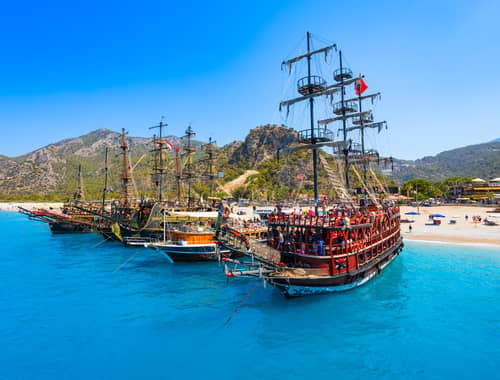
Side Pirate Boat Tour with Lunch, Transfer & Drinks Included
Free Cancellation Free Shuttle
From £17.90 £15.98 Per Person



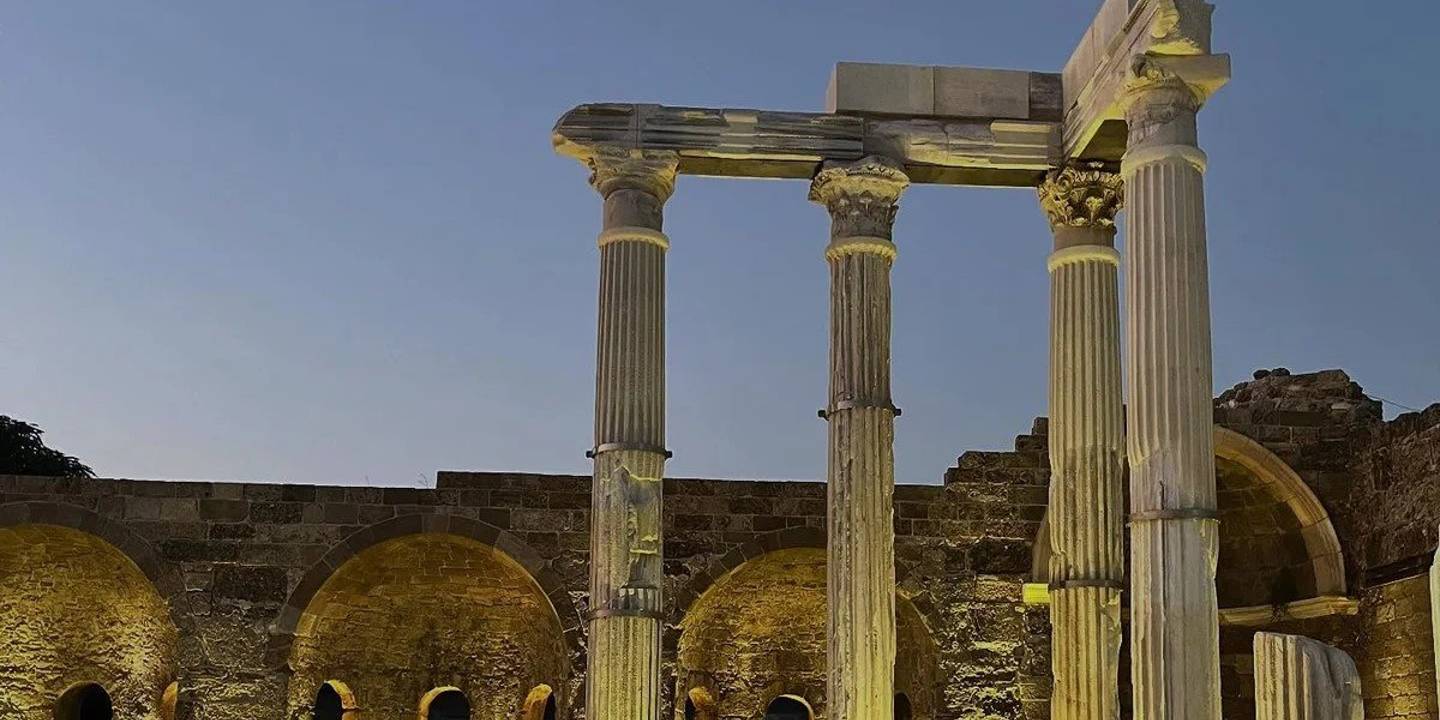
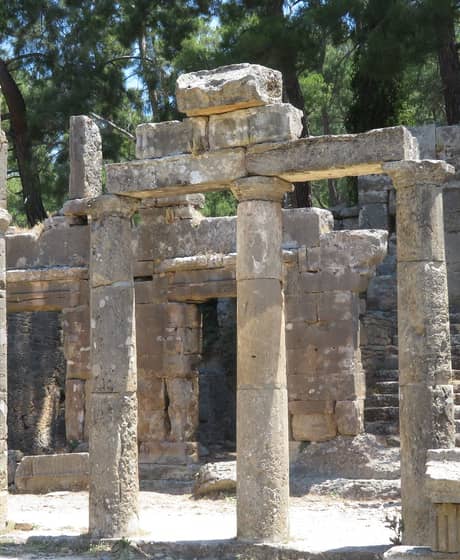
Side Ancient City is an important ancient port city located on a small peninsula extending into the Mediterranean Sea in the Manavgat district of Antalya. With a history that can be traced back to at least the 7th century BC, the city is one of the most remarkable archaeological sites in the ancient region of Pamphylia, featuring a monumental fountain, colonnaded streets, agoras, a Roman theatre, baths, city walls, and the seaside Temples of Apollo and Athena. A significant part of ancient Side is integrated with the modern town and bazaar. While many of the open-air ruins can be explored free of charge, controlled areas such as the Side Archaeological Site, Ancient Theatre and Side Museum are subject to current ticketing and visitor regulations. Combining history, the sea, sunset views and the atmosphere of the old town in a single route, Side is one of the most comprehensive day-trip destinations around Antalya.
Tours and trips that go here, run by licensed local operators.
Side Ancient City is located in Side neighbourhood in the Manavgat district of Antalya, on a historic peninsula extending into the Mediterranean Sea. Around 7–8 kilometres from central Manavgat, the ancient city lies along the same walking route as Side Old Town, the bazaar and the harbour.
The main ways to reach Side Ancient City are:
By car: From Manavgat or the D400 highway, follow the signs towards Side. Vehicle access may be restricted in the historic centre, so visitors generally use the car parks near the entrance.
By public transport: Municipal buses and dolmuş minibuses operate between central Manavgat and Side. Routes and timetables can change, so check them on the day of your visit.
By taxi: Taxis provide direct access from hotels in Side, central Manavgat and nearby tourist resorts.
By organised tour: Some cultural and sightseeing tours departing from Side, Manavgat, Antalya and Alanya include Side Ancient City in their itineraries.
On foot: Visitors staying in central Side or at hotels close to the peninsula can easily reach the ancient city on foot.
Approximate distances:
| Starting Point | Distance to Side Ancient City |
|---|---|
| Side centre and bazaar | Walking distance |
| Manavgat town centre | 7–8 km |
| Manavgat Waterfall | 12–15 km |
| Evrenseki and Kumköy | 7–12 km |
| Antalya Airport | 60–70 km |
| Antalya city centre | 70–80 km |
| Alanya | 60–70 km |
| Aspendos Ancient Theatre | 35–40 km |
For navigation, search for Side Ancient City, Side Archaeological Site, Side Ancient Theatre or Side Museum. As the ancient city covers a large area, choosing the car park closest to the monument you want to visit can save time.
A large part of Side’s ancient streets, harbour area and open monuments such as the Temple of Apollo can be explored free of charge, while controlled areas including the Side Archaeological Site, Ancient Theatre and Side Museum require a ticket.
According to official and current information accessed in September 2026:
| Area | Admission and Visitor Information |
|---|---|
| Open archaeological routes through Side | Largely free |
| Colonnaded streets and accessible open ruins | Free in accessible sections |
| Area around the Temples of Apollo and Athena | Free |
| Side Archaeological Site and Ancient Theatre | Ticket required; MüzeKart valid for Turkish citizens |
| Side Archaeological Site ticket for foreign visitors | €7 under the 2026 tariff |
| Side Museum | Separate or seasonal combined ticket arrangements may apply; MüzeKart valid |
| Side Museum ticket for foreign visitors | €5 under the 2026 tariff |
| Daytime opening hours | 08:00–18:45 |
| Night museum hours | 19:00–22:00 |
| Night ticket office closing time | 21:30 |
| Closed days | Listed as open every day |
| MüzeKart | Valid for Turkish citizens |
| MüzeKart during night visits | An additional night ticket is required under the 2026 programme |
During the 2026 night museum programme at the Side Archaeological Site, visitors with a Turkish ID number who hold a valid MüzeKart are stated to require an additional 200 TL night ticket.
Admission prices, combined tickets, restoration closures and opening hours may change during the season. Check the official MüzeKart or museum website on the day of your visit.
Side Ancient City can be explored on foot along a route beginning at the Monumental Fountain and continuing through the colonnaded streets, agoras, theatre, museum, old town, harbour and the Temples of Apollo and Athena.
Recommended walking route:
Monumental Fountain and Great City Gate
Colonnaded Street
State Agora
Commercial Agora and Temple of Tyche
Side Ancient Theatre
Side Museum
Vespasian Monument and surrounding ruins
Side Old Town and bazaar streets
Ancient harbour
Temples of Apollo and Athena
Allow around 2–3 hours for a shorter visit. Visitors who want to explore the ancient theatre, museum, agoras and harbour area in more detail should allow around 4–5 hours.
If you want to watch the sunset at the Temple of Apollo, starting your route in the afternoon works particularly well.
Stone and marble surfaces become extremely hot in summer. Wear comfortable walking shoes and bring a hat, water and sun protection. Excavations and restoration work may occasionally alter pedestrian routes, so always follow the signs and barriers on site.
Side Ancient City is a unique archaeological destination where historic ruins and a lively Mediterranean resort share the same peninsula. Visitors can walk among Roman colonnaded streets, theatres, agoras and temples before continuing directly into Side Old Town, the harbour, restaurants and the seafront.
The ancient city is not a single enclosed archaeological site with one entrance. Free open-air routes and ticketed controlled areas exist alongside one another. For this reason, entrance fees, opening hours and the amount of time required should be considered separately for the Side Archaeological Site, Ancient Theatre, Side Museum and Temple of Apollo.
Side Ancient City is a historic settlement that was one of the most important ports and trading centres of the ancient region of Pamphylia.
With its administrative buildings, marketplaces, theatre, baths, temples, harbour, water systems and residential areas, Side functioned as a fully developed city in antiquity.
A large proportion of the ruins visible today date from the Hellenistic, Roman and Byzantine periods.
Because modern Side developed on and around the ancient settlement, visitors can experience historic monuments and the present-day old town along the same walking route.
Side Ancient City is located in the Manavgat district of Antalya Province.
Side is not a separate province or district. It is a neighbourhood and tourism area within Manavgat, Antalya.
The ancient city lies on a peninsula around 7–8 kilometres southwest of central Manavgat.
Side is located east of Antalya city centre and west of Alanya.
Side Ancient City is located in Türkiye’s Mediterranean Region and within the ancient geographical region of Pamphylia.
Pamphylia was the historic region covering much of the coastal plains along the eastern side of the Gulf of Antalya. Perge, Aspendos, Sillyon and Side were among its most prominent ancient cities.
Side’s natural position on the Mediterranean coast played an important role in its development as a major port and trading centre.
The name Side is generally considered to come from an ancient Anatolian language and to mean “pomegranate.”
The pomegranate was an important symbol of Side and appeared on the city’s ancient coins. This is considered one indication that the name originated from a local language spoken in the region before Greek colonisation.
Side also had its own distinctive local language and writing system, reflecting the city’s Anatolian cultural heritage.
The known settlement history of Side dates back to at least the 7th century BC.
Ancient sources and archaeological evidence show that Side was already an important settlement during this period. However, its local name and Anatolian linguistic characteristics suggest that settlement in the area may have begun earlier.
Using the 7th century BC as a reference point, Side is approximately 2,700 years old.
Most of the monumental ruins visible today were constructed later, particularly during the Hellenistic, Roman and Byzantine periods.
The history of Side spans approximately 2,700 years, from ancient Anatolian kingdoms and Persian rule to the Hellenistic, Roman and Byzantine periods.
Major periods in Side’s history include:
| Period | Developments in Side |
|---|---|
| 7th century BC | Side developed into an important settlement |
| 6th century BC | Lydian and later Persian rule |
| 334 BC | Macedonian control during Alexander the Great’s campaign in Anatolia |
| Hellenistic Period | Ptolemaic and Seleucid rule |
| 2nd century BC | Period of independence and commercial development |
| 1st century BC | Influence of pirate activity |
| After 78 BC | Roman rule |
| 2nd–3rd centuries AD | Peak period of trade, architecture and urban prosperity |
| 5th–6th centuries AD | Major Christian centre of eastern Pamphylia |
| 9th–10th centuries AD | Raids, economic decline and population loss |
| Early 20th century | Development of Selimiye village among the ancient ruins |
Most of the monumental character visible in Side today was shaped during the city’s prosperous years under the Roman Empire.
Side was inhabited by local Pamphylian communities, Hellenistic populations, Romans and Christian communities during the Byzantine period.
Throughout its history, the city came under the influence or rule of the Lydians, Persians, Macedonians, Ptolemies, Seleucids, Kingdom of Pergamon, Romans and Byzantines.
Side also maintained its independence during certain periods and minted its own coins.
In the early 20th century, Muslim immigrants from Crete established the village of Selimiye among the ruins, forming the basis of modern Side.
Side Ancient City does not belong to a single civilisation; the ruins visible today represent layers of heritage created over many different periods.
The theatre, monumental fountains, agoras, baths and temples largely reflect Roman-period development.
Churches and episcopal buildings belong to the Byzantine period, while elements of the urban plan and earlier architectural remains date back to the Hellenistic period.
It would therefore be incomplete to describe Side simply as a “Roman city”. Its local Pamphylian and Hellenistic history predates Roman rule.
Side Ancient City was not constructed at one time for one specific purpose; it was a living port city that developed gradually over centuries.
Different structures in the city served different purposes:
The harbour and warehouses supported trade.
Agoras were used for commerce and public life.
The theatre hosted performances and civic events.
Baths were used for hygiene and socialising.
Temples were used for religious ceremonies.
Fountains and water systems supplied the city with water.
Walls and gates provided defence.
Basilicas and churches served Christian worship during the Byzantine period.
Side is important because it combines monumental Roman architecture, an ancient harbour and a living modern Mediterranean town in one destination.
Features that make Side particularly significant include:
Its role as one of Pamphylia’s major ancient ports
Its distinctive local language and coinage tradition
Its unusual ancient theatre architecture
Monumental Roman-period buildings
Side Museum housed in the ancient Agora Baths
The seaside Temples of Apollo and Athena
Ancient ruins integrated with the modern old town
The opportunity to combine cultural sightseeing and sunset views in one route
Side was not abandoned because of a single event. Its decline resulted from a combination of raids, economic difficulties, the decreasing importance of its harbour and long-term population loss.
The city began losing its former economic strength around the 4th century AD.
Although Side regained importance as a Christian centre during the 5th and 6th centuries, later attacks, political instability and changes in trade routes weakened the city.
By the 9th and 10th centuries, Side’s population had declined substantially. Historical accounts indicate that some residents moved towards the Antalya area.
The historical story of Side is one of a port city that grew wealthy through trade, passed under the control of several kingdoms and empires, and became a monumental Roman city.
Many of Side’s popular legends are associated with the Temples of Apollo and Athena.
One well-known story claims that Cleopatra and Mark Antony met at the Temple of Apollo. However, there is no conclusive archaeological evidence directly linking this romantic story to the temple.
For this reason, popular legend and verified historical information should be considered separately.
Ancient Side was a sophisticated Mediterranean city with colonnaded streets, marketplaces, monumental fountains, baths, a theatre, temples and a busy harbour.
Monumental streets beginning near the main city gate extended towards the harbour and temples.
Colonnaded porticoes and shops lined the streets. The agoras were centres of commercial and administrative life, while the theatre served as one of the main venues for entertainment and public gatherings.
The surviving ruins represent only part of the ancient city. Most houses, timber upper structures and everyday residential areas have not survived.
Visitors to Side Ancient City can see numerous monuments from different periods, ranging from the Monumental Fountain to the seaside temples.
Main attractions include:
Monumental Fountain or Nymphaeum
Great City Gate
Colonnaded Streets
State Agora
Commercial Agora
Temple of Tyche
Side Ancient Theatre
Vespasian Monument
Agora Baths and Side Museum
Harbour Baths
Temple of Apollo
Temple of Athena
Southern Basilica
Episcopal Palace and basilica remains
City walls
Aqueducts and water channels
Buildings around the ancient harbour
The areas accessible to visitors may change depending on excavation and restoration work.
The Monumental Fountain of Side is a large Roman-period fountain located near the landward entrance to the ancient city.
Known as the Nymphaeum, the structure once had an impressive façade designed to welcome visitors entering the city.
Water transported to Side through aqueducts was collected here and displayed as part of the monumental architecture.
The fountain is one of the most suitable places to begin a walking tour of Side Ancient City. Its surviving sections help visitors understand the original scale and multi-storey design of the building.
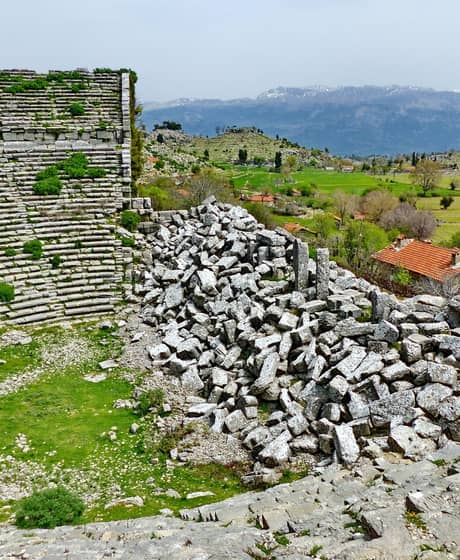
Side Ancient Theatre is important because of its distinctive architecture, which combines the Hellenistic theatre tradition with Roman construction techniques.
The lower seating rows are partly supported by the natural terrain, while the upper sections rise over an extensive vaulted substructure.
This feature distinguishes Side Ancient Theatre from many other ancient theatres in Anatolia.
Dating mainly to the 2nd century AD, the theatre is estimated to have accommodated around 15,000–17,000 spectators.
During the 3rd century AD, it was adapted for arena events, and in the 5th century parts of the building were used for religious purposes.
Yes. Side Ancient Theatre is located in the centre of the ancient city, close to the agora and near the narrowest part of the peninsula.
The theatre lies directly along the main walking route from the Monumental Fountain and Colonnaded Street towards Side Old Town and the Temple of Apollo.
As the theatre is a controlled and ticketed area, its admission rules may differ from the free open-air sections of Side Ancient City.
Side Ancient Theatre is estimated to have had a capacity of approximately 15,000–17,000 spectators.
Slightly different figures can be found in different sources depending on seating calculations and reconstruction methods.
Its capacity demonstrates the size and regional importance of Side during the Roman period.
Stone steps are steep and may be worn in places, so visitors should take care while walking inside the theatre.
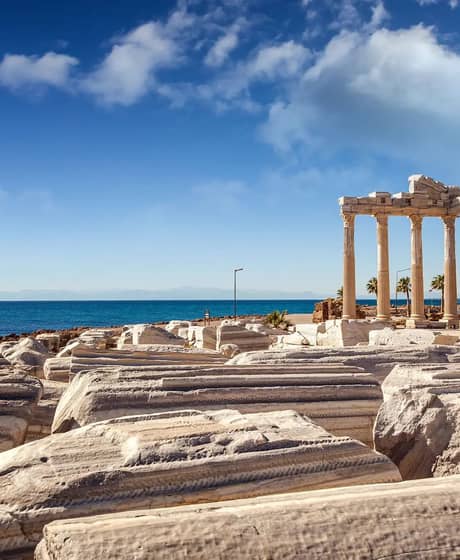
Yes. The Temple of Apollo is one of the most important seaside monuments within Side Ancient City.
The temple stands close to the entrance of the ancient harbour at the tip of the peninsula.
Immediately beside it are the remains of the Temple of Athena, dedicated to Side’s principal goddess.
Visitors can walk from Side Ancient Theatre to the Temple of Apollo through Side Old Town and the harbour area.
The Temple of Apollo in Side was constructed around the 2nd century AD during the Pax Romana, a period of relative peace and prosperity in the Roman Empire.
The temple was dedicated to Apollo, one of the principal gods worshipped in Side.
Its reconstructed columns overlooking the Mediterranean have become one of the most recognisable symbols of Side.
The area around the temple can become crowded at sunset. Visit in the morning for a quieter experience.
Side Museum is housed in the restored Agora Baths, a Roman bath complex dating to approximately the 2nd century AD within Side Ancient City.
The museum displays archaeological finds discovered during excavations in Side and the surrounding area.
The collection includes:
Statues and sculptural fragments
Sarcophagi
Reliefs
Inscriptions
Coins
Architectural fragments
Grave stelae
Finds from the Hellenistic, Roman and Byzantine periods
The museum helps visitors understand the relationship between the monuments visible outside and the art and everyday life of ancient Side.
The general open-air areas of Side Ancient City are free to explore, while controlled areas such as the Side Archaeological Site, Ancient Theatre and Side Museum require admission.
Under the 2026 tariff, admission for foreign visitors is listed as €7 for the Side Archaeological Site and €5 for Side Museum.
Seasonal single-ticket or combined-ticket arrangements may also be available.
Turkish citizens can enter eligible controlled areas with a valid MüzeKart.
Ticket prices may change during the year, so check the official tariff before visiting.
Yes. MüzeKart is valid for Turkish citizens at the Side Archaeological Site and Side Museum.
MüzeKart is not required for free public areas such as Side Old Town or the Temple of Apollo.
It is used for museums and archaeological areas where admission is normally charged.
Night museum programmes may have separate pricing. Under the 2026 programme, MüzeKart holders are required to purchase an additional ticket for night visits.
The official Side Archaeological Site page lists regular daytime visiting hours as 08:00–18:45.
The daytime ticket office is also listed as closing at 18:45.
During the night museum programme, the archaeological site may reopen between 19:00 and 22:00, with the night ticket office closing at 21:30.
These hours should not be confused with public areas around Side Old Town, the harbour and the Temple of Apollo.
Controlled archaeological and museum areas have their own opening hours.
The official Side Archaeological Site page lists the site as open every day of the week.
Temporary changes may occur because of public holidays, maintenance, restoration projects, events, weather conditions or security arrangements.
Businesses in Side Old Town, Side Museum and other individual attractions may operate different opening hours from the archaeological site.
Side Old Town, the harbour and the area around the Temple of Apollo can be explored in the evening, while ticketed sections of the archaeological site stay open late only during announced night museum programmes.
Side becomes particularly lively on summer evenings.
The bazaar, restaurants, harbour and temple area remain popular after sunset.
For entry to the Ancient Theatre and controlled archaeological sections, follow the official night museum dates and opening hours.
Yes. Side Archaeological Site is one of the archaeological attractions included in Türkiye’s 2026 night museum programme.
According to the official programme, night visits are available from 1 June to 1 October.
The announced hours for Side are:
Night opening: 19:00
Night closing: 22:00
Ticket office closing: 21:30
Programme: Every day
For MüzeKart holders with a Turkish ID number, the additional 2026 night ticket is listed as 200 TL.
Dates, admission fees and opening arrangements may change because of special events or seasonal decisions.
Allow at least 2–3 hours for Side Ancient City, or approximately 4–5 hours for a more comprehensive visit.
Approximate visiting times:
| Visit | Recommended Time |
|---|---|
| Monumental Fountain and open ruins | 45–60 minutes |
| Side Ancient Theatre | 45–60 minutes |
| Side Museum | 60–90 minutes |
| Old Town and harbour | 1–2 hours |
| Temple of Apollo and sunset | 45–90 minutes |
| Complete sightseeing route | 4–5 hours |
If you also plan to eat, shop or spend time at the beach, Side can easily become a full-day destination.
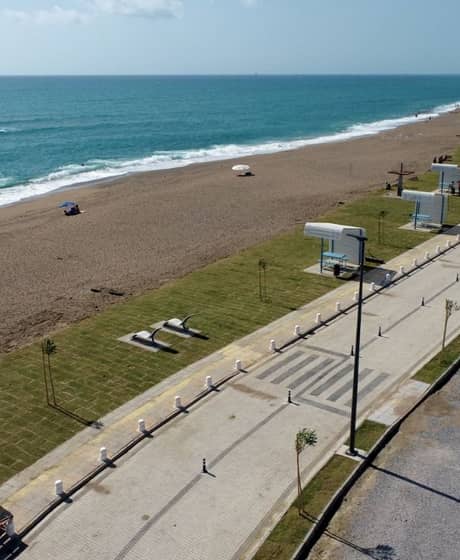
Swimming is not permitted among the archaeological ruins themselves, but beaches suitable for swimming are located on both sides of the Side peninsula.
Side East Beach and Side West Beach extend along the two sides of the historic peninsula.
After exploring the ancient city, visitors can add a swimming break at either beach.
Do not swim in the ancient harbour, directly beside archaeological remains or in rocky areas where swimming is prohibited.
Side Ancient City can be visited with children, although hot weather, uneven stone surfaces and steep theatre steps mean that close supervision is necessary.
Tips for families:
Visit early in the morning or later in the day during summer.
Bring hats, water and sun protection.
Do not leave children unattended on the theatre steps.
Do not allow children to climb on the ruins.
Divide longer routes into shorter sections with breaks.
Consider uneven surfaces when using a pushchair.
Visiting the museum can also make it easier to explain the buildings and archaeological remains to children.
Some of the main walking areas in Side Ancient City are accessible, but uneven ancient paving, steps and slopes can make full access difficult.
Flatter routes can be found around Side Old Town and the harbour.
Upper sections of the Ancient Theatre, certain excavation areas and stone-paved streets can be challenging for visitors using wheelchairs or walking aids.
Contact Side Museum Directorate for current information about the most suitable entrance, parking area and accessible route.
The most comfortable times to visit Side Ancient City are early in the morning and during the period before sunset.
Morning: Cooler temperatures, fewer crowds and a more comfortable museum visit
Midday: Strong sunlight and intense summer heat
Afternoon: Suitable for the theatre, old town and harbour route
Sunset: The most popular time to visit the Temple of Apollo
Evening: Ideal for Side Old Town, the harbour and night museum visits
For sunset, arrive at the Temple of Apollo at least 45 minutes before the sun goes down.
Spring and autumn are generally the most comfortable seasons for visiting Side Ancient City.
Spring: Mild temperatures, greener surroundings and comfortable walking conditions
Summer: Longer visiting hours and night museum programmes, but very high temperatures
Autumn: Ideal for combining swimming with cultural sightseeing
Winter: Quieter atmosphere, although rain is more likely
Weekdays: Usually less crowded than weekends
Early morning: More peaceful before larger tour groups arrive
In July and August, exposed archaeological areas can become extremely hot around midday.
The most popular photo locations in Side Ancient City include the Temple of Apollo, Ancient Theatre, Monumental Fountain and Colonnaded Streets.
Recommended photography spots include:
Temple of Apollo at sunset
The broad façade of the Monumental Fountain
Perspective views along the Colonnaded Street
Seating rows of the Ancient Theatre
Agora and Temple of Tyche
Open courtyard of Side Museum
Ancient harbour
Mediterranean views from the peninsula
Do not climb on archaeological remains or cross barriers. Check permit requirements in advance for professional or commercial photography.
Systematic archaeological excavations at Side began in 1947 under the direction of Arif Müfid Mansel.
The excavations uncovered the Ancient Theatre, agoras, baths, temples, streets and numerous movable archaeological finds.
A significant number of these discoveries are now exhibited in Side Museum.
Archaeological research can continue today through universities, public institutions and specialist archaeological teams.
Some routes may occasionally close because of ongoing excavation work.
Excavation, conservation and restoration work continues periodically throughout Side Ancient City.
The aim of these projects is to preserve surviving structures, improve the safety of visitor routes and document newly discovered archaeological remains.
Some of the columns that form the iconic appearance of the Temple of Apollo today were re-erected using the archaeological restoration method known as anastylosis.
During restoration, an entire monument or individual sections may temporarily close to visitors.
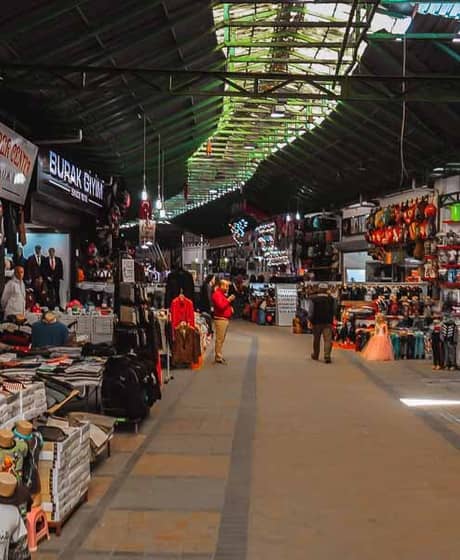
Yes. Side Old Town and bazaar are located directly along the walking route between the ancient city, theatre, harbour and Temple of Apollo.
Visitors may find:
Souvenir shops
Clothing and accessory stores
Restaurants
Cafés
Ice cream shops
Jewellery stores
Tour and activity sales points
The bazaar becomes particularly busy during summer evenings.
Before purchasing anything, ask about the price, product specifications, payment methods and return conditions.
The closest accommodation areas to Side Ancient City include the Side peninsula, central Side, Kumköy, Evrenseki, Sorgun and Titreyengöl.
| Area | Main Accommodation Advantage |
|---|---|
| Side peninsula | Walking distance to the ancient city, bazaar and harbour |
| Central Side | Easy access to restaurants, beaches and transport |
| Kumköy and Evrenseki | Large resorts and wide sandy beaches |
| Sorgun | Forest and coastal atmosphere |
| Titreyengöl | Family hotels and a quieter environment |
| Central Manavgat | Local city life and transport connections |
When choosing accommodation, consider not only straight-line distance but also whether the hotel provides a shuttle or has convenient dolmuş connections to Side.
Visitor reviews most frequently praise the way Side combines archaeological ruins with the bazaar, harbour and Mediterranean scenery.
Positive reviews commonly highlight:
Sunset at the Temple of Apollo
The impressive scale of the Ancient Theatre
Open areas that can be explored free of charge
The archaeological collection in Side Museum
The ability to reach many attractions on foot
The evening atmosphere
The opportunity to combine history and the beach in one day
Common criticisms include summer heat, crowds, difficulty finding parking, relatively high restaurant prices and occasional closures caused by restoration work.
Side is an ancient port city integrated with a modern resort, while Perge is an inland archaeological site with a more clearly preserved and separated ancient urban layout.
| Feature | Side Ancient City | Perge Ancient City |
|---|---|---|
| Location | On the Mediterranean coast | Inland, in Aksu district |
| Main character | Harbour, temples, theatre and living old town | Colonnaded streets, stadium and monumental urban plan |
| Modern settlement | Integrated with the ruins | Archaeological area is more clearly separated |
| Beach | Nearby | No |
| Sunset | Famous for the Temple of Apollo | Open archaeological landscape |
| Recommended visit | 3–5 hours or full day | 2–3 hours |
Both sites can be included in the same Antalya holiday, although visiting them on different days will usually provide a more comfortable experience.
Side is an extensive ancient city and harbour area, while Aspendos is best known for its exceptionally well-preserved ancient theatre.
In addition to its theatre, Side includes agoras, baths, a museum, temples, an ancient harbour and a living old town.
At Aspendos, the theatre, aqueducts and surrounding ancient city remains are the main attractions.
Aspendos is more suitable for a shorter, monument-focused visit, whereas Side is better suited to a longer itinerary combining history, the sea, shopping and meal breaks.
There are ancient monuments, beaches, waterfalls and nature destinations within easy reach of Side Ancient City.
Popular nearby attractions include:
Side East Beach
Side West Beach
Side Harbour
Side Museum
Temples of Apollo and Athena
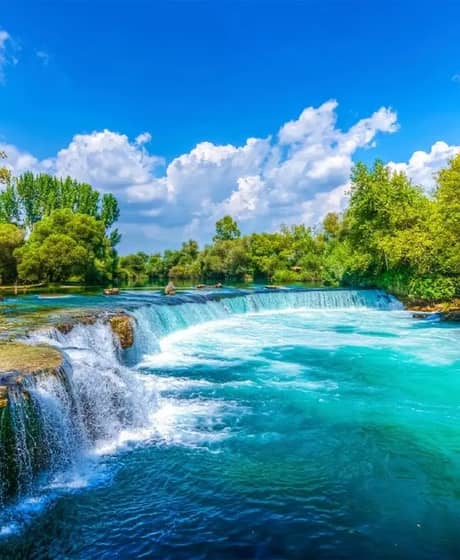
Manavgat Waterfall
Manavgat River
Titreyengöl
Sorgun Forest
Ancient City of Lyrbe, also known as Seleukeia
Oymapınar Dam
Green Canyon
Aspendos Ancient Theatre
Köprülü Canyon
Tazı Canyon
For more ideas, explore Maxtoria’s Best Places to Visit in Side guide and Best Places to Visit in Manavgat.
A Side Ancient City itinerary can be planned as either a half-day or full-day trip, combining the archaeological monuments with sunset and the evening atmosphere of Side Old Town.
Example half-day itinerary:
Monumental Fountain and Great City Gate
Colonnaded Street
Side Ancient Theatre
Side Museum
Old Town and harbour
Sunset at the Temple of Apollo
Example full-day itinerary:
Manavgat Waterfall in the morning
Lunch in central Manavgat
Side Ancient City in the afternoon
Ancient Theatre and Side Museum
Side Old Town and bazaar
Sunset at the Temple of Apollo
Dinner around the harbour
During summer, avoiding the hottest midday hours will make walking through the ancient city much more comfortable.
Visitors planning to explore Side Ancient City should decide in advance how they will get there, how much time they want to spend and which ticketed attractions they want to visit.
Before your trip, check:
Transport from your hotel to Side
Parking or public transport options
Side Archaeological Site and museum opening hours
Current entrance fees
MüzeKart conditions
Night museum programme
Time required for the Ancient Theatre and Side Museum
Sunset time at the Temple of Apollo
Areas temporarily closed for restoration
Return transport arrangements
You can compare sightseeing tours, boat trips, nature experiences and cultural activities around Side on the Side tours and activities page.
Our easy-to-use app offers a comprehensive listing of curated tours, activities, and experiences, all in one place. Whether you’re a thrill-seeker looking for an adrenaline-packed adventure or seeking a more relaxed getaway, Maxtoria has got you covered.





© 2026 Maxtoria Turizm Ticaret A.Ş. — All Rights Reserved
v2.1.2