












City Tour
Antalya Full-Day City Tour with Waterfalls, Boat Trip & Lunch
Free Cancellation Free Shuttle
From £19.68 £17.82 Per Person



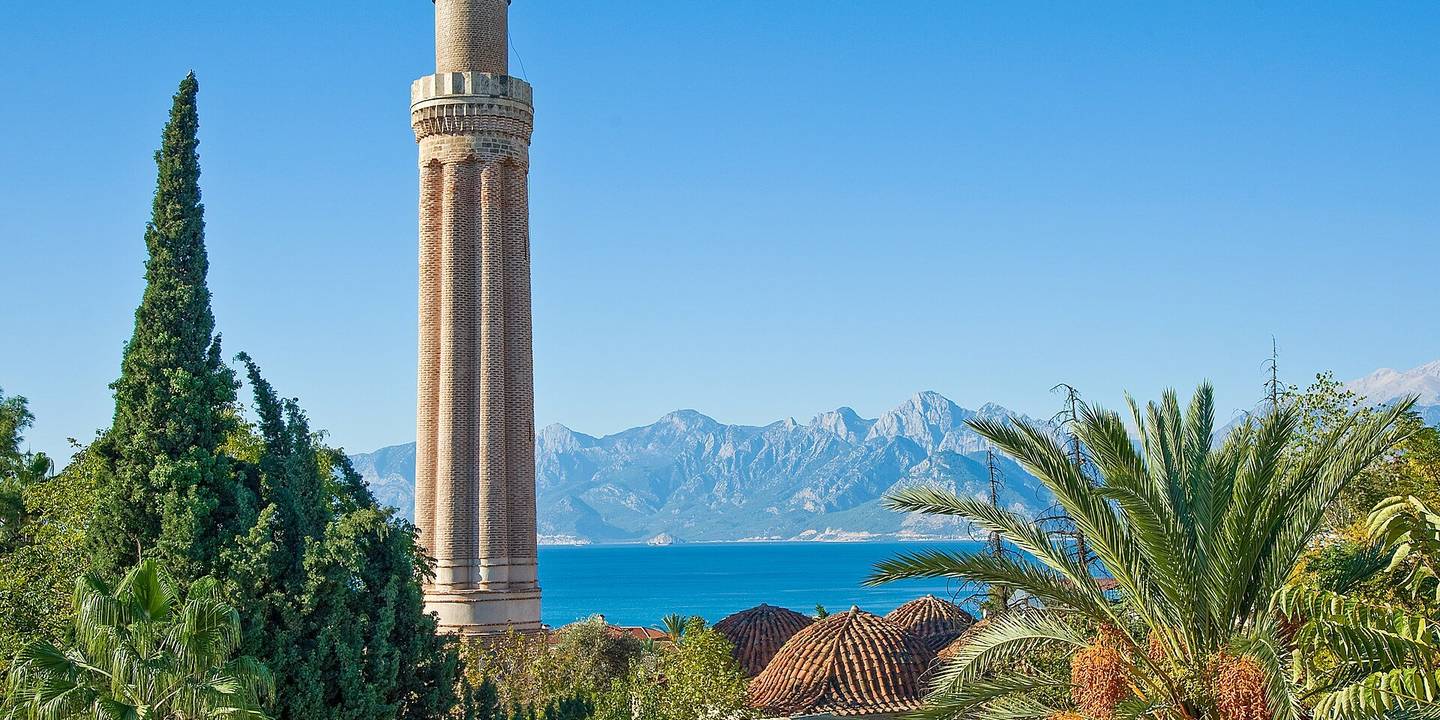
Yivli Minaret Mosque is a historic mosque and Seljuk complex located between Kaleici and Kalekapisi Square in Antalya’s central Muratpasa district. Its famous fluted minaret was constructed during the reign of Anatolian Seljuk Sultan Alaaddin Keykubad I in the early 13th century. Known in English as the Fluted Minaret , the structure is recognised by its eight-grooved red-brick shaft and turquoise and cobalt-blue tile decorations. The minaret, mosque, madrasas, Mevlevi lodge and tombs form one of Antalya’s most important historical complexes. The mosque remains active and can be visited free of charge outside prayer times.
Tours and trips that go here, run by licensed local operators.
Yivli Minaret Mosque is located in Antalya’s central Muratpasa district, just north of Kaleici and close to Kalekapisi and Republic Square. The distinctive minaret can be seen from many points around the historic city centre.
Address:
Selçuk, Korkut Street, 07100 Muratpasa, Antalya, Türkiye
The main transport options are:
On foot: Walk from Republic Square, Antalya Clock Tower or Kalekapisi. All three are only a few minutes from the mosque.
By tram: Use Antalya’s city-centre tram network and leave near İsmetpaşa or Republic Square, depending on the route.
By public bus: Numerous municipal buses stop around Republic Square, Kalekapisi and central Antalya.
By car: Parking and vehicle access are limited around Kaleici. Use a signed car park near Republic Square or the outer walls and continue on foot.
By taxi: Ask to be dropped near Yivli Minaret, Kalekapisi or Republic Square.
By organised tour: Antalya city tours may combine the Yivli Minaret with Hadrian’s Gate, Kaleici, Clock Tower, the Old Harbour and Duden Waterfall.
Approximate distances:
| Starting point | Distance to Yivli Minaret |
|---|---|
| Republic Square | 200–300 m |
| Antalya Clock Tower | 200–400 m |
| Old Harbour | 500–700 m |
| Hadrian’s Gate | 700–900 m |
| Hidirlik Tower | 1–1.5 km |
| Antalya Museum | 3–4 km |
| Antalya Bus Terminal | 8–10 km |
| Antalya Airport | 13–15 km |
The mosque is in central Antalya, so visitors do not need a private vehicle. It can easily be included in a walking route covering Kaleici, Clock Tower, Republic Square and the Old Harbour.
Entrance to Yivli Minaret Mosque is free. No ticket or Museum Pass is required. However, the building remains an active place of worship, so visitors must respect prayer times and mosque etiquette.
| Visitor information | Details |
|---|---|
| Mosque entrance | Free |
| Ticket or Museum Pass | Not required |
| Current function | Active mosque |
| Recommended visit duration | 20–40 minutes |
| Mosque and complex | 1–2 hours |
| Access inside the minaret | Should not be assumed to be open |
| Mevlevi lodge and other sections | May follow separate visiting hours |
The prayer hall may be temporarily closed to sightseeing before prayers, during worship or on important religious days. Daytime hours outside the five daily prayer periods are generally the most appropriate time to visit.
Visitors should:
Remain quiet inside the mosque.
Place mobile phones on silent.
Avoid photographing people while they are praying.
Wear modest clothing covering shoulders and knees.
Remove shoes before entering the prayer hall.
Use a head covering where required.
Avoid flash photography and large equipment.
Never enter the minaret staircase without permission.
The Mevlevi lodge, tombs and exhibition areas within the wider complex may operate separately from the mosque. Access can change because of restoration, maintenance or religious programmes.
The Yivli Minaret was constructed during the reign of Anatolian Seljuk Sultan Alaaddin Keykubad I in the first half of the 13th century. It is considered one of Antalya’s earliest and most important Turkish-Islamic monuments.
The minaret and the prayer hall visible today were not built at exactly the same time. The original Seljuk mosque was damaged or destroyed in the 14th century. The present six-domed prayer hall was reconstructed in 1373 under Mehmet Bey of the Hamidid dynasty. The architect associated with this work is Balaban al-Tawashi.
The principal architectural features include:
A large square stone base
A red-brick shaft
Eight semi-circular vertical flutes
Turquoise and cobalt-blue tile decoration
Surviving Kufic inscriptions and inscription fragments
A single balcony supported by muqarnas decoration
A small northern entrance to the minaret
An internal staircase with approximately 90 steps
A height given as approximately 30–38 metres, depending on the measurement method
A rectangular prayer hall covered by six domes
Twelve supporting columns with reused ancient capitals
Yivli Minaret Mosque is regarded as one of the oldest surviving examples of the multi-domed mosque type in Anatolia. It has been included on Türkiye’s UNESCO World Heritage Tentative List since 2016.


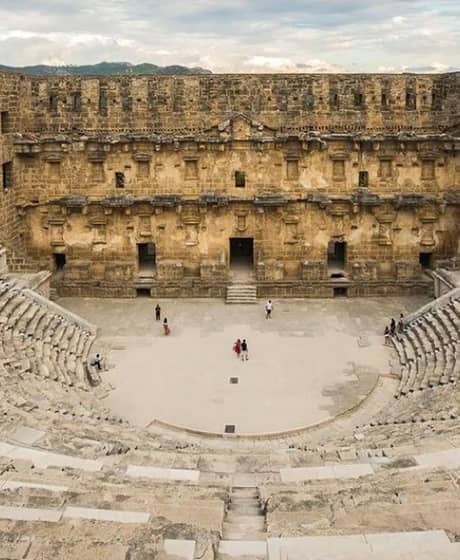

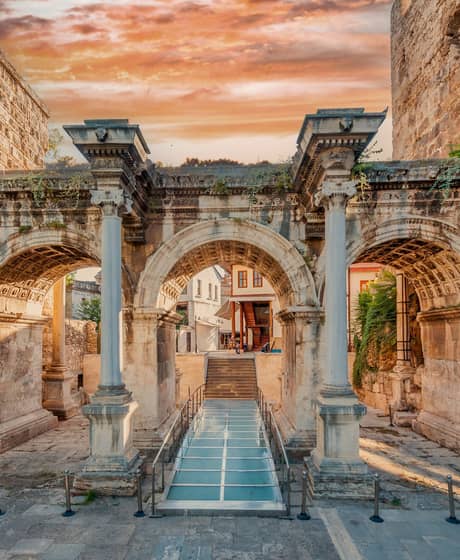



Yivli Minaret Mosque is one of the most important Seljuk monuments in Antalya’s historic city centre. Its red-brick, eight-fluted minaret is among the most recognisable architectural features of the Kaleici skyline.
The attraction is not limited to a single mosque. The minaret, prayer hall, madrasas, Mevlevi lodge, bathhouse and tombs gradually formed the wider Yivli Minaret Complex.
The Yivli Minaret is a historic minaret constructed in Antalya during the Anatolian Seljuk period in the 13th century. Together with the mosque beside it, the minaret forms one of the city’s most important religious and architectural landmarks.
Its shaft consists of eight semi-circular flutes that rise vertically above a massive stone base. The combination of red brick and blue tiles makes the monument visible from several points around central Antalya.
The Turkish word yiv refers to a groove, flute or long vertical ridge on a surface. The structure is called the Yivli Minaret because its shaft is divided into eight fluted sections.
The monument may appear under several names in international sources:
Yivli Minaret
Fluted Minaret
Grooved Minaret
Yivli Minaret Mosque
Alaaddin Mosque
Antalya Grand Mosque
These names can refer to the minaret, mosque or wider complex.
The Yivli Minaret was commissioned during the reign of Anatolian Seljuk Sultan Alaaddin Keykubad I. Its inscription and architectural characteristics date it to the first half of the 13th century.
The name of the original architect or craftsman responsible for the minaret is not known with certainty.
The existing prayer hall is later than the minaret. It was reconstructed in 1373 under Mehmet Bey of the Hamidid dynasty. The name Balaban al-Tawashi appears in connection with this reconstruction or major restoration.
The minaret itself is not originally a beylik-period monument. It was constructed during the Anatolian Seljuk Sultanate under Alaaddin Keykubad I, who ruled from 1220 to 1237.
The prayer hall visible today was rebuilt during the Hamidid dynasty in 1373.
| Part of the monument | Historical period |
|---|---|
| Yivli Minaret | Anatolian Seljuk period |
| Original mosque | 13th-century Seljuk period |
| Present six-domed prayer hall | Hamidid period, 1373 |
| Later restoration work | Ottoman and Republican periods |
No. The Yivli Minaret is not a Roman monument. It is a Turkish-Islamic structure dating from the Anatolian Seljuk period.
However, an earlier building existed on or near the site, and architectural elements from antiquity were reused during later construction. Some of the column capitals inside the mosque are spolia taken from older buildings.
This reuse of ancient material does not make the minaret Roman. It demonstrates how different periods of Antalya’s history overlap within the same location.
The Yivli Minaret was constructed as the tower from which the call to prayer could be made. Its height also made the mosque visible within the city and emphasised Antalya’s new religious and political identity under Seljuk rule.
Its main functions included:
Providing a high point for the call to prayer
Identifying the mosque within the city
Representing Seljuk authority in Antalya
Creating a landmark visible from Kaleici and the harbour
Emphasising the religious centre of the complex
After Antalya came under Seljuk control, new Turkish-Islamic buildings were constructed in the city. The Yivli Minaret, built during the reign of Alaaddin Keykubad I, became one of the most visible symbols of this transformation.
The original mosque beside the minaret was later damaged or destroyed. The current six-domed prayer hall was constructed in 1373 during the Hamidid period.
The complex underwent several restoration campaigns in later centuries. Some sections were temporarily used for museum purposes before being reorganised. Today, the mosque continues to serve its religious function, while the Mevlevi lodge and other parts of the complex are used for cultural visits.
The minaret rises from a large square stone base. The upper part of this base transitions into an octagonal section supporting the eight-fluted red-brick shaft.
Important architectural and decorative elements include:
Square stone base
Octagonal transition section
Eight semi-circular flutes
Red-brick construction
Turquoise and cobalt-blue tiles
Surviving Kufic inscriptions
Decorative blind niches
Muqarnas-supported balcony
Single-balcony design
Conical roof
The combined structural and decorative use of brick reflects architectural traditions that reached Anatolia through Central Asia and Iran during the Seljuk period.
The reported height varies according to the selected measurement points. Some official Turkish sources describe the minaret as approximately 30 metres high, while the UNESCO Tentative List file gives a height of approximately 38 metres, including its base and upper sections.
It is therefore reasonable to describe the Yivli Minaret as approximately 30–38 metres tall.
An internal staircase of approximately 90 steps leads upward from a small entrance on the northern side.
Access to the staircase and balcony is not continuously available to general visitors. Travellers should not enter the minaret without permission from authorised staff.
Yivli Minaret Mosque has a rectangular prayer hall covered by six domes. The roof structure is supported by 12 columns, some of which have reused ancient capitals.
This layout makes the building one of the oldest surviving examples of the multi-domed mosque type in Anatolia. The exterior walls are constructed from cut stone, while the interior demonstrates how earlier architectural pieces were incorporated into later Seljuk and beylik-period construction.
The complex developed gradually and includes:
Yivli Minaret
Yivli Minaret Mosque
Atabey Armagan Madrasa
Ulu Mosque or Imaret Madrasa
Antalya Mevlevi Lodge
Yivli Minaret Bathhouse
Nigar Hatun Tomb
Zincirkiran Mehmet Bey Tomb
These buildings were not constructed at the same time. The complex expanded through the Seljuk, beylik and Ottoman periods.
Yivli Minaret Mosque has been included on Türkiye’s UNESCO World Heritage Tentative List since 2016. It has not yet been inscribed as a confirmed UNESCO World Heritage Site.
A Tentative List contains cultural and natural properties that a country may consider nominating for World Heritage status in the future. Yivli Minaret Mosque was proposed because of its distinctive fluted minaret, Seljuk architecture and early multi-domed prayer hall.
Yes, entrance to Yivli Minaret Mosque is free. No museum ticket or Museum Pass is required.
Because the building remains an active mosque, sightseeing access may be restricted during prayers. The Mevlevi lodge, exhibitions and other sections of the complex may follow separate opening arrangements.
The best time to visit is during daylight hours outside the five daily prayer periods. The mosque may become particularly busy around Friday midday prayers, religious festivals and special programmes.
Individual sections of the complex may follow their own schedules. Restoration, maintenance and religious events can also affect access, so visitors should check conditions on arrival.
The minaret remains visible from public areas around Kaleici and Republic Square after dark. When illuminated, its red-brick shaft creates a distinctive feature in Antalya’s evening skyline.
Access to the prayer hall at night depends on worship arrangements and authorised staff. The exterior can still be viewed from the surrounding public streets and squares.
Useful photography locations include:
Republic Square
Kalekapisi
Antalya Clock Tower
Upper Kaleici streets
Steps descending towards the Old Harbour
Tophane Park and nearby viewpoints
Early morning usually offers softer light and fewer people. Around sunset, the minaret can be photographed above the rooftops of Kaleici with the Mediterranean landscape in the background.
Drone use may require permission because of local flight restrictions and the protected historic setting.
The monument is within walking distance of several central Antalya attractions:
Republic Square
Antalya Clock Tower
Kaleici
Old Harbour
Hadrian’s Gate
Broken Minaret
Hidirlik Tower
Karaalioglu Park
Mermerli Beach
Tophane Park
Yivli Minaret, Clock Tower and Republic Square are particularly close and can be included in the same short walking itinerary.
Yivli Minaret can be visited independently or as part of an organised Antalya city tour. Guided programmes may combine the mosque with Hadrian’s Gate, Kaleici, the Old Harbour, Duden Waterfall and a coastal boat trip.
Compare Antalya tours and activities, explore the best places to visit in Antalya, or review the Antalya city tour with waterfalls, Old Town and a boat trip.
Our easy-to-use app offers a comprehensive listing of curated tours, activities, and experiences, all in one place. Whether you’re a thrill-seeker looking for an adrenaline-packed adventure or seeking a more relaxed getaway, Maxtoria has got you covered.





© 2026 Maxtoria Turizm Ticaret A.Ş. — All Rights Reserved
v2.1.2