



 Best Price
Demre Myra & Kekova
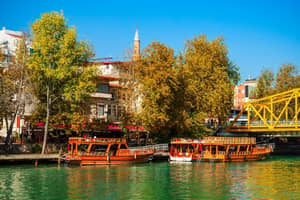
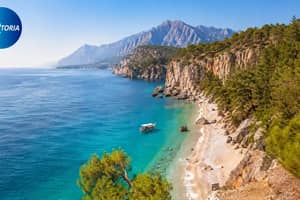
Demre Myra Kekova Boat Tour with Lunch and Transfer
Free Cancellation Free Shuttle
From £57.53 £51.09 Per Person



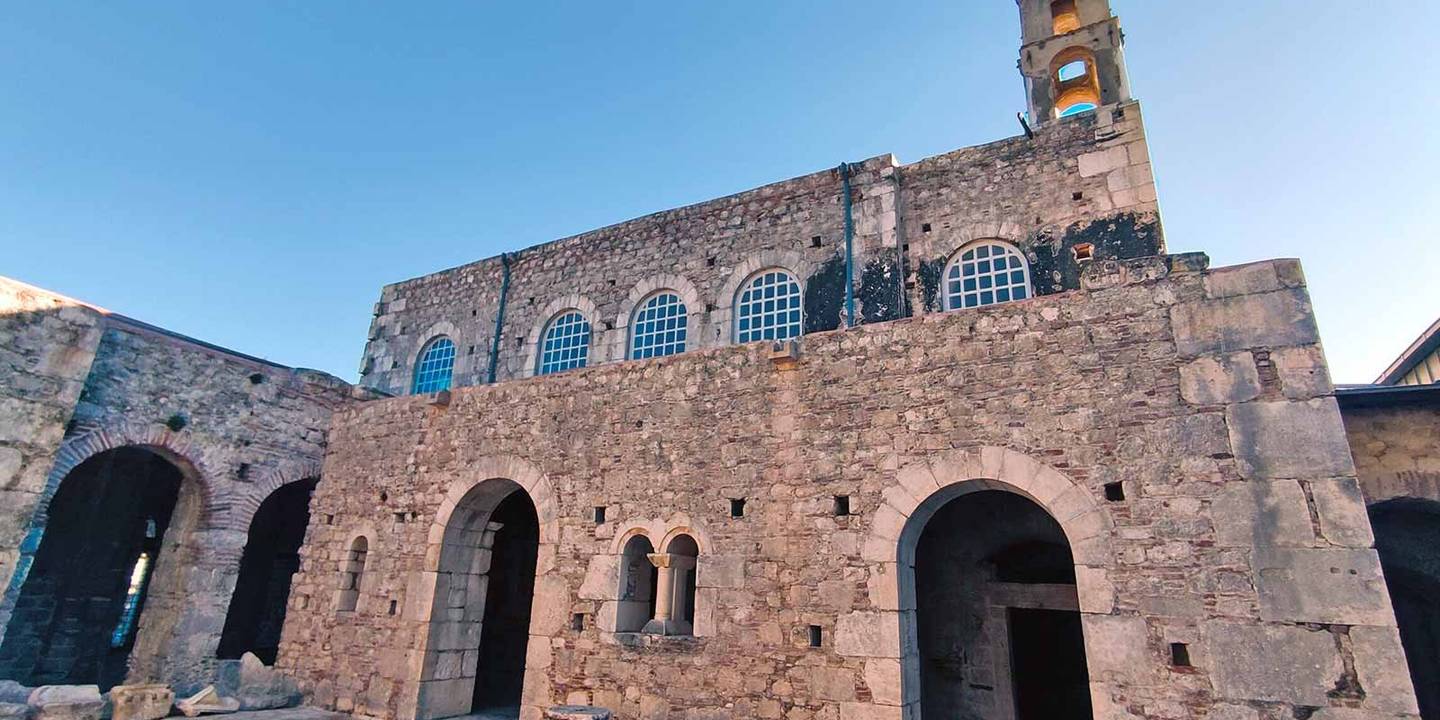
St. Nicholas Church is an important Byzantine landmark in the Demre district of Antalya and is also widely known as Santa Claus Church. Developed around the site traditionally associated with the tomb of St. Nicholas, the bishop of ancient Myra, the church is one of Demre’s most visited cultural attractions, with its frescoes, mosaics, stonework and historic sarcophagus. The building is now open to visitors as the St. Nicholas Memorial Museum and is located in central Demre. A visit to the church can easily be combined with Myra Ancient City, Andriake, Kekova and Kaleköy as part of the same Demre itinerary.
Tours and trips that go here, run by licensed local operators.
St. Nicholas Church is located on Müze Street in the Gökyazı neighbourhood of Demre, Antalya. Also known as Santa Claus Church and the St. Nicholas Memorial Museum, the building is within walking distance of Demre town centre.
The main transport options are:
By car: From Antalya, follow the route through Kemer, Kumluca, Finike and Demre. The journey between Antalya city centre and Demre generally takes approximately 2.5–3 hours, depending on traffic and stops.
By public transport: Buses and minibuses travelling from Antalya Bus Station towards Demre can be used. From central Demre, the church can be reached on foot or by a short taxi journey.
By taxi: Direct journeys are available from accommodation around Kaş, Finike and Demre.
By organised tour: Many Demre, Myra and Kekova tours departing from Antalya include St. Nicholas Church in their itinerary.
On foot: Visitors staying in central Demre can walk to the church from many parts of the town.
Approximate distances:
| Starting point | Distance to St. Nicholas Church |
|---|---|
| Demre town centre | 0–1 km |
| Myra Ancient City | 2–3 km |
| Andriake Ancient City | 4–6 km |
| Finike | 25–30 km |
| Kaş | 45–50 km |
| Antalya city centre | 145–150 km |
| Antalya Airport | 150–160 km |
When using a navigation application, search for St. Nicholas Church, Santa Claus Church, Church of Saint Nicholas or St. Nicholas Memorial Museum. Churches dedicated to the same saint can be found in different Turkish cities, so confirm that the result points to Demre, Antalya.
St. Nicholas Church is visited as a memorial museum administered by the Turkish Ministry of Culture and Tourism. The entrance fee is listed as €17 in the official admission tariff. Prices and visitor arrangements can change, so checking the official museum page before travelling is recommended.
| Visitor information | Current arrangement |
|---|---|
| Opening time | 08:30 |
| Closing time | 20:00 |
| Last ticket | 19:30 |
| Open days | Every day |
| Entrance fee | €17 |
| Museum Pass | Valid for citizens of the Republic of Türkiye |
| Audio guide | Available |
| Parking | May be charged depending on the facility used |
| Guides and tours | May be charged separately |
The free admission provided by a Museum Pass is personal to the cardholder. Card type, validity period and free-entry conditions may change, so the current rules should be checked on the date of the visit.
Ticket procedures and entrance queues can take longer during the busy summer season. Arriving earlier and allowing at least 1–1.5 hours for the visit is more comfortable than entering shortly before closing.
St. Nicholas is believed to have been born in Patara during the second half of the 3rd century AD and later became the bishop of Myra. Stories of his generosity and his protection of children and sailors eventually contributed to the development of the modern Santa Claus tradition.
After the death of St. Nicholas, a memorial was created around his reputed burial place in Myra. A church and a larger religious complex subsequently developed on the site. The surviving building was not completed on a single date; it contains evidence of construction, restoration and expansion during the Early and Middle Byzantine periods.
Notable parts of the church include:
A Roman-period sarcophagus traditionally associated with St. Nicholas
Religious frescoes on walls and vaulted surfaces
Floor mosaics with geometric and botanical patterns
A basilica layout containing naves, apses and side chambers
Stone columns, arches and reused architectural elements
Chapels and burial spaces added during different periods
Architectural layers revealing the building’s restoration history
The sarcophagus inside the church is traditionally associated with the original tomb of St. Nicholas. However, a large proportion of the saint’s remains was taken to Italy in 1087 by sailors and merchants from Bari. The principal relics are now believed to be held in the Basilica of Saint Nicholas in Bari. Some bone fragments thought to belong to St. Nicholas are displayed at Antalya Museum.
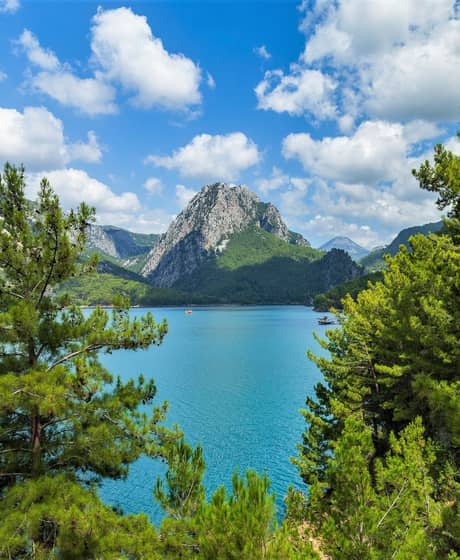
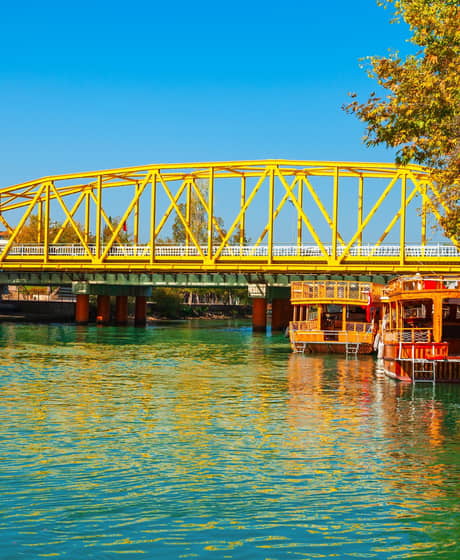
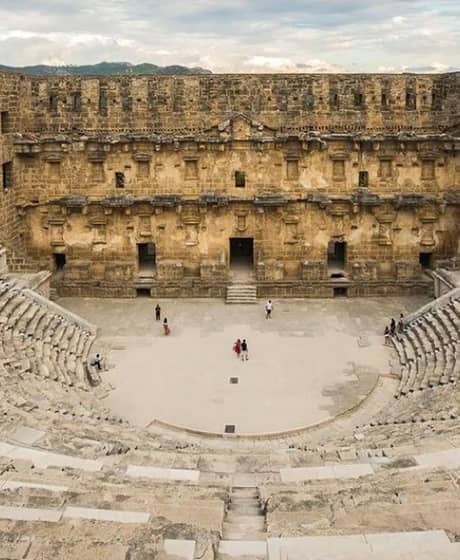
St. Nicholas Church is an important cultural landmark that connects Demre’s ancient Myra heritage with the history of Christianity and the Santa Claus tradition. The building is significant not only because of its association with the tomb of St. Nicholas but also because of its Byzantine architecture, wall paintings, floor mosaics and the changes it underwent over many centuries.
Today, the church operates primarily as a memorial museum and archaeological visitor site rather than a regularly functioning neighbourhood church. A guided visit or audio guide can provide more context for visitors who want to examine its different architectural sections in detail.
St. Nicholas Church is a historic Byzantine church associated with the burial place of St. Nicholas, the bishop of ancient Myra. The building is now open to visitors as the St. Nicholas Memorial Museum.
The church complex contains sections constructed during different periods. Its principal elements include a basilica layout, side naves, apses, chapels, burial chambers, frescoes and mosaic floors.
As the fame of St. Nicholas spread to different countries, the church also became an important destination for international visitors and Christian pilgrims. The building is included on Türkiye’s UNESCO World Heritage Tentative List.
Yes. Santa Claus Church, St. Nicholas Church, the Church of Saint Nicholas and the St. Nicholas Memorial Museum all refer to the same historic building.
The attraction may appear under the following names:
St. Nicholas Church
Santa Claus Church
Demre Santa Claus Church
Church of Saint Nicholas
Saint Nicholas Church
St. Nicholas Memorial Museum
St. Nicholas Monument Museum
The name “Santa Claus Church” is commonly used in tourism searches. From a historical and religious perspective, St. Nicholas Church is the building’s principal name.
Providing a single construction year for St. Nicholas Church can be misleading. After the death of St. Nicholas, a memorial tomb was created at what was believed to be his burial place. A church and a larger basilica complex subsequently developed around it.
The building was repaired and expanded over the centuries because of earthquakes, raids, natural conditions and changing needs. The surviving architecture includes elements from the Early Byzantine, Middle Byzantine and later restoration periods.
The church should therefore be understood as a complex containing several historical phases rather than a building constructed during a single project.
St. Nicholas was a Christian bishop who is believed to have been born in Patara, in the Lycian region, during the second half of the 3rd century AD. He later became the bishop of Myra.
Stories about St. Nicholas commonly emphasise:
His secret assistance to people in need
His protection of children
His role as the patron saint of sailors and travellers
His support for poor families
Miracles attributed to him
His use of personal wealth for charitable purposes
These stories spread across different parts of Europe over the centuries and contributed to the association between the historical St. Nicholas and the traditions of Father Christmas and Santa Claus.
St. Nicholas, the historical figure regarded as the origin of Santa Claus, lived in the Lycian region within the boundaries of modern Antalya Province. He is believed to have been born in Patara and to have served as bishop in Myra.
Patara is now located within the Kaş district, while ancient Myra is in Demre. A significant part of the life of St. Nicholas is therefore directly connected with the geography of present-day Antalya.
The familiar image of Santa Claus in a red suit developed much later. The historical St. Nicholas and the modern visual representation of Santa Claus belong to very different periods.
No confirmed residence in which St. Nicholas lived has survived. St. Nicholas Church in Demre was not his house; it is a religious structure associated with his tomb and memory.
St. Nicholas is believed to have been born in Patara and to have lived in Myra during the later part of his life while serving as bishop. However, no original residence in Patara or Myra has been conclusively identified as “Santa Claus’s house.”
Although the church in Demre is sometimes presented as the home of Santa Claus in tourism narratives, the historically more accurate description is the church and burial site of St. Nicholas.
The original tomb of St. Nicholas is believed to have been located inside St. Nicholas Church in Demre. An ornamented Roman-period sarcophagus within the church is traditionally associated with the saint.
However, a large proportion of his remains was transported to Bari, Italy, during the Middle Ages. The sarcophagus in Demre is therefore regarded as a historical symbol of the saint’s original burial place.
Visitors can see the sarcophagus in the burial section of the church. Protection barriers must be respected, and the sarcophagus should not be touched.
Most of the bones believed to belong to St. Nicholas were taken from Demre to Bari, Italy, in 1087. These remains are now preserved in the Basilica of Saint Nicholas in Bari.
Some bone fragments thought to belong to St. Nicholas are displayed at Antalya Museum. Relics associated with the saint are also held in different countries, and historical and scientific discussions about the identity and distribution of all the fragments continue.
It is therefore inaccurate to state either that all the remains of St. Nicholas are in Bari or that they are all still in Demre.
St. Nicholas Church is a multi-section Byzantine complex expanded during different historical periods. Its principal space follows a basilica arrangement, with a central section flanked by side naves.
Its architectural features include:
Central and side naves
A main apse and side apses
Vaulted passages
Chapels
Burial chambers
Stone columns and capitals
Arched openings
Reused stone elements
Walls decorated with frescoes
Mosaic floors
Alluvial deposits accumulated around Demre over time, causing the building to remain below the level of the surrounding roads. Visitors therefore enter parts of the complex using stairs or sloping passages.
The church’s frescoes depict scenes from the Bible, saints, religious figures and symbolic compositions. Not all the wall paintings belong to the same period; different layers represent separate phases of restoration and use.
The mosaic floors feature geometric forms, interlacing patterns, botanical motifs and arrangements of coloured stones. Wear visible on some surfaces reflects the building’s long history of use and exposure to natural conditions.
Frescoes are sensitive to light, moisture and physical contact. Visitors must respect the protective barriers, avoid touching the surfaces and follow the current regulations regarding flash photography.
The entrance fee for the St. Nicholas Memorial Museum is listed as €17 in the official admission tariff. The amount collected in Turkish lira may vary according to the applicable exchange rate and ticketing arrangements.
The following services may be charged separately:
Audio guides
Professional guiding
Private tour services
Transport
Parking
Food and drinks
Entrance tickets to Myra and other archaeological sites
A ticket for St. Nicholas Church may not automatically include entrance to Myra Ancient City or other attractions around Demre. When booking a tour, check which entrance fees are included in the programme.
Yes. The Museum Pass can be used at the St. Nicholas Memorial Museum by citizens of the Republic of Türkiye who meet the applicable card conditions.
The card must belong to the visitor, remain within its validity period and be used according to the current rules. Ticket and pass options for international visitors may differ.
Conditions for students, teachers, children, visitors with disabilities, members of the press and other free-entry categories can change. Check the official museum rules for situations requiring identification or supporting documents.
The St. Nicholas Memorial Museum is currently open every day from 08:30 to 20:00. The last ticket is issued at 19:30.
Opening hours may change because of seasonal arrangements, public holidays, maintenance work or special events. If a visit is being planned for a future date, the official museum page should be checked before travelling.
Visitors who want to examine the church in detail should enter at least 1–1.5 hours before closing.
St. Nicholas Church now operates mainly as a memorial museum rather than as an active neighbourhood church holding regular services. On ordinary days, visitors explore the building according to the arrangements for the museum and archaeological site.
Religious ceremonies may be organised around 6 December, the feast day of St. Nicholas, or on other dates for which special permission has been granted. Event dates, participation conditions and their effects on ordinary museum visits can change each year.
Visitors wishing to attend a special service should follow current announcements from the relevant public authorities and religious institutions.
A standard visit to St. Nicholas Church takes approximately 45–60 minutes. Visitors who want to examine the frescoes, mosaics, architectural sections and sarcophagus in more detail may spend 1–1.5 hours.
The duration of a guided group visit depends on the scope of the commentary. If Myra, Andriake and Kekova are also included on the same day, a full-day programme is more suitable for the Demre area.
Factors that may affect the visiting time include:
Ticket queues
Summer-season crowds
Guided commentary
Photography stops
Group size
Special ceremonies or events
Temporary arrangements inside the museum
St. Nicholas Church can be visited with children. Its history, archaeology and Santa Claus stories may help maintain their interest. However, visitors should remember that the building is an archaeological site.
Families should pay attention to the following points:
Children should not touch historical surfaces.
Protective barriers must not be crossed.
Care is required around low walls and changes in floor level.
Children should be supervised on stairs.
Water and sun protection should be carried in summer.
Ask the staff at the entrance about routes suitable for pushchairs.
Some parts of the building may contain uneven floors and narrow passages.
Personal photography may be permitted in designated areas. Different rules can apply to flash photography, tripods, professional equipment, video recording and commercial shoots.
During the visit:
Check the current photography rules at the entrance.
Do not use flash.
Do not touch the frescoes or sarcophagus.
Do not cross protective barriers.
Do not obstruct passageways with tripods or equipment.
Respect the privacy of participants during religious ceremonies.
Drone use is subject to museum rules as well as local aviation and heritage-protection regulations. A drone should not be operated without prior permission.
St. Nicholas Church can be visited throughout the year. The best period depends on the weather and the other stops included in the Demre itinerary.
Spring: Mild weather and comfortable conditions for visiting nearby ancient sites
Summer: Long days and the peak season for boat tours, although midday can be hot
Autumn: More comfortable walking conditions and fewer visitors
Winter: A quieter visit, although rain and transport conditions should be checked
Morning: A calmer museum experience before the main tour groups arrive
Afternoon: Suitable for combining the church with Myra or a Kekova itinerary
Special ceremonies and larger visitor numbers may occur around the St. Nicholas commemoration period on 6 December.
The principal attractions around Demre include:
Myra Ancient City
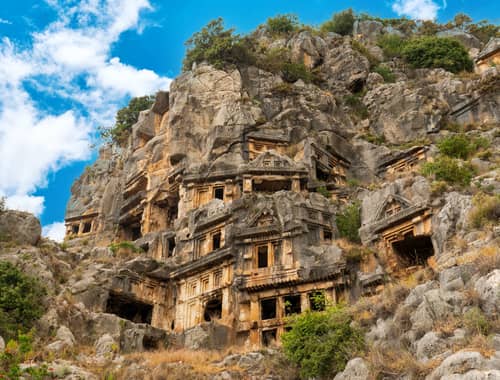
Lycian rock tombs at Myra
Myra Ancient Theatre
Andriake Ancient City
Museum of Lycian Civilisations
Çayağzı Harbour
Kekova
Kaleköy and Simena
The Sunken City area
Üçağız
Demre Bird Sanctuary
Taşdibi Beach
Sülüklü Beach
St. Nicholas Church and Myra are located relatively close to each other. If a Kekova boat trip is also added to the programme, an early-starting full-day itinerary is recommended.
St. Nicholas was the bishop of ancient Myra. The area containing the church formed part of the historic Myra settlement and its religious centre during the early Christian period.
Today, the rock tombs and theatre of Myra Ancient City and St. Nicholas Church are managed as separate visitor attractions. The distance between them is approximately 2–3 kilometres.
Visiting both sites on the same day helps travellers understand Myra’s Roman urban structure and its later importance during the Byzantine and Christian periods. However, the two sites may have separate entrance tickets and opening hours.
Yes. A day trip from Antalya to Demre is possible. However, as the distance between Antalya city centre and Demre is approximately 145–150 kilometres, an early departure is necessary.
A sample one-day itinerary can be arranged as follows:
Morning departure from Antalya
Visit to St. Nicholas Church
Myra Ancient City
Lunch
Kekova boat trip from Çayağzı or Üçağız
Views of Kaleköy and the Sunken City
Evening return to Antalya
Visitors travelling by car should allow extra time for bends along the coastal road and peak-season traffic. Organised tours can simplify transport, guiding and itinerary planning.
Check the following information before visiting the church:
Current entrance fee
Opening and closing times
Museum Pass validity
Last ticket time
Guide or audio-guide options
Opening hours for Myra and other archaeological sites
Departure time for a Kekova boat trip
Weather and sea conditions
Entrance tickets included in the tour price
Return time
Half a day may be sufficient when travelling to Demre only for the church. A full day is more suitable when Myra and Kekova are also included.
For an Antalya departure, explore the Antalya Demre Myra Kekova Boat Trip Economic. Check the tour page to see whether transport, the boat trip, lunch, guiding and entrance fees are included in the programme.
For more options around the region, explore Maxtoria’s guide to the best places to visit in Antalya or compare Antalya tours and activities.
Our easy-to-use app offers a comprehensive listing of curated tours, activities, and experiences, all in one place. Whether you’re a thrill-seeker looking for an adrenaline-packed adventure or seeking a more relaxed getaway, Maxtoria has got you covered.




© 2026 Maxtoria Turizm Ticaret A.Ş. — All Rights Reserved
v2.1.2