





- Places to SeeThings to DoDownload the App


About Selge Ancient City
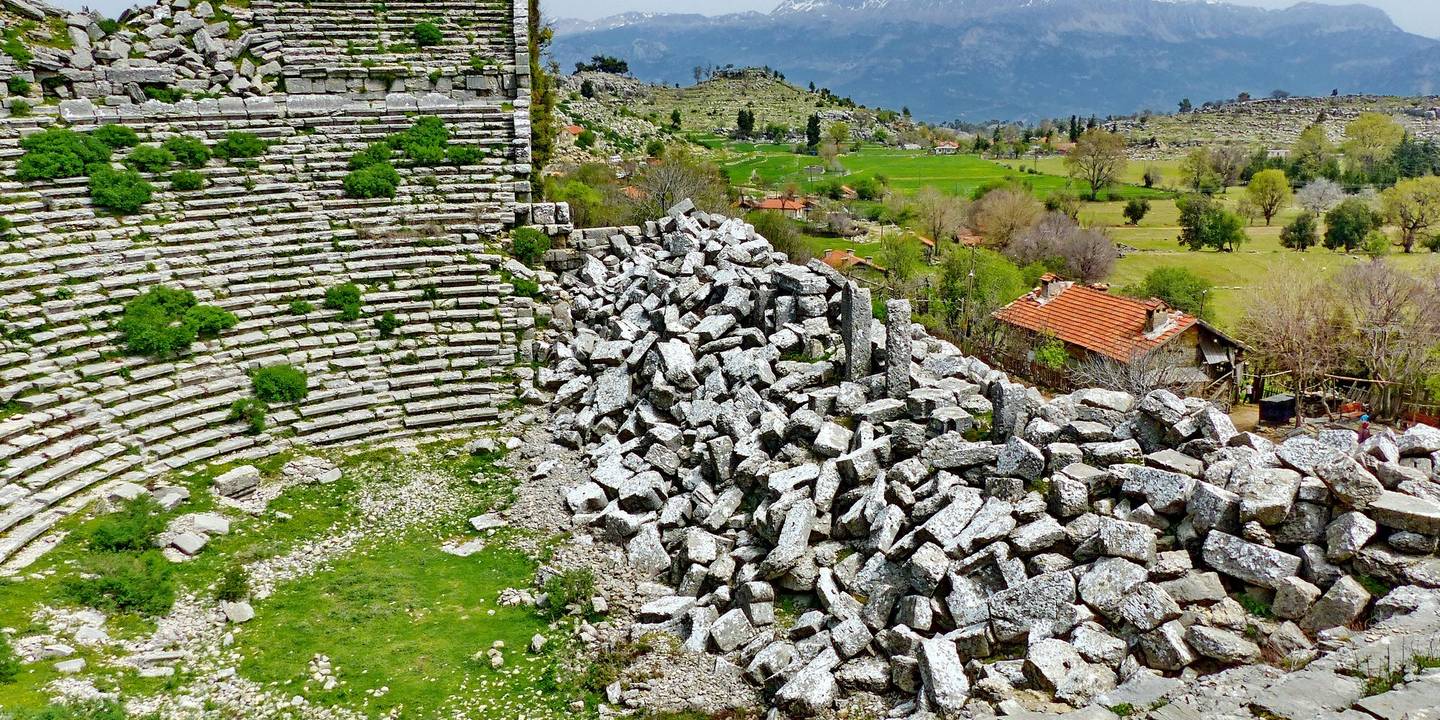
Selge Ancient City is a historic Pisidian mountain settlement in Altınkaya, within Köprülü Canyon National Park in the Manavgat district of Antalya. Standing approximately 950 metres above sea level, it is known for its rock-cut ancient theatre, fortification walls, agoras, stadium and gymnasium remains, temples, cisterns and views across the Taurus Mountains. The ruins of Selge are interwoven with the living village of Altınkaya. The road climbs for approximately 13 kilometres after Oluk Bridge, and the winding mountain drive, views across Köprülü Canyon and the natural formations known as Adam Kayalar are all important parts of the journey. No current official tariff confirms a standard ticket office or organised visitor service at Selge. Older and recent visitor sources describe the ruins as free to explore, but entrance, road and access conditions may change. Visit during daylight, check the weather and road conditions, and never climb on the archaeological remains.
No trips to this one just yet
Have a look at everything else you can book in Side.
All activities in SideWhere Is Selge Ancient City and How Do You Get There?
Selge Ancient City is in Altınkaya, a mountain neighbourhood within Köprülü Canyon National Park in the Manavgat district of Antalya. Turn north at the Taşağıl junction on the Antalya–Manavgat road, follow the Köprüçay River towards Beşkonak and Oluk Bridge, then continue uphill to Altınkaya.
Official sources describe the paved route from the Taşağıl junction to Selge as approximately 55 kilometres. The final section from Oluk Bridge to the ancient city is around 13 kilometres. This is a narrow, winding mountain road where passing oncoming vehicles may require patience and careful driving.
The principal transport options are:
- By car: Follow the Taşağıl–Beşkonak–Oluk Bridge–Altınkaya route. Check the vehicle, tyres and fuel level before setting out.
- By taxi or private transfer: A vehicle can be arranged from Side, Manavgat or nearby hotels. Confirm waiting time, the return journey and the total fare in advance.
- By tour: Selge may be included in selected tours focused on Tazı Canyon or Köprülü Canyon. Ask how much time is allowed at Selge and whether the itinerary genuinely reaches the ancient city.
- By public transport: Do not assume that a frequent visitor-friendly service runs all the way to Altınkaya. Verify the current local route and return option on the day of travel.
Search for “Selge Ancient City, Altınkaya, Manavgat” in navigation apps. Do not confuse the archaeological site with Selge Beach Resort or similarly named places elsewhere.
The History and Main Ruins of Selge Ancient City
Selge emerges clearly in written history as an important mountain city of Pisidia in the 5th century BC, although its foundation traditions reach further back. The ancient geographer Strabo connected the settlement with Dorian migrations after the Trojan War. Over time, Selge experienced Lydian, Persian, Macedonian and Roman rule and enjoyed one of its most prosperous periods under Rome.
Despite its mountain setting, fertile land allowed the city to produce olive oil, wine, medicinal and aromatic plants and timber. Selge’s economic strength is also reflected in its coinage and in the historic road network that linked it to the coastal cities.
The principal remains include:
- The ancient theatre built against the rocky slope and restored during the Roman period
- Fortification walls and acropolis areas
- Remains of the stadium and gymnasium
- Agoras and traces of a colonnaded street
- Baths, cisterns and basilica remains
- Sacred areas associated with Zeus and Artemis
- A fountain, necropolis and funerary structures
Because the ruins extend through modern Altınkaya, Selge differs from a managed archaeological park entered through a single gate. Respect village life, private property and protected archaeological areas.
Selge Ancient City Entrance Fee and Opening Hours
No standard ticket price or ticket-office schedule for Selge appears in the current official museum tariff. Visitor sources report that the ancient city can be explored free of charge and that there is no regular ticket office. However, “open 24 hours” should not be treated as an official visitor schedule.
| Visitor information | Current situation |
|---|---|
| Entry to the ruins | No standard ticket system is evident |
| Entrance fee | Reported as free by visitor sources; confirm current conditions |
| Museum Pass | Usually not required because there is no standard ticket office |
| Opening hours | No fixed official schedule published |
| Guided visit | Can be arranged separately through a private guide or tour |
| Parking | An organised official car park should not be assumed |
The mountain road, limited lighting, uneven terrain and lack of regular visitor services make daylight visits the sensible option. Rain, fog or ice may affect winter access, while heat and wildfire restrictions can affect summer travel. Check road conditions and official notices before departure.
More to see around Side
Selge Ancient City Travel and Visitor Guide
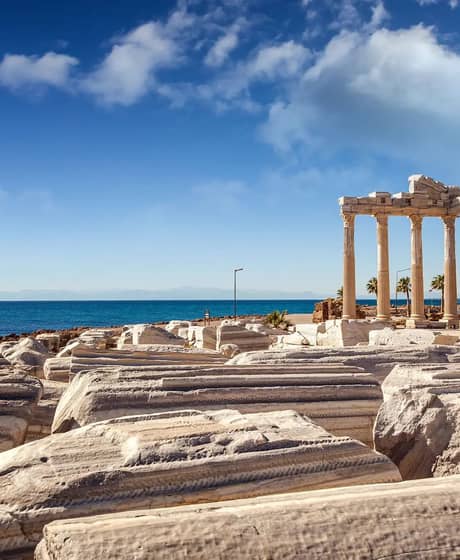
Selge Ancient City is a remote mountain settlement on the southern slopes of the Taurus Mountains, combining archaeology, village life and the dramatic landscape of Köprülü Canyon in one route. Unlike large, managed coastal sites, the ruins here spread among the houses, roads and fields of Altınkaya.
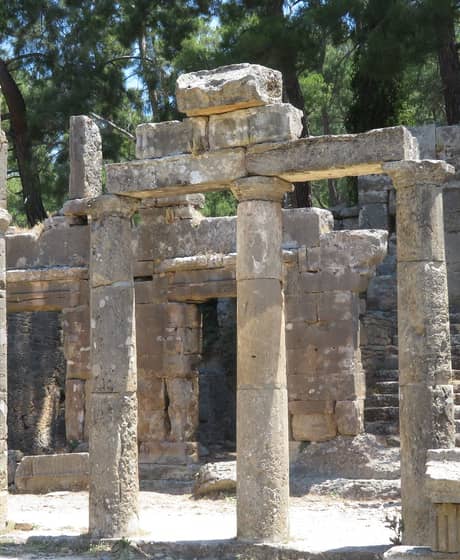
The ancient theatre is Selge’s most prominent surviving monument, but the city consisted of much more than a theatre. Traces of agoras, a stadium, gymnasium, temples, cisterns, basilicas and necropolises reveal a much broader urban landscape. Adam Kayalar, Oluk Bridge and Köprülü Canyon are separate natural and historical stops that complete the wider Selge route.
What Is Selge Ancient City?
Selge is a historic city that developed in the mountainous part of ancient Pisidia and was later associated with the borders of Pamphylia. Its protected location in the Taurus Mountains, productive agricultural land and roads leading towards the coast helped it remain powerful for a long period.
Today, the archaeological remains are interwoven with the modern settlement of Altınkaya. Selge refers to the ancient city, while Altınkaya is the present-day neighbourhood occupying the same landscape.
Where Is Selge Ancient City?
Selge Ancient City is in Altınkaya, within the Manavgat district of Antalya and the boundaries of Köprülü Canyon National Park. It stands on the southern slopes of the Taurus Mountains at an elevation of approximately 950 metres above sea level.
Selge is not in central Antalya or on the Manavgat coast. It is reached by entering the Köprüçay valley through Taşağıl and Beşkonak, crossing Oluk Bridge and following a winding mountain road towards Altınkaya.
Which District Is Selge in?
The modern location of Selge lies within Altınkaya, a neighbourhood administratively attached to the Manavgat district. The province is Antalya, the district is Manavgat and the neighbourhood is Altınkaya.
Travel descriptions may refer to Selge on tours departing from Side, Belek or Antalya. Those names indicate the tour’s departure area, not the administrative location of the ancient city.
Are Altınkaya and Zerk the Same Place?
Yes. Altınkaya was historically known as Zerk, and official sources may use the form “Altınkaya (Zerk).” Because the ruins of Selge are woven into the modern settlement, older travel writing may also refer to “Zerk village.”
Use the current official name Altınkaya in navigation apps. Searching for Zerk alone may produce incomplete or unrelated results.
What Is the Elevation of Selge Ancient City?
Selge Ancient City was established at an elevation of approximately 950 metres above sea level. Its high position provides broad views over the Taurus Mountains, Köprülü Canyon and the surrounding forests.
Although the elevation may bring cooler air than the coast, the summer sun and exposed terrain should not be underestimated. In winter, fog, rain and ice associated with the mountain setting can make road conditions more difficult.
Why Was Selge’s Location Important?
Selge’s mountainous and defensible location offered advantages for protection, agriculture and regional trade. Natural barriers along the slopes of the Taurus Mountains helped protect the city, while productive land supported its economy.
Roman roads linked Selge to the coastal cities of Pamphylia by crossing the Köprüçay valley at structures such as Oluk Bridge and Büğrüm Bridge. The mountain city was therefore not completely isolated but connected inland and coastal routes.
The History of Selge Ancient City
Selge’s foundation tradition is sometimes taken back to the end of the 2nd millennium BC, but the city becomes clearly visible in the historical record in the 5th century BC. Strabo associated its origin with Dorian groups arriving after the Trojan War. The Türkiye Cultural Portal also records the tradition that the city was founded by Kalehes.
Selge passed through Lydian, Persian, Macedonian and Roman rule. Its population and public architecture expanded during the Roman period, when the city achieved considerable regional strength. The settlement continued as a Christian centre in the Byzantine era and later came under Turkish control during the Middle Ages.
It would be misleading to present a single exact foundation year or one founder story as established fact. Ancient literary traditions and archaeological evidence should be considered together.
What Was Selge’s Economy Based On?
Selge’s economy depended on agricultural and forest products from the fertile mountain landscape around the city. Olive oil, wine, medicinal and aromatic plants and timber are listed among its important products.
The city achieved sufficient economic and political power to issue its own coins. Historic roads leading towards the coast helped products circulate despite Selge’s remote mountain position.
What Is the Ancient Theatre of Selge Like?
The Ancient Theatre of Selge is the city’s most prominent and best-preserved surviving structure. Its seating section rests against a rocky slope and is divided into two principal zones by a broad diazoma, while steep stairways provide access between the seating blocks.
Although the theatre’s earliest building phases may be older, official sources state that it was restored in the 3rd century AD. Much of the stage building has disappeared, while the seating area remains more visible. Different sources estimate a capacity of approximately 9,000 to 10,000 spectators; this should be treated as a range rather than an exact figure.
What Can You See at Selge?
The principal remains at Selge include:
- The ancient theatre and surrounding public area
- Acropolis and fortification traces
- Remains of the stadium and gymnasium
- Agora areas
- Traces of a colonnaded street
- Bath and basilica remains
- Cisterns and water structures
- Monuments and temple remains associated with Zeus and Artemis
- A fountain, necropolis and funerary structures
Not every ruin is signposted, excavated or immediately recognisable. Without a guide, the function of individual structures may be misinterpreted. Do not enter private property or cultivated land.
What Are the Adam Kayalar Near Selge?
Adam Kayalar are natural conglomerate rock formations in the mountainous area around Selge; they are not statues carved in antiquity. Karstic erosion acting on conglomerate masses made of compacted pebbles has created unusual shapes that can resemble standing human figures.
The formations are also known locally by names such as Şeytan Kayalar, the “Fairy Chimneys of the Taurus Mountains” and “Avatar Land.” Different groups can be seen along the road to Selge and across the broader area between Altınkaya and Ballıbucak.
Writing on the rocks, using spray paint, breaking off pieces or climbing on fragile surfaces damages this natural heritage. When stopping for photographs, pay close attention to traffic and cliff-edge safety.
Are Adam Kayalar and Selge Ancient City the Same Place?
No. Selge is an archaeological city, while Adam Kayalar are natural geological formations in the same wider landscape. Their proximity means they may be presented as a single stop in tours and social media posts.
Selge’s theatre and urban remains lie around Altınkaya. Adam Kayalar refers to groups of formations spread along the road and across a broader mountain area. Both can be seen on the same route, but they are not the same type of heritage site.
How Do You Get to Selge Ancient City?
The usual route to Selge turns from the Antalya–Manavgat road at Taşağıl towards Beşkonak and Köprülü Canyon. Follow the Köprüçay River, cross Oluk Bridge and continue for approximately 13 kilometres on the mountain road by following signs to Altınkaya.
The road is paved, but its final section contains sharp bends, narrow passages and points with restricted visibility. Coaches and oncoming traffic can slow progress. Night driving, heavy rain, fog or icy conditions make the route more demanding.
What Should You Know About Driving Directions to Selge?
When using navigation, select “Selge Ancient City, Altınkaya, Manavgat” rather than searching only for Selge. Downloading an offline map and saving the return route before departure may be helpful.
Complete these checks before the journey:
- Check the fuel level and tyre condition.
- Confirm the weather and road situation on the same day.
- Do not follow unpaved forest tracks presented as shortcuts.
- Reduce speed when passing oncoming vehicles.
- Do not stop in unsafe places for roadside photographs.
- Try to complete the return drive before dark.
How Far Is Selge Ancient City from Manavgat?
The driving distance between central Manavgat and Selge is approximately 65–75 kilometres, depending on the starting point and route. This should not be judged like a journey on a flat main road; the winding climb after Beşkonak and Oluk Bridge adds significant travel time.
Allowing for traffic, tour coaches, rafting-season activity and roadworks, planning approximately 1.5–2 hours each way is safer. Check the latest navigation estimate on the day of travel.
Can You Reach Selge Ancient City by Public Transport?
Do not assume that direct, frequent public transport operates to Selge at practical sightseeing times. Local options may reach Beşkonak or nearby communities, but the final climb to Altınkaya may require separate transport.
For visitors without a car, a transfer-included tour or pre-arranged taxi may be more realistic. Confirm the return vehicle and likely phone reception before setting out.
Is There an Entrance Fee for Selge Ancient City?
Selge has no standard ticket office or published current admission tariff, and visitor sources report that the ruins can be explored free of charge. A Museum Pass is therefore not normally requested.
Private tours, transfers, guiding, food, drinks or vehicle parking may still involve charges. Do not confuse the entrance conditions at the ancient city with the price of these services. Check the latest situation before visiting because arrangements can change.
What Are the Opening Hours of Selge Ancient City?
Selge does not have published official summer and winter hours like a ticketed archaeological site. This does not mean the ruins are safe, supervised or practically accessible throughout the night.
The best plan is to arrive in the morning or early afternoon, explore in daylight and complete the winding return journey before dark. Local works, conservation measures or weather conditions may temporarily affect access.
Is There Parking at Selge Ancient City?
Do not assume that a large, organised and official visitor car park operates at the entrance to the ruins. Limited areas may be available for leaving a vehicle within Altınkaya, but their capacity, ownership and conditions can change.
Do not block village roads, house entrances, cultivated land or emergency access. Follow local instructions on days when coaches or larger visitor groups are present.
How Long Do You Need at Selge Ancient City?
Allow approximately 45–60 minutes to see only the theatre and its immediate surroundings, or 1.5–2 hours to explore the wider ruins at a relaxed pace. Photo stops at Adam Kayalar, Oluk Bridge and Köprülü Canyon are additional to this estimate.
Because reaching Selge takes time, do not plan the day based only on the period spent among the ruins. A return trip from Side or Manavgat generally takes more than half a day.
When Is the Best Time to Visit Selge Ancient City?
Mild spring and autumn days are more comfortable for exploring Selge’s open, rocky terrain than the height of summer. The sun can remain strong despite the elevation, while winter rain, fog and ice can make the mountain road difficult.
Weekdays and mornings may be quieter both on the road and among the ruins. Check official restrictions affecting the national park or forest roads during periods of high wildfire risk.
What Should You Bring to Selge?
Useful items include:
- Walking shoes with non-slip soles
- Sufficient drinking water
- A hat, sunscreen and clothing suitable for the season
- An offline map and a fully charged phone
- Basic emergency supplies in the vehicle
- Some cash for small purchases where card payment may not be available
Do not assume that toilets, a kiosk, shade or a visitor centre will be available throughout the ancient city. It is safer to obtain supplies in Beşkonak or at businesses along the route.
Is Selge Suitable for Children?
Selge can be visited with children, but the long winding road, uneven ground, high walls and unprotected edges require continuous supervision. A pushchair may not reach all parts of the ruins.
Families with young children should pay particular attention to theatre steps, loose stones and local vehicle traffic. In summer, choose cooler hours rather than the middle of the day.
Is Selge Accessible for Visitors with Limited Mobility?
Village roads, rocky paths and the stepped structure of the ancient theatre make step-free access difficult. An official accessible visitor route should not be assumed.
Visitors with limited mobility should seek local information about viewpoints and village areas that can be approached by vehicle. Do not enter the theatre or sloping ruins without appropriate assistance.
Where Are the Best Photo Spots at Selge Ancient City?
Selge’s best-known viewpoints include the upper rows of the theatre, mountain panoramas around Altınkaya and the Adam Kayalar formations. Oluk Bridge and the Köprüçay River are separate photographic stops on the same broader route.
Do not climb on structures, stand in dangerous positions beside roads or cliffs, or photograph village residents without permission. Drone use may require separate authorisation because the area is a national park, archaeological zone and living settlement.
What Do Reviews of Selge Ancient City Mention?
Visitor reviews most often mention the theatre’s dramatic position, views of the Taurus Mountains, the quiet atmosphere and Adam Kayalar. The long, narrow and winding road, limited signage, lack of facilities and differing experiences with local vendors are also recurring themes.
Do not treat old comments about admission, roads or services as current rules. The review date, type of vehicle and seasonal conditions can substantially affect each visitor’s experience.
Do Selge Documentaries and Promotional Videos Provide Current Information?
Documentaries, promotional films and social media videos about Selge may be useful visually, but they show the road, maintenance and visitor conditions that existed when they were recorded. Older clips that became known for their commentary should not be used as current travel-planning sources.
Videos can help visitors recognise the architecture and landscape. Admission, transport, accessible areas and facilities should still be checked through official sources and recent local information.
Are Selge and Sagalassos the Same Place?
No. Selge and Sagalassos are two different ancient cities associated with the historical geography of Pisidia. Selge is in Altınkaya, Manavgat, Antalya, while Sagalassos is in the Ağlasun district of Burdur.
Selge is known for its theatre interwoven with a mountain village and its setting near Köprülü Canyon. Sagalassos is known for extensive excavations, the Antonine Fountain and a more formally managed archaeological site. They are not nearby stops that can easily be combined in one day.
Are Selge Ancient City and Köprülü Canyon the Same Place?
Selge lies within Köprülü Canyon National Park, but the rafting centre, Oluk Bridge and the ancient city are not the same location. From the rafting businesses around Beşkonak, continue to Oluk Bridge and then climb the mountain road to Selge.
Joining a rafting tour does not automatically mean Selge is included. Check that Selge, Altınkaya or Adam Kayalar is explicitly named in the tour itinerary.
What Can You Visit Near Selge Ancient City?
The Selge route can be combined with natural and historical attractions in the same region. Start with Köprülü Canyon National Park, Oluk Bridge, the banks of the Köprüçay River and Adam Kayalar.
For broader itinerary ideas, explore Maxtoria’s guides to the best places to visit in Manavgat and the best places to visit in Side. Tazı Canyon is in the same broad region, but it should not be assumed to share the same car park or approach road as Selge.
How Should You Plan a Visit to Selge Ancient City?
The safest approach is to include Selge as a daylight stop within a full-day Köprülü Canyon itinerary. Consider the mountain road, stops and return time together rather than looking only at the distance shown in navigation apps.
A practical sequence is:
- Check the weather and current road conditions.
- Obtain supplies along the Taşağıl–Beşkonak route.
- Make a short and safe photo stop at Oluk Bridge.
- Follow the winding road uphill to Altınkaya and Selge.
- Allow at least one to two hours for the theatre and nearby ruins.
- View Adam Kayalar only from safe stopping or observation points.
- Complete the return drive before dark.
If rafting or Tazı Canyon is also part of the programme, allow a full day and calculate transfer times realistically instead of rushing through every stop.
Our easy-to-use app offers a comprehensive listing of curated tours, activities, and experiences, all in one place. Whether you’re a thrill-seeker looking for an adrenaline-packed adventure or seeking a more relaxed getaway, Maxtoria has got you covered.




© 2026 Maxtoria Turizm Ticaret A.Ş. — All Rights Reserved
v2.1.2