











Jeep Safari
Alanya Pink Jeep Safari – Sapadere Canyon and Roman Bridge
Free Cancellation Free Shuttle
From £29.44 £27.76 Per Person



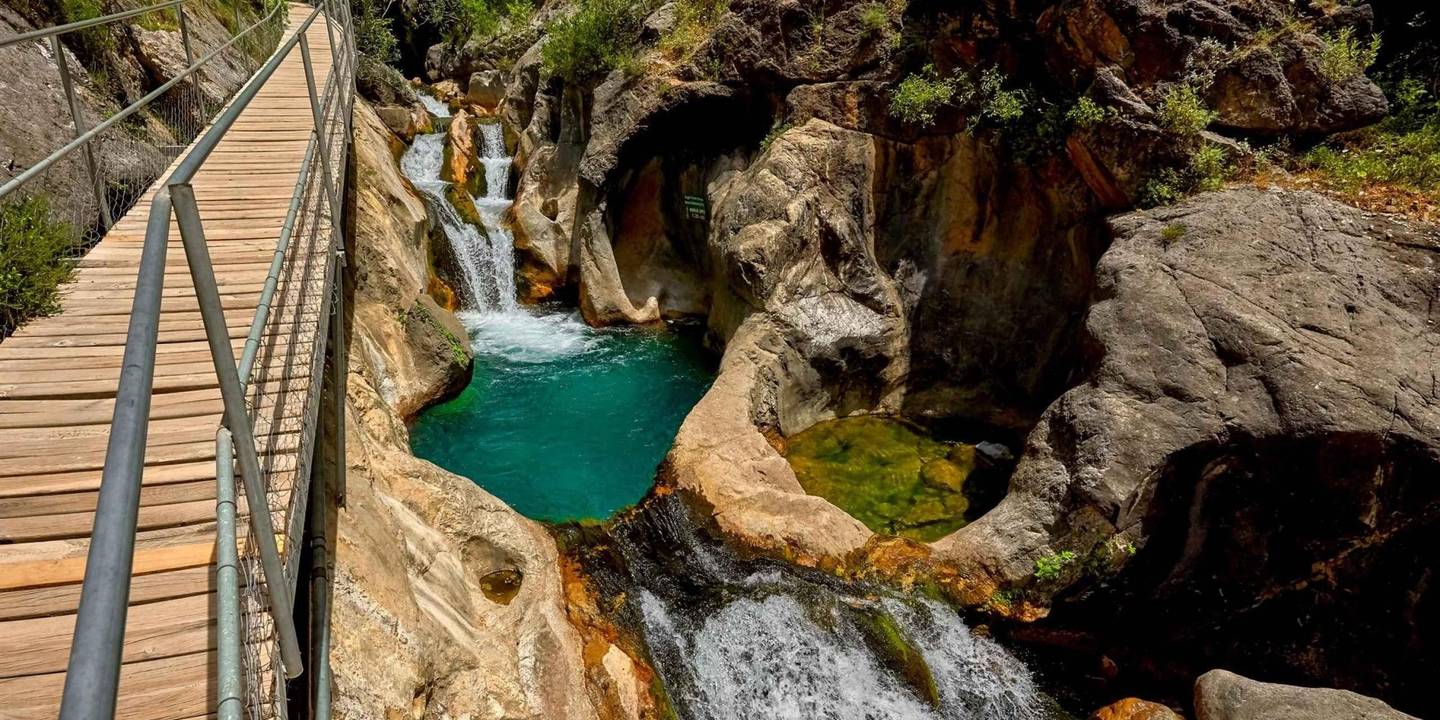
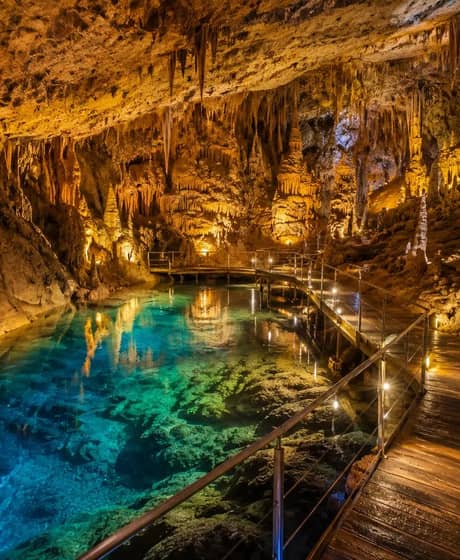
Dwarfs Cave, also known as Dwarf Cave, Dwarves Cave and Cüceler Mağarası, is a natural show cave near Tırılar in the Alanya district of Antalya. Located on the Sapadere Canyon route, this compact cave has approximately 150 metres of visitor passages divided into six galleries, with stalactites, stalagmites, columns and naturally shaped rock formations. The cave is approximately 37 kilometres from central Alanya and can easily be combined with Sapadere Canyon on the same day. Admission is charged and the Museum Pass is not accepted; ticket prices and opening hours can change during the season, so visitors should check current information before travelling. The cave entrance is approached along an elevated walkway of approximately 170–180 metres.
Tours and trips that go here, run by licensed local operators.
Dwarfs Cave is near Tırılar, east of Alanya and along the route to Sapadere Canyon. It is approximately 37 kilometres from central Alanya. From the coastal D400 highway, turn inland at Demirtaş and follow the signs towards Sapadere and Tırılar.
The main transport options are:
By car: Drive east from Alanya towards Gazipaşa, turn north at the Demirtaş junction and follow the signs for Sapadere and Tırılar. The mountain section can become narrow and winding.
By taxi: Direct journeys can be arranged from Alanya, Mahmutlar, Kargıcak or Demirtaş. Agree on waiting time and the return fare before departure.
By tour: Some Sapadere Canyon tours include Dwarfs Cave in the itinerary. Check separately whether the cave entrance fee is included in the tour price.
By public transport: Regular direct services to the cave entrance can be difficult to find. A taxi may still be needed after reaching Demirtaş or a nearby settlement.
For navigation, search for Dwarfs Cave Alanya, Dwarf Cave Alanya, Dwarves Cave or Cüceler Mağarası. Confirm that the result is near Tırılar, Sapadere and Alanya; Damlataş Cave, Dim Cave and Lovers Cave are different attractions.
Dwarfs Cave is a paid attraction and the Museum Pass is not accepted. However, no single official online tariff is consistently updated for 2026, so the exact price should be confirmed at the ticket office or with the tour operator on the day of your visit.
| Visitor information | Details |
|---|---|
| Cave admission | Charged |
| Museum Pass | Not accepted |
| Sapadere Canyon ticket | May be separate from the cave fee |
| Organised tours | Cave admission may be an optional extra |
| Parking | Check the current arrangement on arrival |
| Payment method | Ask in advance whether cash and cards are accepted |
Online maps and booking platforms commonly show opening hours of approximately 8.30 am–6.30 pm. Summer and winter schedules, maintenance, weather and operator decisions can change these hours, and the final admission may be earlier than closing time.
Old, very low ticket prices found online may no longer be valid. A tour described as “including Sapadere” does not automatically include the Dwarfs Cave ticket, so read the inclusions and exclusions carefully.
Dwarfs Cave is a natural karst cave whose name comes from a local legend. Its stalactites, stalagmites and columns developed as water dissolved the limestone and mineral-rich droplets slowly deposited material over a very long period.
According to the most common version of the story, a short-statured young man living in Tırılar during the early 20th century fled to the cave after mistreatment by his older brother. A sister or another relative secretly brought him food. He was eventually discovered in the cave, and local people began associating the site with him.
This account is oral tradition rather than a documented historical event, and its details vary between sources. The geological formation of the cave should therefore be separated from the story behind its name. Searches for “Seven Dwarfs Cave” also refer to this attraction but do not establish a connection with the Snow White fairy tale.
Dwarfs Cave is one of the nature stops leading from Alanya's busy coastline into the quieter foothills of the Taurus Mountains. Rather than being an extensive underground system, it is a compact show cave known for illuminated galleries and dripstone formations that can be viewed from close range.
Its main practical advantage is that it can be added to the same day trip as Sapadere Canyon, Sapadere village and the surrounding stream landscapes. Visitors should nevertheless consider the mountain road, temperature change, humid surfaces and seasonal operating arrangements.
Dwarfs Cave is a natural dripstone cave open to visitors in the Tırılar and Sapadere area of Alanya. Its limestone galleries contain stalactites, stalagmites, columns and mineral deposits.
It is not a long, technical underground system intended for specialist cave exploration. Instead, it is a tourist cave with a prepared walking route, lighting and platforms that reveal the formations from different angles.
Because of its compact size, Dwarfs Cave is normally planned as a short stop on a Sapadere Canyon excursion rather than as an independent full-day trip.
Dwarfs Cave is near Tırılar in the Alanya district of Antalya Province. The site is connected to the rural road network north of Demirtaş and close to the Sapadere Canyon route.
Map services may describe the location as Tırılar, Sapadere or Demirtaş. These variations do not necessarily indicate different caves; the route leaves the D400 at Demirtaş and continues inland towards the Taurus Mountains.
When checking the location, make sure navigation leads east of Alanya city centre into the rural interior.
Dwarfs Cave is in the Alanya district of Antalya Province. International visitors may find it under the names Dwarfs Cave Alanya, Dwarf Cave Alanya, Dwarves Cave or Cüceler Mağarası.
The cave is not in Antalya city centre. Reaching it from central Antalya requires a long road journey, so travellers staying there should include it within a separate day devoted to Alanya.
It is more practical for visitors staying around Alanya, Mahmutlar or Kargıcak.
Dwarfs Cave is approximately 37 kilometres from central Alanya, depending on the route. Traffic, your starting point and mountain-road conditions can make the journey last around 50–70 minutes.
Distances from Mahmutlar, Kargıcak and Demirtaş are shorter. On organised tours, hotel pickups for other passengers can increase the total transfer time.
Do not judge the journey only by kilometres. The rural section after leaving the D400 is winding and can be narrow, reducing average driving speed.
Yes, Dwarfs Cave is close to the Sapadere Canyon route and the two natural attractions can easily be visited on the same day. Depending on the selected road, the distance between them is approximately 7–10 kilometres.
Tour itineraries commonly visit the cave before or after the canyon walk. Their entrance fees and operating hours may nevertheless be separate.
Independent travellers can plan the cave as a short stop and reserve more time for walking and relaxing at Sapadere Canyon.
The easiest ways to reach Dwarfs Cave are by car, taxi or an organised Sapadere Canyon tour. From Alanya, follow the D400 east towards Gazipaşa, turn north at Demirtaş and continue according to the signs for Sapadere and Tırılar.
Mobile reception can weaken in the rural area, so downloading an offline map before departure may help. At local junctions, follow road signs as well as the navigation application.
Check fuel, tyres and brakes before the journey. If returning after dark, remember that lighting can be limited on the mountain roads.
Public transport alone is not usually the most practical option because frequent direct services may not reach the cave entrance. After travelling from Alanya to Demirtaş or another nearby settlement, visitors may still need a taxi.
Routes and schedules can change during the season, so do not rely on a fixed bus number without checking it on the day of travel. Return transport must also be considered in advance.
For travellers who do not want to rent a car, a Sapadere Canyon tour with hotel transfers is generally the more organised choice.
The first part of the route follows the main coastal highway, while the final section uses a winding and sometimes narrow rural road. An ordinary passenger car can normally complete the journey, but rain, roadworks and tour traffic may affect conditions.
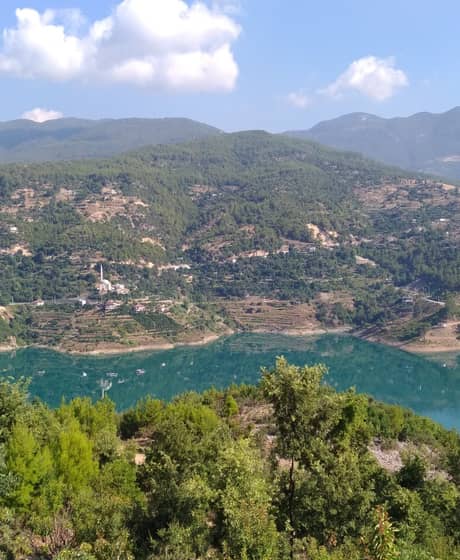
Near the attraction, visitors approach the cave along an elevated wooden and metal walkway of approximately 170–180 metres. This section also provides views across the surrounding valley and vegetation.
Wear footwear with good grip and remain inside the railings. After severe weather, check the latest road conditions with the local operator.
Yes, admission to Dwarfs Cave is charged. The cave ticket is not automatically combined with the Sapadere Canyon ticket, transfer or tour price.
Some tours list the cave as an itinerary stop while showing its entrance fee under “not included.” Seeing “cave visit” in the programme is therefore not enough to confirm that admission has been prepaid.
Child, student and group reductions may change over time. Ask the ticket office or tour provider for the current terms.
It is not safe to state one exact 2026 entrance fee because Dwarfs Cave does not publish a single official online tariff that is consistently updated. Prices on different websites may belong to earlier years, a particular visitor category or an old operating arrangement.
Before visiting, ask about:
Adult admission
Child and student prices
Cash and card payments
Parking charges
Any combined ticket with Sapadere Canyon
Whether cave admission is included in your tour
The current tariff displayed at the ticket office should be treated as more reliable than prices in old blog posts and map reviews.
The Museum Pass is not valid at Dwarfs Cave. The attraction is not part of the standard ticketing system for museums and archaeological sites operated by the Ministry of Culture and Tourism.
Holding a Museum Pass does not remove the cave admission charge. The same may apply at Sapadere Canyon, so check the visitor arrangements for each attraction separately.
Visitors arriving with a tour also pay separately when cave admission is not included in the package.
Online maps and booking sources most commonly list Dwarfs Cave as open from approximately 8.30 am to 6.30 pm. These hours can change according to the season, weather, maintenance and operator decisions.
Arriving at least one hour before closing is safer than planning a last-minute visit. Final ticket sales or last admission may stop earlier than the published closing time.
Confirm the schedule on the same day during winter, wet weather and the low season.
Dwarfs Cave can normally be visited, although weather, maintenance or safety checks may cause temporary closures. An “open” label on a map does not guarantee that the road and every gallery are accessible.
After heavy rain, the rural road, external walkway or wet surfaces inside the cave may need inspection. The operator can shorten the route when necessary.
If travelling from a distant location, confirm the current situation before departure.
The cave is named after a local legend about a short-statured young man said to have hidden there near Tırılar. According to the story, he escaped mistreatment within his family and a relative secretly brought him food.
A shepherd or villager later discovered him, and local people began associating the cave with his story. Names, the length of his stay and the manner in which he was found vary between versions.
The account should therefore be understood as oral tradition explaining the cave's place in local memory, not as a fully documented historical event.
The name is linked to the local story of a short-statured person who reportedly lived in the cave for a period. It is not primarily or verifiably named because its formations resemble dwarfs.
Some tourism accounts add that the person belonged to a local family known as the Terziler. However, no published archival record confirms every detail of the narrative.
Describing the name as part of local oral culture is more accurate than presenting the legend as established history.
Searches for “Seven Dwarfs Cave” usually refer to Dwarfs Cave near Alanya, although the standard local name is Cüceler Mağarası. The word “seven” is sometimes added because of search habits or the association with Snow White.
The cave has no documented historical connection with the Snow White and the Seven Dwarfs story. Its name is linked instead to a local human-interest legend.
Searching only for “Seven Dwarfs” may produce unrelated businesses or attractions. Confirm that the result is near Tırılar and Sapadere.
Dwarfs Cave is a karst cave created as rainwater and groundwater slowly dissolved limestone over a very long period. Water passing through cracks enlarged the underground spaces and deposited minerals on the ceiling and floor.
Formations growing down from the ceiling are stalactites, while those developing upward from the floor are stalagmites. When the two join, they create columns.
This natural growth is extremely slow on a human timescale. Touching the formations can contaminate or damage their surfaces, so visitors should remain on the prepared route.
No precise and comprehensive scientific dating result for Dwarfs Cave is clearly available in public sources. Tourism articles often describe it as approximately 15,000 years old, but that figure should not be presented as a conclusive geological age without an explained measurement method.
The age of the cave chamber and the age of each stalactite or stalagmite may differ. Individual formations can develop during different periods.
The safest conclusion is that the cave and its formations developed through natural processes over thousands of years.
The visitor section of Dwarfs Cave is generally reported to be approximately 150 metres long. Some sources may give different total lengths because they include explored or continuing sections outside the prepared route.
The external approach walkway of approximately 170–180 metres should not be confused with the cave's internal length. Visitors first cross this elevated path and then enter the illuminated galleries.
Maintenance or safety work may temporarily shorten the accessible route.
The section of Dwarfs Cave open to tourism is reported to contain six galleries. These chambers are connected by narrower passages and display different dripstone forms.
The galleries are not identical in width or height. Steps, slopes and narrower walking areas may occur between them.
Visitors must not leave the prepared route or attempt to enter closed natural cavities.
Dwarfs Cave contains stalactites, stalagmites, columns, flowstone surfaces and natural formations compared to different shapes. Lighting makes their texture and mineral colours easier to see.
The main features include:
Six galleries
Stalactites and stalagmites
Joined dripstone columns
Mineral deposits on the walls and ceiling
Narrow passages and stepped sections
Illuminated photography areas
Visitors should not expect historical artefacts or an archaeological exhibition. The attraction focuses on natural geological formations.
The expression “seven colours” used in promotional descriptions does not mean that the cave contains seven scientifically defined colour layers. Mineral surfaces, moisture and artificial lighting can combine to produce yellow, orange, brown, white and many intermediate tones.
Colours in photographs vary according to night mode, white balance and the cave lighting. The site may appear darker or more natural than heavily processed online images.
Artificial lighting effects should be distinguished from the natural colour of the mineral surface.
Most visitors need approximately 20–30 minutes to walk through the cave itself. The external walkway, photography stops, ticketing and queues can bring the total visit to around 45–60 minutes.
Allowing about one hour creates a comfortable schedule when combining the cave with Sapadere Canyon. Organised tour groups may provide less free time.
Visitors who walk slowly and families with children may need additional time on the steps.
Dwarfs Cave can be visited with children, but the steps, damp ground, narrow passages and elevated walkway require constant adult supervision. Children should not climb on the railings or touch the cave formations.
A pushchair may not be practical in the stepped sections. If using a baby carrier, consider slippery surfaces and limited headroom.
Children uncomfortable with darkness or enclosed spaces can be told what to expect before entering.
Older visitors who can walk confidently may explore the cave, although steps, slopes and slippery surfaces should be assessed according to individual mobility. Anyone needing frequent rests should avoid rushing or entering between large tour groups.
Visitors with knee, hip, balance, heart or respiratory conditions should ask about the current route before entering. The cave's cool environment should not be interpreted as medical treatment.
Footwear with good grip and support from a companion can be important.
Dwarfs Cave should not be considered fully wheelchair accessible because of its stairs, narrow passages and varying surfaces. Although parts of the external platform may be more even, the complete internal route is not continuously step-free.
Accessible parking, toilets and the closest drop-off point can vary with the operating arrangement. Visitors with limited mobility should contact the attraction before travelling.
The presence of a companion does not remove every physical obstacle, so safety should guide the decision.
The cave feels cooler and more humid than the outside during summer. Because no verified fixed temperature is publicly documented, it would be misleading to claim one exact year-round figure.
A light layer may be useful for some visitors in summer. During winter, the combination of outdoor weather, rain and cave humidity can feel colder.
Glasses and camera lenses may fog briefly because of the temperature difference.
The best cave photographs are taken by keeping the phone or camera steady and preserving the available lighting. Flash can create harsh reflections on nearby wet surfaces and flatten the natural texture.
Photography tips include:
Use night mode only when the device can remain still.
Support the phone against a railing or another safe surface.
Prefer the main camera to digital zoom.
Slightly reduce exposure around bright lights.
Carry a clean, dry cloth for a fogged lens.
Do not block the walking route.
Never touch stalactites or stalagmites.
Ask the operator about tripod and professional photography rules on the day of your visit.
Areas for leaving vehicles may be available near the cave, although capacity, charges and ground conditions can vary. Large tour vehicles and busy weekends may create temporary congestion around the entrance.
When parking, do not block the access road, turning space or emergency route. Avoid leaving valuables visible inside the vehicle.
Check the current arrangement on arrival rather than assuming that parking remains free because an older review says so.
Dwarfs Cave is a small rural attraction with a ticket point, elevated walkway, lighting and potentially limited basic services. Visitors should not expect a large museum complex or extensive visitor centre.
Facilities may include:
A ticket point
A vehicle parking area
A walkway and safety railings
Lighting inside the cave
Small food and drink outlets
Limited seating or rest areas
Seasonal toilet facilities
Not every service is guaranteed to be open, free or able to accept card payments. Carrying water and basic supplies from Alanya or Demirtaş may be useful.
Closed shoes with good grip and comfortable clothing that allows easy movement are the most suitable choices. Flip-flops, footwear with poor traction and very long clothing can create a risk on wet steps.
Useful items include:
Non-slip walking shoes
Drinking water
A light outer layer
A hat and sunscreen
A cloth for a phone or camera lens
A small bag for personal rubbish
Spare clothing for children
If you plan to enter the water at Sapadere Canyon, also bring swimwear, a towel and water shoes.
Dwarfs Cave can be visited during spring, summer and autumn, with mornings and late afternoons generally providing the most comfortable conditions. Although the interior is cool, the external walkway and road can be hot in midsummer.
Spring: Green scenery and cooler walking conditions
Summer: A refreshing cave stop, but hotter and busier outdoors
Autumn: More balanced temperatures and a quieter route
Winter: Fewer visitors but a greater risk of rain and difficult road conditions
Weekdays: Potentially fewer tour groups
Morning: Easier parking and photography
If Sapadere Canyon is also included, leaving in the morning helps make better use of daylight.
Light rain may not directly affect the cave interior, but the rural road, external walkway and surface safety determine whether a visit is practical. Heavy rain can cause temporary closure of the road or cave.
Steps may become more slippery and dripping inside the cave can increase after rain. A waterproof jacket that leaves both hands free is more useful than an umbrella on the walkway.
During severe weather warnings, contact the operator or tour provider before travelling.
Visitor reviews most often mention the coloured lighting, stalactites and stalagmites, short visiting time and proximity to Sapadere Canyon. The cave is frequently described as small but photogenic.
Commonly praised features include:
Dripstone formations visible at close range
A cool cave environment
A short stop that is easy to add to a day trip
Nature views from the elevated walkway
A convenient combination with Sapadere Canyon
Common criticisms concern the cave being smaller than expected, steps, narrow passages, changing admission prices, crowds and damage caused by earlier visitors. Setting expectations for a brief nature stop rather than a vast underground complex creates a more realistic visit.
Sapadere Canyon is the principal attraction near Dwarfs Cave. Places that can be considered on the same day or wider route include:
Sapadere Canyon
Sapadere village
Sapadere Stream and rural viewpoints
Demirtaş Beach
Syedra Ancient City
Mahmutlar
Dim River
Dim Cave
Alanya city centre
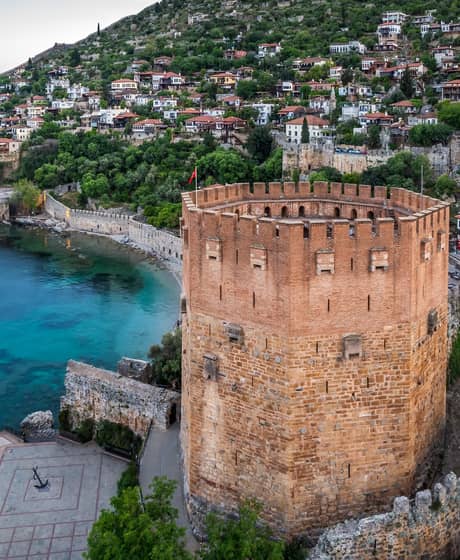
Alanya Castle and the Red Tower
Dim River and Dim Cave are also in the mountainous Alanya region but follow a different route. Consider travel times instead of attempting to fit every attraction into one day.
Yes, Dwarfs Cave and Sapadere Canyon can comfortably be visited on the same day and form the most practical combined route in this area. Allow approximately 45–60 minutes for the cave and several hours for the canyon and a meal break.
A sample itinerary is:
Morning departure from Alanya or your hotel
Visit to Dwarfs Cave
Sapadere village and viewpoint stop
Sapadere Canyon walk
Lunch
Stream or swimming break when conditions are suitable
Evening return to Alanya
Check the two entrance fees, last admission times and the amount of free time on an organised tour separately.
Dwarfs Cave is in the rural eastern part of Alanya on the Sapadere route, while Damlataş Cave is beside Cleopatra Beach in central Alanya. Their access and visitor experiences are therefore quite different.
| Feature | Dwarfs Cave | Damlataş Cave |
|---|---|---|
| Location | Near Tırılar and Sapadere | Alanya city centre |
| Route | Rural and mountainous | Coastal and central |
| Visitor experience | Short nature stop with six galleries | Central cave attraction |
| Best combination | Sapadere Canyon | Cleopatra Beach and Alanya Castle |
| Museum Pass | Not accepted | Check current conditions separately |
| Transport | Car, taxi or tour is more practical | Easy by walking and urban transport |
Visitors with limited time in the city centre may prefer Damlataş, while those planning a full rural day trip can choose Dwarfs Cave.
Dim Cave is a separate and larger cave with a longer visitor route in the Dim Valley direction. Dwarfs Cave is smaller and lies on the Sapadere Canyon route.
| Feature | Dwarfs Cave | Dim Cave |
|---|---|---|
| Nearby route | Sapadere Canyon | Dim River and Dim Valley |
| General scale | Smaller and shorter | Larger and longer |
| Time inside | Approximately 20–30 minutes | Usually longer |
| Main feature | Six galleries and colourful appearance | Spacious galleries and panoramic surroundings |
| Distance from Alanya | Approximately 37 km | Closer to central Alanya |
The two caves are not in the same location and do not use a shared ticket. Planning them with their respective nearby attractions on different routes is generally more comfortable.
The most practical plan places Dwarfs Cave as a short morning stop within a Sapadere Canyon day trip. This allows visitors to see the cave before larger groups arrive and reserve most of the day for the canyon walk.
Check the following before departure:
Current opening and final admission time
Separate cave and canyon entrance fees
Road and weather conditions
Parking arrangements
Needs of children and visitors with limited mobility
Free time provided by the tour
Whether cave admission is included
Return time to Alanya
Independent drivers can download an offline map, while tour participants should read the inclusions and exclusions to avoid last-minute surprises.
Travellers who want hotel transfers and guiding should choose a Sapadere Canyon tour that clearly lists Dwarfs Cave as a stop. Not every Alanya jeep safari visits the cave, and its entrance fee may be excluded even when the stop appears in the itinerary.
Before booking, check:
Dwarfs Cave stop
Time allocated at the cave
Whether admission is included
Sapadere Canyon visit
Hotel pickup and drop-off areas
Lunch and drinks
Swimming breaks
Child age categories
Vehicle type and road conditions
Cancellation and weather terms
To see the cave and canyon in the same programme, explore the Alanya Pink Jeep Safari Sapadere Canyon Tour. For more ideas, read the best places to visit in Alanya guide or compare options on the Alanya tours and activities page.
Our easy-to-use app offers a comprehensive listing of curated tours, activities, and experiences, all in one place. Whether you’re a thrill-seeker looking for an adrenaline-packed adventure or seeking a more relaxed getaway, Maxtoria has got you covered.





© 2026 Maxtoria Turizm Ticaret A.Ş. — All Rights Reserved
v2.1.2