







 Best Price
Boat Tours
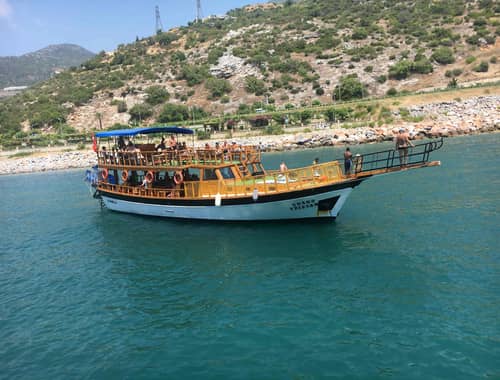
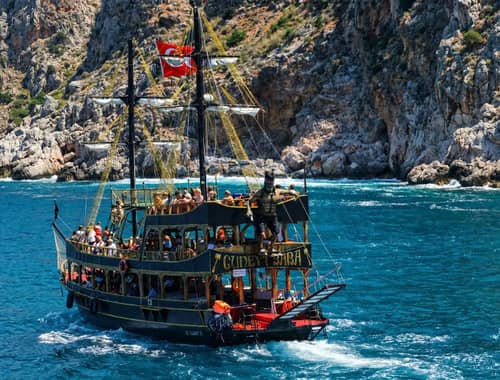
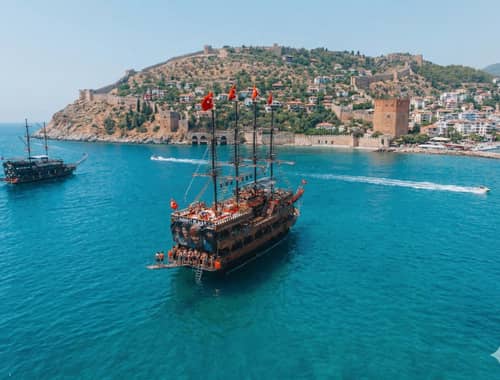
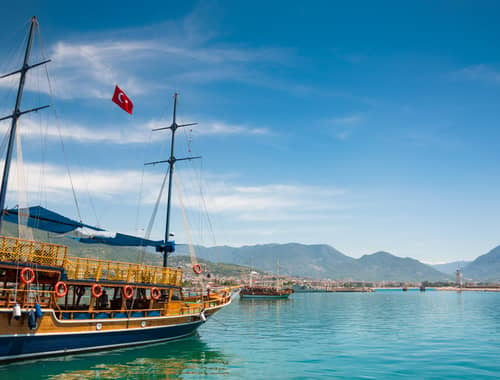
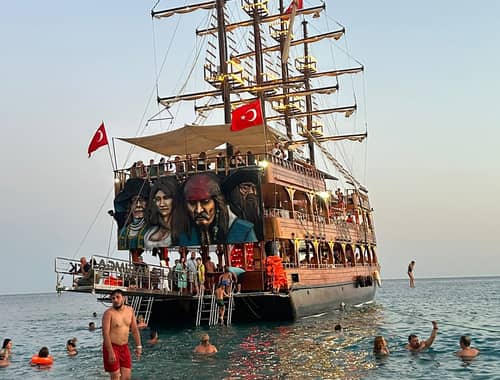
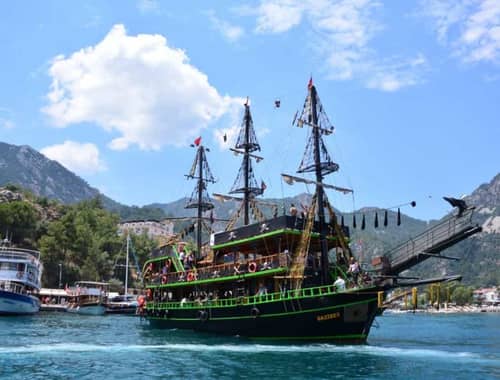
Alanya Luxury Pirate Boat Cruise with Lunch and Drinks
Free Cancellation Free Shuttle
From £20.19 £19.04 Per Person



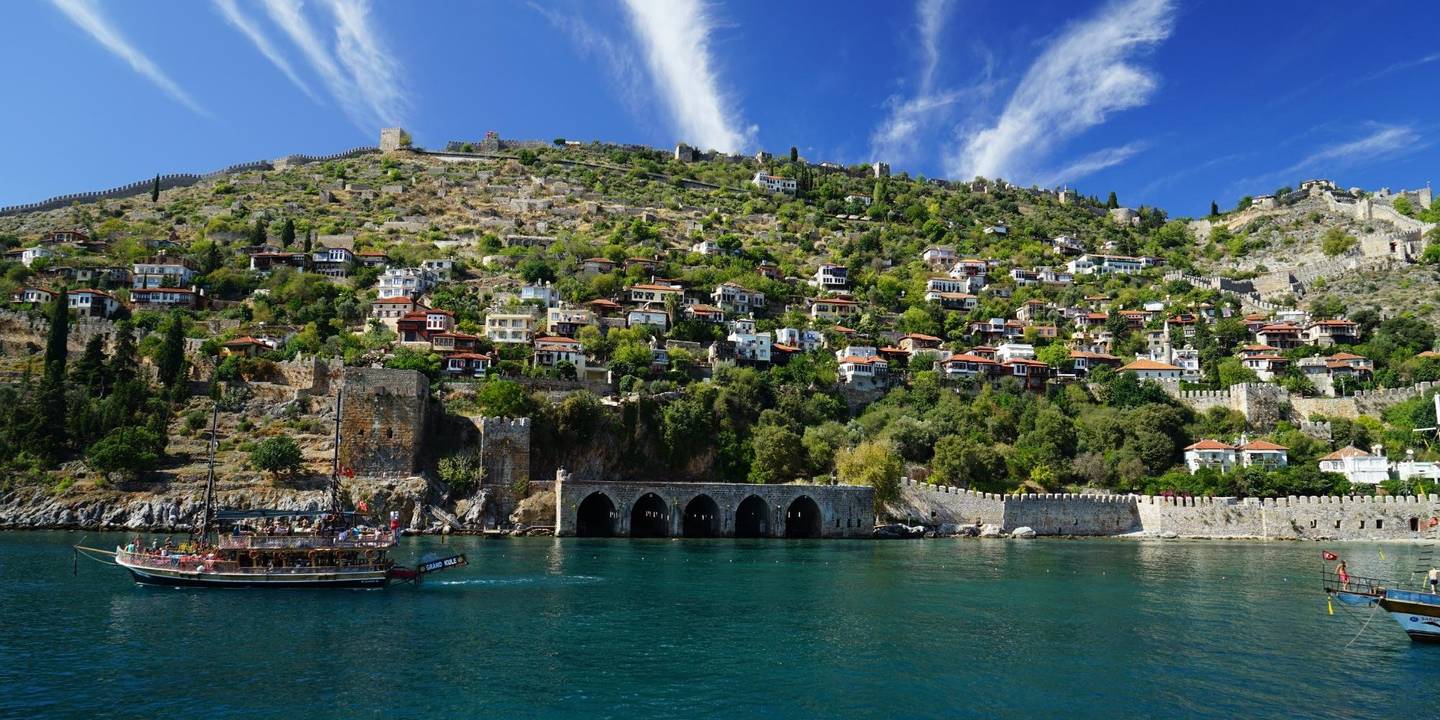
Alanya Shipyard is a 13th-century Seljuk shipyard built on the seafront below the eastern side of Alanya Castle, just south of the Red Tower. Commissioned by the Anatolian Seljuk Sultan Alaeddin Keykubad I, the five-bay structure was used to build, repair, equip and shelter ships during the winter. Also known as the Seljuk Shipyard, Alanya Tersanesi and the Old Shipyard, it is one of Alanya’s most important historical attractions. Its stone walls, brick vaults, entrance inscription and maritime displays can be explored as part of the same waterfront route as the Red Tower, Tophane and Alanya Harbour. Admission arrangements, Museum Pass validity and opening hours can change, so current details should be confirmed before visiting.
Tours and trips that go here, run by licensed local operators.
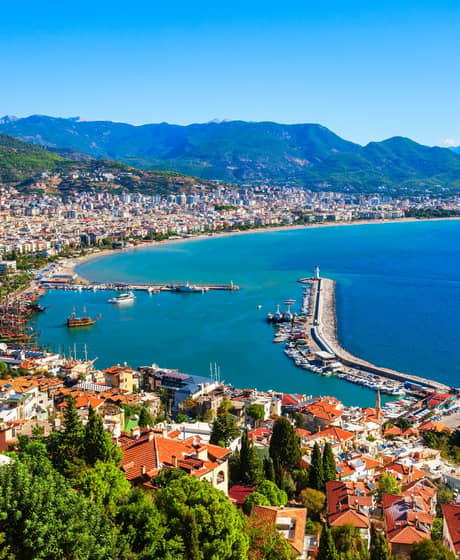
Alanya Shipyard is located on the waterfront east of Alanya Harbour, approximately 300 metres south of the Red Tower, where the castle walls meet the Mediterranean Sea. Map services generally show its address as Tersane Sokak in the Tophane neighbourhood of Alanya.
The main transport options are:
On foot: Follow the coastal path beside the walls from Alanya Harbour and the Red Tower. The walk from the Red Tower normally takes around 5–10 minutes.
By public transport: Use a current municipal bus serving the harbour, İskele or Red Tower area. Routes can change, so check Alanya’s local transport system on the day of your visit.
By taxi: Taxis can take visitors from central Alanya, Cleopatra Beach, Damlataş and nearby hotels to the Red Tower or the shipyard entrance.
By car: Drive to the harbour or Red Tower area and continue on foot. The final approach to the historic site is narrow, so use an authorised parking area rather than trying to drive directly to the entrance.
By boat: Many excursions departing from Alanya Harbour pass the shipyard from the sea. This provides an exterior view but does not include entry to the museum area.
For navigation, search for Alanya Shipyard, Seljuk Shipyard or Alanya Tersanesi. A search for “shipyard” alone may lead to a modern private business, so confirm that the result is beside the Red Tower and Tophane.
Admission is charged for the museum section of Alanya Shipyard, but a separate current 2026 ticket price and timetable are not clearly published on its official online information page. The safest approach is to confirm the latest fee, opening hours and ticket-office closing time with the local museum or ticket office before visiting.
| Visitor information | Current position |
|---|---|
| Shipyard museum entrance | Ticket required |
| 2026 adult ticket | Confirm the current price at the ticket office |
| Student or child ticket | Ask about current eligibility and rates |
| Museum Pass or MuseumKart | Confirm current validity before entry |
| Red Tower ticket | Separate or combined admission may be available |
| Tophane | Access arrangements may be different |
| Opening hours | May change seasonally |
Online prices often come from different years, while visitor reports about Museum Pass validity are inconsistent. Do not treat an old ticket price as the current rate. Combined tickets for the Red Tower, shipyard or other municipal attractions may be offered at certain times, but visitors should check exactly which sites are included before paying.
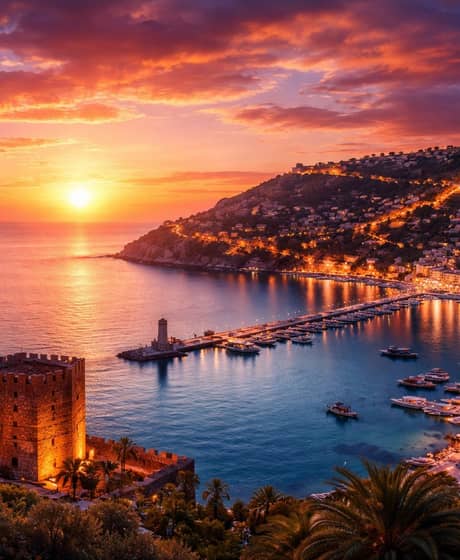
Exterior evening lighting does not mean that the museum remains open. Visitors who want to see the displays and vaulted interior should arrive during daylight or well before the current last-entry time.
Alanya Shipyard was commissioned by the Anatolian Seljuk Sultan Alaeddin Keykubad I and is generally dated to 1228. Some records use 1227 as the beginning or completion date, so the construction period may also be written as 1227–1228.
After taking Alanya in 1221, the sultan strengthened the castle, commissioned the Red Tower in 1226 and developed the protected harbour and shipyard. His control of a naval base at Sinop on the Black Sea and another at Alanya on the Mediterranean is associated with his title as the “Sultan of the Two Seas”.
The shipyard was more than a workshop for making boats. Its five vaulted bays formed part of a permanent maritime complex containing work areas, storage, an office, a small mosque, a freshwater well and spaces where ships could be protected during winter. Today, the building serves as a small maritime and shipbuilding museum.
Alanya Shipyard is one of the most important surviving structures associated with Seljuk naval power in the Mediterranean. Built beneath the eastern side of the castle peninsula, it consists of five vaulted galleries opening directly onto the sea. Together with the Red Tower, harbour walls and Tophane, it formed an integrated system for defence, shipbuilding and port security.
The site is impressive not only because of its age but also because of the way it was adapted to the coast. Its position takes advantage of sunlight, the rocky ground and direct access to the water. Ships were built and repaired here for centuries, and the galleries now contain displays explaining maritime technology, navigation and boat construction.
Alanya Shipyard is a permanent Seljuk naval base where ships were built, repaired, equipped and sheltered during winter. The historic structure is formed by five long vaulted bays that open towards the Mediterranean.
Leaving a wooden ship exposed to the open sea and winter weather could shorten its working life. The covered galleries allowed vessels to be protected and enabled construction and maintenance to continue during less favourable conditions. Work at the complex was not limited to hulls; sails, masts, iron components and other equipment could also be prepared or stored here.
For this reason, Alanya Shipyard should not be understood simply as an old building with five arches. It brought together the functions of a military harbour, production facility, repair centre, winter shelter, storehouse and administrative area in one maritime complex.
The history of Alanya Shipyard begins in the 13th-century Anatolian Seljuk period. After Sultan Alaeddin Keykubad I took Alanya in 1221, the city was reorganised as an important military, maritime and commercial centre.
The Red Tower was completed in 1226 to protect the harbour and the location selected for the shipyard against attacks from the sea. Sources date the shipyard to either 1227 or 1228, with 1228 generally accepted as its completion year.
Shipbuilding activity is reported to have continued under the Beylik of Alaiye and the Karamanids after the Seljuk period. Construction and repair work also continued after the city came under Ottoman control. Piri Reis’s early 16th-century Kitab-ı Bahriye includes information connected with Alanya’s harbour, castle and maritime facilities.
According to Alanya Municipality’s account of the building, boat construction and repair continued at the shipyard into the 1960s. This long working history makes the site more than a static medieval ruin; it remained a functional production area for many centuries.
Alanya Shipyard was commissioned by the Anatolian Seljuk Sultan Alaeddin Keykubad I. The entrance inscription and the wider Seljuk building programme in Alanya support this identification.
After taking the city, Alaeddin Keykubad aimed to turn Alanya into a strong commercial and defensive base on the Mediterranean. Strengthening the castle walls, constructing the Red Tower and completing the shipyard were closely connected parts of this plan.
The names of all the craftsmen and the full architectural team responsible for the shipyard are not known. The Red Tower inscription names Ebu Ali Reha el-Kettani of Aleppo, but there is no equally clear inscription proving that he designed the shipyard as well. The reliable short answer to “Who built Alanya Shipyard?” is therefore that it was built by order of Sultan Alaeddin Keykubad I.
Alanya Shipyard was built in the first half of the 13th century and is most commonly dated to 1228. Some official records and cultural inventories give 1227, creating a one-year difference between sources.
This variation may relate to the start of construction, the completion year or conversion from the Hijri calendar to the Gregorian calendar. For visitor information, it is reasonable to say that the shipyard was built in 1227–1228 or completed in 1228.
The shipyard followed shortly after the Red Tower, which was completed in 1226. The tower defended the harbour entrance, while the shipyard provided a protected place for building, maintaining and sheltering vessels. The two monuments therefore belonged to the same maritime and defensive system.
Alanya Shipyard is important because it was the Seljuks’ first major shipyard on the Mediterranean and is one of the most significant surviving medieval maritime structures in Türkiye. Its largely preserved design and exceptionally long period of use make it particularly valuable.
Its importance includes:
Demonstrating the Mediterranean policy and naval ambitions of the Anatolian Seljuks
Combining ship construction, repair, equipment and shelter in one complex
Preserving its five-bay vaulted layout to a remarkable degree
Forming a coordinated defence system with the Red Tower and Tophane
Remaining in use through the Seljuk, beylik and Ottoman periods
Presenting maritime tools and shipbuilding methods through its museum displays
Belonging to the wider Alanya Castle and historic maritime landscape on UNESCO’s Tentative List
The structure shows that the Anatolian Seljuks were not only builders of inland castles and caravanserais. They also developed maritime trade, defended strategic ports and organised naval production on both the Black Sea and Mediterranean coasts.
Alanya Shipyard consists of five vaulted bays opening directly onto the sea. Each bay is a long gallery that could be used for building, maintaining or storing ships and shipyard equipment.
Measurements published by Alanya Municipality describe the structure as approximately 57 metres long and 40 metres deep. Each bay is around 7.70 metres wide. The galleries vary according to the rocky ground and coastline, with the longest extending to approximately 43 metres and the shortest to around 32 metres.
Pointed-arched walls separate the five bays. Cut stone was used for the main walls, while brick was used in the arches and vaults. Openings in the vaults admitted daylight and helped smoke produced by workshop activity escape from the galleries.
The defining architectural features of Alanya Shipyard are its five vaulted galleries, pointed dividing arches, combined use of stone and brick, and direct connection with the sea. The plan was carefully adapted to the natural shape and levels of the site.
The principal features include:
A structure approximately 57 metres long and 40 metres deep
Five bays, each approximately 7.70 metres wide
Main walls built from cut stone
Brick arches and barrel-like vaults
Ventilation openings providing light and allowing smoke to escape
A freshwater well at the landward end of the third bay
A storage space cut into the rock
A small mosque and office area near the entrance
Different floor levels following the natural terrain
The shipyard was positioned to benefit from daylight for as long as possible. The builders reduced the need to cut deeply into the rock by using the natural ground and arranged the galleries so that seawater could reach them in a controlled way.
The five-line relief inscription above the entrance praises Alaeddin Keykubad I and refers to him as the sultan of the lands and the two seas. The sultan’s emblem appears between decorative rosettes in the first line.
Located approximately four metres above the narrow round-arched doorway, the inscription also expresses the political meaning of the building. With Sinop providing access to the Black Sea and Alanya supporting power on the Mediterranean, the claim to rule two seas was turned into an architectural statement.
To see the inscription and emblem, look carefully above the doorway rather than viewing only the wider façade. When taking photographs, avoid blocking the entrance and remain within the conservation boundaries.
Inside Alanya Shipyard, visitors can see shipbuilding tools, boat components, masts, anchors and navigational equipment. A wooden walkway leads through the five galleries and provides views of the vaulted architecture and displays.
The main objects identified in the municipality’s description include:
An ancient crane in the first bay
An unfinished çekevele-type boat in the second bay
A mizzen mast and yard
A main mast and shipbuilding tools in the third bay
The freshwater well at the landward side of the third bay
Ancient anchors in the fourth bay
Direction-finding and navigation instruments in the fifth bay
The room to the right of the entrance was used as a small mosque, while the five-windowed area to the left served as an office for shipyard staff. Conservation and repair work in the mosque revealed frescoes depicting Zülfikar, the bifurcated sword associated with Ali, on two opposing walls.
The small mosque beside the shipyard entrance is notable for the opposing Zülfikar frescoes discovered during conservation work. The space demonstrates that the complex supported the everyday and religious life of its workers as well as maritime production.
The mosque served officials, craftsmen and sailors working at the site. The office on the opposite side is thought to have supported record-keeping, materials management and administration.
Access to parts of these spaces may be restricted to protect the historic surfaces. Visitors should not touch the walls, barriers or displayed objects.
Şehzade Mustafa did not build Alanya Shipyard; the structure was completed during the reign of Alaeddin Keykubad I about three centuries before Mustafa’s lifetime. The connection comes from stories about Ottoman-period restoration, shipbuilding and naval activity.
Local traditions and popular historical accounts sometimes claim that Şehzade Mustafa reactivated the shipyard at Alaiye, ordered repairs or had ships prepared there. Television dramas and social-media content have helped make this story more widely known.
However, the principal municipal and cultural-inventory descriptions of the shipyard do not identify Şehzade Mustafa as its founder. Reliable historical explanations should separate the well-established Seljuk construction from later Ottoman activity. The Mustafa association is best presented as a local tradition or debated Ottoman-period narrative rather than a confirmed construction fact.
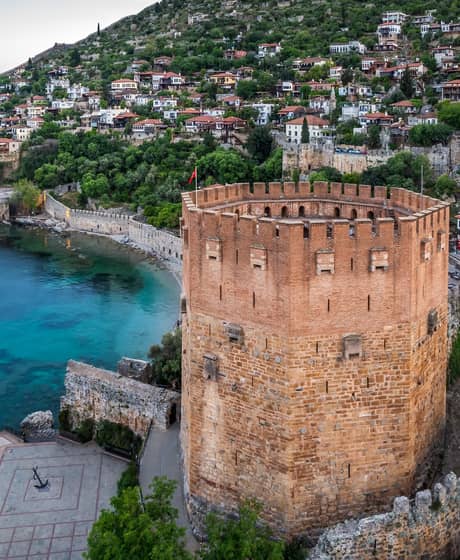
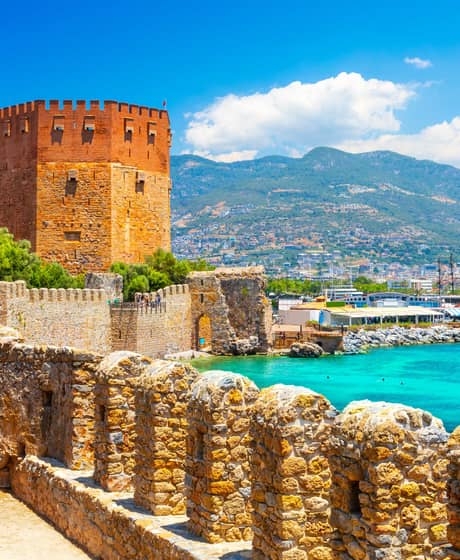
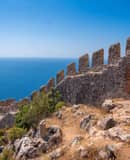
The Red Tower was the main defensive structure protecting Alanya Harbour and the shipyard from attacks approaching by sea. The two monuments are linked by the walls and a coastal path.
The Red Tower was completed in 1226, shortly before the shipyard. Its octagonal plan, commanding harbour position and robust stone-and-brick construction have made it the best-known symbol of Alanya. The shipyard provided the protected production and maintenance facility within the harbour zone defended by the tower.
For visitors, the two sites are very close. After leaving the Red Tower, follow the path beside the walls to reach the shipyard in approximately 5–10 minutes. Whether the sites use separate or combined tickets can change, so confirm the current arrangement at the ticket office.
No. Alanya Shipyard and Tophane are separate Seljuk structures, although they stand next to one another and belonged to the same defensive and maritime system. The shipyard is at sea level, while Tophane occupies the rocky ground above and beside it.
Tophane was positioned to monitor approaching vessels and protect the coastline and shipyard. From the sea, the five arched openings of the shipyard can be seen below, with Tophane and the castle walls rising above them.
The paths leading towards Tophane differ from the wooden walkway inside the shipyard and may be steeper or more uneven. Visitors planning to see both should wear suitable footwear and allow enough daylight.
The Inner Fortress of Alanya Castle and Alanya Shipyard are separate visitor areas, so one ticket should not be assumed to cover both. Seasonal combined tickets are valid only for the attractions specifically listed at the ticket office.
Public roads, neighbourhoods and some viewpoints around the castle peninsula can be explored without an Inner Fortress ticket. Museum-controlled sections such as the Inner Fortress require paid admission, while the shipyard and Red Tower may have their own ticketing arrangement.
Before starting your route, ask whether your ticket covers the Red Tower, shipyard, Tophane, Inner Fortress or Damlataş Cave. For detailed information about the upper castle district, see Maxtoria’s Alanya Castle guide.
Current Museum Pass or MuseumKart validity at Alanya Shipyard should be confirmed before visiting because it is not shown separately and clearly on the shipyard’s official online information page. Recent and older visitor reports offer conflicting answers.
MuseumKart validity at the Inner Fortress of Alanya Castle does not automatically mean that it is accepted at the shipyard. The managing body, ticket system and combined-admission arrangement may be different. Bring the card if you have one, but plan your budget for the possibility of a paid ticket.
Alanya Shipyard opening hours may change according to the season and management decisions, and a separate current 2026 schedule is not clearly published on its official introduction page. Visitors who want to enter the museum should confirm both the opening time and the last ticket time on the day of travel.
Published hours for the Red Tower or Alanya Castle should not automatically be applied to the shipyard. The exterior may be visible under evening lighting even after the exhibition area and entrance have closed.
Summer mornings offer cooler conditions for the waterfront walk. Late afternoon produces warmer colours on the stone arches, water and walls. If seeing the interior is your priority, arrive well before sunset and allow time for a possible ticket queue.
A visit to the museum section of Alanya Shipyard normally takes around 30–45 minutes. Adding the Red Tower, Tophane, harbour and photography stops can extend the route to between 1.5 and 3 hours.
| Itinerary | Recommended time |
|---|---|
| Shipyard only | 30–45 minutes |
| Shipyard and Red Tower | 1–1.5 hours |
| Shipyard, Red Tower and Tophane | 2–3 hours |
| Wider harbour and castle route | Half a day |
Visitors who want to read every display, study the architecture and take photographs may need longer. In summer, leave additional time because the heat can slow the walking pace between attractions.
Alanya Shipyard can be visited with children, but close supervision is required because of the waterfront setting, potentially slippery surfaces and conservation rules. Displays about ships, anchors and maritime history can make the visit educational for children interested in boats.
Stay on the wooden walkway, do not cross the barriers and prevent children from touching the exhibits. Visitors using a pushchair or wheelchair should ask about the narrow entrance, floor surfaces and current accessibility arrangements before travelling.
The museum galleries are not a swimming area, although a small section of coast nearby is sometimes called Tersane Beach. Visitors should not enter the historic structure from the sea or cross conservation boundaries.
Anyone considering swimming along the nearby coast should assess the rocky ground, waves, currents, boat traffic and whether a lifeguard is present. Swimming stops on organised cruises take place only at locations selected by the captain according to current sea and safety conditions.
Treat the museum visit and swimming as separate activities. The shipyard looks impressive from the water, but coastal safety and protection of the historic structure must come first.
Businesses found under names such as Tersane Cafe are separate commercial venues and are not part of the historic shipyard museum. Their menus, breakfast service, prices, reservations and opening hours are independent of the attraction.
Check the venue’s current name, map location and recent reviews before going. Visitors searching for “Alanya Tersane breakfast” or “Tersane Cafe” should not expect food or drinks to be included with a museum ticket.
Several cafés and restaurants operate around the Red Tower, harbour and Tophane area. During busy summer evenings, contact the chosen business to ask whether a reservation is required.
The best Alanya Shipyard photographs can be taken from inside the galleries, along the Red Tower–shipyard path and from the sea. Each position highlights a different element of the structure.
The entrance façade for the inscription and arched doorway
The wooden walkway for the depth and symmetry of the vaults
The seaward end of the galleries for reflections of light on the water
The coastal path for a combined view of the shipyard, walls and Mediterranean
The Tophane area for a higher viewpoint
A boat trip for the complete five-bay façade
Late afternoon or exterior-lighting hours for the texture of the stone
Special rules may apply to tripods, flash photography or professional shoots inside the museum. Before flying a drone, check current aviation restrictions, rules protecting cultural property and limitations around crowded or sensitive areas.
Visitor reviews most often praise the preserved architecture, the atmosphere created by the sea, the five vaulted bays and the shipyard’s proximity to the Red Tower. Common criticisms concern unclear ticket information, the relatively short visit and a limited number of exhibits.
Frequently praised features include:
Authentic Seljuk-period architecture
Shipbuilding tools and boat displays
Cool, echoing vaulted galleries
Easy combination with the Red Tower
Evening illumination
The impressive façade seen from the sea
The most realistic expectation is a historic production building with a compact maritime display rather than a large modern museum. Visitors interested in architecture, Seljuk history and Alanya’s coastline are likely to find the site most rewarding.
Alanya Shipyard can be combined with the Red Tower, Tophane, Alanya Harbour and the lower castle walls on the same route. A half-day itinerary can bring together history, coastal scenery and a city-centre walk.
Nearby places include:
Red Tower
Tophane and the Tophane neighbourhood
Alanya Harbour
The lower walls of Alanya Castle
The small coast sometimes known as Tersane Beach
Pirates’ Cave
Lovers’ Cave
Phosphorus Cave
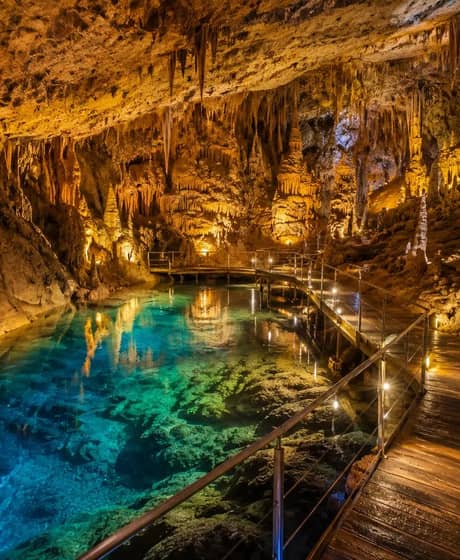
Damlataş Cave
Cleopatra Beach
Inner Fortress and Ehmedek
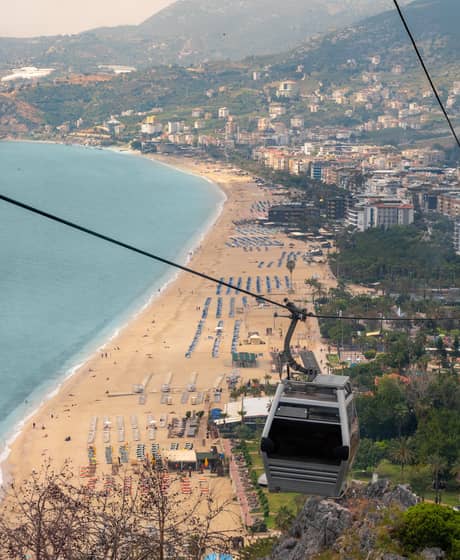
There is a considerable difference in height between the lower harbour sites and the upper castle district. If you plan to add the Inner Fortress and Ehmedek on the same day, arrange your cable-car, taxi, bus or road transport in advance.
The most practical route begins at Alanya Harbour, continues to the Red Tower and then follows the waterfront path to the shipyard and Tophane. Walking in the cooler morning or late afternoon is more comfortable, particularly during summer.
A short itinerary can include:
A walk around Alanya Harbour
A visit to the Red Tower
The coastal path beside the walls
The shipyard’s five galleries and maritime displays
A viewpoint stop near Tophane
A half-day itinerary can include:
The Red Tower and shipyard in the morning
Tophane neighbourhood and castle streets
A lunch break
Ehmedek and the Inner Fortress by cable car or road
A return to the harbour around sunset
Wear comfortable shoes with good grip. Carry water, a hat and sun protection during summer. At the first ticket office, ask about the current ticket coverage, Museum Pass conditions and closing time so that the rest of the itinerary can be planned accurately.
For more ideas, explore Maxtoria’s guide to the best places to visit in Alanya.
Coastal cruises departing from Alanya Harbour offer views of the shipyard’s five-bay façade from the Mediterranean. The sea-level perspective makes its relationship with the Red Tower, Tophane and the castle walls much easier to understand.
Not every Alanya boat trip follows the same route or spends the same amount of time in front of the shipyard. Before booking, check:
Whether the boat departs from Alanya Harbour
Whether it passes the shipyard and Red Tower
Whether a photography or swimming stop is included nearby
Total tour duration
Hotel transfers
Lunch and drinks
Conditions for children
Weather and cancellation policy
The Alanya Boat Trip with Swimming Stops and Kids’ Entertainment includes views of the Red Tower and historic shipyard after leaving the harbour. Seeing the building from the water does not replace entering its galleries; the two experiences provide different perspectives.
Alanya Shipyard can be added to a short independent harbour walk or included in a wider day covering the castle, Red Tower, caves and coastal views.
Before choosing a tour, check:
Whether the shipyard is visited inside or only viewed from the sea
Whether the Red Tower and castle are included
Entrance fees
Guide service
Total walking distance
Hotel pickup areas
Boat and swimming stops
Child and accessibility conditions
Return time
Visitors who want to combine the cable car, castle, Damlataş Cave and Cleopatra Beach can consider the Alanya City Tour with Cable Car, Castle and Panoramic Sea Views.
Compare more options among Maxtoria’s Alanya city tours or browse all tours and activities in Alanya.
Our easy-to-use app offers a comprehensive listing of curated tours, activities, and experiences, all in one place. Whether you’re a thrill-seeker looking for an adrenaline-packed adventure or seeking a more relaxed getaway, Maxtoria has got you covered.





© 2026 Maxtoria Turizm Ticaret A.Ş. — All Rights Reserved
v2.1.2