




 Best Price
Boat Tours
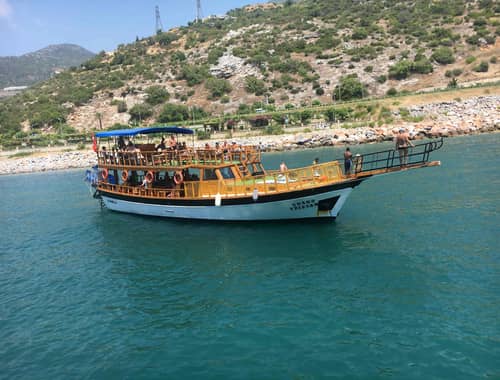
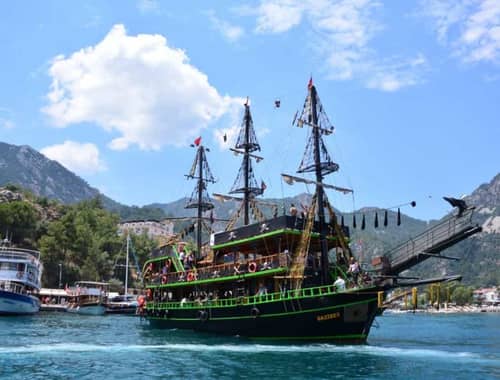
Alanya Luxury Pirate Boat Cruise with Lunch and Drinks
Free Cancellation Free Shuttle
From £20.19 £19.04 Per Person



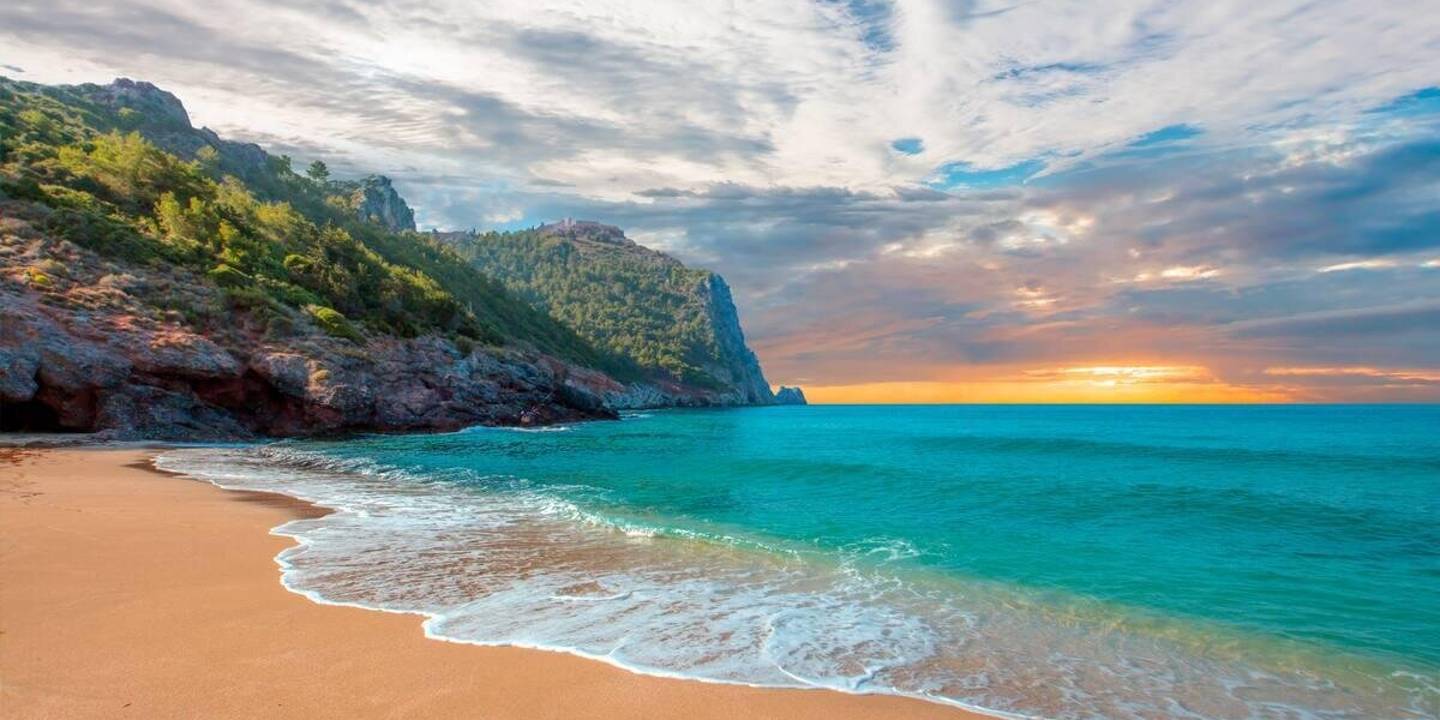
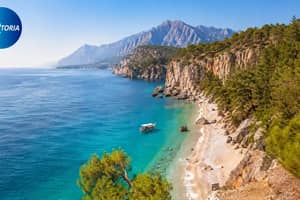
Cleopatra Beach is a famous public beach in Alanya, Antalya, stretching west from the historic peninsula and the area in front of Damlataş Cave. Known locally as Kleopatra Plajı, it is one of Alanya’s most popular swimming spots, with golden sand, clear Mediterranean water, views of Alanya Castle and a convenient location close to the city centre. Access to the public sections of the beach is free. Sunbeds, parasols, food and drinks, water sports and some facilities may be charged separately. The seabed can become deep quite quickly in certain sections, and the water may be rough on windy days, so families with children should follow lifeguard warnings and check current sea conditions.
Tours and trips that go here, run by licensed local operators.
Cleopatra Beach is on the western side of Alanya’s historic peninsula, along the coast of Saray neighbourhood in Antalya Province. Damlataş Cave, Alanya Archaeological Museum and the lower cable car station are within walking distance of the beach’s eastern end.
The main transport options are:
On foot: Depending on your starting point, the beach is approximately a 10–30-minute walk from Alanya bazaar and many central hotels.
By public transport: Municipal buses travelling along Atatürk Boulevard and through Saray and Damlataş can be used. Routes and timetables may change, so check a current transport application on the day of your visit.
By taxi: Direct journeys are available from central Alanya, the bus station, Oba and hotels around the city centre.
By car: Search for “Cleopatra Beach”, “Kleopatra Plajı”, “Damlataş Beach” or your preferred numbered beach section. Parking near the coast can fill early in summer.
By bicycle: Cycle routes along the coast and through central Alanya may be practical, depending on the location of your accommodation.
Approximate distances:
| Starting point | Approximate distance to Cleopatra Beach |
|---|---|
| Damlataş Cave | 100–300 m |
| Alanya Archaeological Museum | 200–500 m |
| Alanya city centre | Approximately 1 km |
| Alanya Bus Station | 1–2 km |
| Red Tower and harbour | 2–3 km |
| Gazipaşa-Alanya Airport | Approximately 40–45 km |
| Antalya Airport | Approximately 120–130 km |
Cleopatra Beach covers a long stretch of coastline. Selecting a particular beach number, facility or entrance on your map can reduce unnecessary walking.
Entry to the public sections of Cleopatra Beach is free. You do not need a standard admission ticket or Museum Pass to use the beach, lay down your own towel or swim in the sea.
| Service | Cost information |
|---|---|
| Entry to the public beach | Free |
| Swimming | Free |
| Museum Pass | Not required |
| Sunbeds and parasols | Charged according to the operator and season |
| Showers, changing cabins and toilets | May be free or charged, depending on the section |
| Food and drinks | Charged separately |
| Water sports | Charged separately |
| Parking | May be charged, depending on the area used |
Sunbed and parasol prices vary between numbered sections, operators and seasons. As there is no clearly published universal online tariff for the entire beach, do not rely on prices from previous years. Ask about the current charge and payment method before using a service.
The shoreline itself is an open public area that can be visited at different times of day. Lifeguards, changing cabins, showers, refreshment stands, equipment hire and sports services may follow seasonal operating hours.
The sea at Cleopatra Beach can become deep within a short distance from the shore in some sections, and waves may be strong on windy days. It therefore does not provide the same shallow, calm conditions at every point or on every day.
For safer swimming:
Follow the warning flags and lifeguard instructions.
Do not enter the water when a red flag is displayed.
Supervise children continuously, even at the water’s edge.
Be careful of waves and backwash that can make leaving the sea more difficult.
Remain within the designated swimming zone and avoid water-sports corridors.
Consider water shoes if you have sensitive feet.
Stay close to the shore if you are not a confident swimmer.
Sea conditions can change during the day. Mornings are often calmer, but this is not guaranteed. Wind, waves, currents and beach warnings should always be assessed at the time of your visit.
Cleopatra Beach is one of the easiest places in Alanya to combine a city-centre beach day with history, scenery and walking. Damlataş Cave, Alanya Archaeological Museum and the cable car station are close to its eastern end, while parks, sports areas, cafés, restaurants and accommodation line the coast behind the beach.
The long shoreline is divided into numbered sections and areas managed by different operators. Crowd levels, facilities and entry conditions can therefore vary from one part to another. First-time visitors may find it useful to walk along the promenade before choosing where to settle.
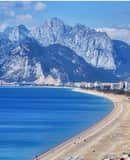
Cleopatra Beach is a long public beach known for its broad sandy shore, clear Mediterranean water, castle views and lively city atmosphere. It is especially busy during summer, while spring, autumn and early mornings can feel more relaxed.
The beach is used for more than swimming. Visitors also come to watch the sunset, walk or cycle along the seafront, play beach sports, relax at nearby cafés and see the coastline from the cable car.
The central and Damlataş sections of Cleopatra Beach are along the coast of Saray neighbourhood in Alanya. Because the beach continues west along a long shoreline, maps may display different numbered sections and business names.
When choosing a location, look for the entrance closest to your hotel or the particular facilities you want rather than selecting only the general “Cleopatra Beach” result.
The main stretch of Cleopatra Beach, extending west from the Damlataş area, is commonly described as approximately 2 kilometres long. Small differences appear between sources because they do not always use the same starting and finishing points.
Specific monitoring areas, including Cleopatra East and Cleopatra West public beaches, have separate Blue Flag records. The measurements for those individual sections do not represent the full length of the entire Cleopatra coastline.
The main features of Cleopatra Beach include:
A central location west of Alanya’s historic peninsula
A long shoreline of approximately 2 kilometres
Golden sand with small pebbles in some sections
Clear Mediterranean water
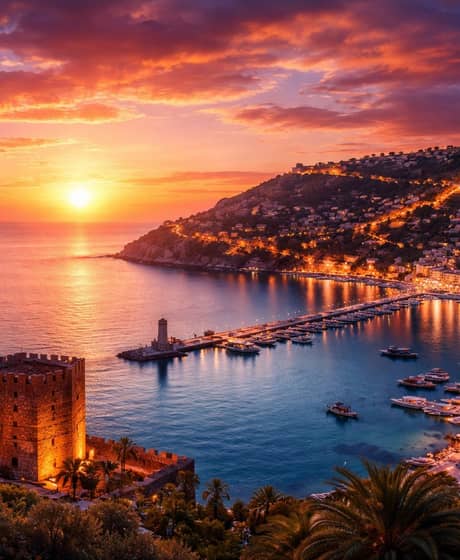
Views of Alanya Castle and the rocky peninsula
Free entry to the public beach areas
Paid sunbed, parasol and operator services
Beach sports and seasonal water activities
Sunset views
Proximity to Damlataş Cave, the museum and cable car
The beach’s popularity can result in heavy summer crowds and limited nearby parking. Arriving early makes it easier to compare sections and find a comfortable place.
Cleopatra Beach is mainly sandy, although small pebbles and coarse sand can be found in some sections and at the water’s edge. The sand is generally coarser than fine powdery sand, so it may stick less to the skin but become very hot underfoot during the middle of the day.
The eastern and western sections are not identical. Blue Flag records describe sand and pebbles in the east section and predominantly sand in the west section.
The sand stands out because of its golden colour, relatively coarse texture and the contrast it creates with the clear blue sea. The natural shape of the coast and views of Alanya Castle’s rocky peninsula make the setting particularly recognisable.
Popular stories claim that the sand was brought from another country or transported for a historical figure. Such claims should be treated as legends unless supported by reliable historical evidence.
Visitors should not remove sand, pebbles or other natural material from Cleopatra Beach. Taking a small amount may seem harmless, but the combined effect of large visitor numbers can damage the shoreline and may conflict with local rules.
Take photographs as souvenirs and leave the beach’s natural materials where they belong.
Cleopatra Beach takes its name from a local legend that Queen Cleopatra VII of Egypt and the Roman commander Mark Antony swam here. Different versions of the story say that the coast was given to Cleopatra or that she visited and bathed in this part of Alanya.
The story is an important part of Alanya’s tourism identity, but its details should be understood as a local legend rather than a fully documented historical event.
Cleopatra Beach usually refers to the long public shoreline, while Cleopatra Bay may describe the smaller rocky cove close to the historic peninsula. The two names are sometimes used interchangeably in everyday conversation and online map results.
Cleopatra Beach in Alanya should not be confused with Cleopatra Bay on Sedir Island near Marmaris or similarly named places elsewhere in Türkiye.
Damlataş Beach is the name generally used for the eastern starting section of the Cleopatra coastline, immediately in front of Damlataş Cave and the historic peninsula. As the two names refer to adjoining parts of the same coastal system, their boundaries can overlap in maps and everyday descriptions.
Choose the Damlataş side for the closest access to the cave, museum, cable car and castle views. Continue west along Cleopatra Beach for a longer shoreline and a wider choice of operators.
Cleopatra East and Cleopatra West public beaches appear as separate locations in the official Blue Flag system. Awards and bathing-water analyses are assessed seasonally, so the current status should be checked for the year of your visit.
The Blue Flag programme covers bathing-water quality, environmental management, safety, information and service standards. It does not mean that the sea is calm every day or that every part of a long beach has identical facilities.
Yes. Entry to the public sections of Cleopatra Beach is free. You can use your own towel and beach equipment without purchasing a beach ticket.
Sunbeds, parasols, lockers, parking, food, drinks, water sports and some shower or toilet facilities may be charged separately by the relevant operator.
There is no general entrance fee for Cleopatra Beach because its public sections are free to access. Prices shown online usually refer to sunbed and parasol rental, a private beach operator, parking or another attraction or business with Cleopatra in its name.
Before paying for a service, ask whether the price is per person, per item or per set, and whether it covers the whole day.
Sunbed and parasol prices vary according to the numbered beach section, operator and season, so there is no single fixed rate for the entire coastline. Prices from previous years may no longer be valid.
Before renting, confirm:
Whether the price covers one sunbed or a set of two sunbeds and a parasol
Whether a parasol is included
Whether the rate is valid for the whole day
Whether showers, changing cabins or toilets cost extra
Whether card payments are accepted
Whether there is a minimum food or drink spend
Cleopatra Beach is not a single gated or ticketed attraction, so there is no universal opening and closing time for the entire shoreline. Lifeguards, sunbeds, showers, cabins, refreshment stands and water-sports operators work during their own hours, mainly in the summer season.
Swimming at night is not recommended because visibility is reduced and waves, currents or the absence of lifeguards can create additional risks. Daylight is best for swimming, while the promenade remains popular around sunset.
Showers are available in various sections of Cleopatra Beach. However, they may not all operate during the same hours or be free to use. Some facilities belong to municipal beach areas, while others are managed by private operators.
If a shower is important to your visit, check the facilities and current conditions at your selected numbered section before settling down.
Toilets and changing facilities are available in different parts of the beach, although access and charges may vary by section. Blue Flag records also list accessible toilets at both Cleopatra East and Cleopatra West public beaches.
Some facilities may be closed outside the main season or temporarily unavailable for maintenance.
Street parking and private car parks can be found around the seafront, but there is no single large, free car park reserved for all beach visitors. Spaces near popular entrances can fill early during summer and at weekends.
For travellers staying in central Alanya, walking, public transport or a taxi may be more convenient than driving during the busiest months.
Accessibility facilities vary between different beach sections. Official Blue Flag records list a ramp, accessible sunbed, parasol and toilet at Cleopatra West Public Beach, while an accessible toilet is listed for the east section.
The location and seasonal availability of these facilities, as well as continuous access all the way to the water, should be confirmed with Alanya Municipality or the relevant beach operator before visiting.
Cleopatra Beach is popular with families, but young children require continuous supervision because the water can become deep quickly and waves may be strong. Families looking specifically for a shallow and consistently calm beach should assess the conditions on arrival rather than assuming every section is suitable.
Visiting early, staying near a lifeguard point and following the red-and-yellow flag system can make a family beach day safer.
Non-swimmers should remain in the very shallow area only when the sea is calm and lifeguard warnings indicate that conditions are suitable. In some sections, the seabed drops within a short distance, so taking only a few steps forward may create a risk.
Inflatable mattresses and swim rings are not safety equipment and can be carried offshore by the wind. Use a suitable buoyancy aid and remain under close adult supervision.
Cleopatra Beach can be rough, particularly in windy weather. Its exposure to the open sea means that waves can make leaving the water more difficult and create strong backwash at the shoreline.
Wave conditions are not constant. Beach flags and lifeguard instructions should take priority over a general weather forecast.
Cleopatra Beach is known for clear water, and the east and west public beach sections are included in official bathing-water monitoring. Visibility can nevertheless change during the day because of waves, rain, currents and visitor numbers.
For the latest results, consult the sampling data on the official Blue Flag pages and current local announcements.
Alanya has a long swimming season, and the sea is generally most comfortable for many visitors between June and October. Swimming may also be possible in May or November, although personal temperature preference and daily weather conditions are important.
July and August bring the warmest conditions and the largest crowds. June, September and early October can offer warm water with more comfortable conditions for walking and sightseeing.
The best period depends on your priorities:
May and June: Warming weather with potentially more manageable crowds than midsummer
July and August: Warm water and fully active services, but the highest temperatures and visitor numbers
September and early October: Usually warm sea and more comfortable conditions for walking
Early morning: A quieter beach, easier choice of space and softer sunlight
Before sunset: The most popular time for castle and Mediterranean views
Check wind and wave forecasts for swimming, sunlight direction for photography and seasonal opening hours if you plan to use beach facilities.
Activities on and around the beach include:
Swimming and sunbathing
Walking and cycling along the seafront
Beach volleyball and outdoor sports
Seasonal water sports through authorised operators
Watching the sunset
Photographing Alanya Castle and the peninsula
Visiting Damlataş Cave
Taking the cable car towards the castle
Exploring Alanya Archaeological Museum
Relaxing at nearby cafés and restaurants
Before booking a water sport, ask about age limits, health requirements, insurance, equipment and weather conditions.
The best section depends on what you want from your visit. The Damlataş side provides easy access to the cave, museum, cable car and castle views, while the sections farther west offer a longer coastline and a greater range of beach operators.
Visitors seeking a quieter experience can walk away from the main entrances. Those who prioritise facilities may prefer to stay near showers, changing cabins and lifeguard points. The seabed and wave conditions can feel different between sections even on the same day.
Popular photography positions include:
The Damlataş side facing the castle and rocky peninsula
West-facing views showing the width and length of the beach
Alanya Cable Car cabins and the area around the upper station
The seafront promenade at sunset
West-facing viewpoints around Alanya Castle
Keep phones and cameras away from breaking waves. Before flying a drone, check current aviation rules, local restrictions, crowd-safety requirements and privacy regulations.
Reviews often praise the clear water, golden sand, castle views, central location and sunsets.
Common concerns include:
Large summer crowds
Strong waves on some days
Water that becomes deep quickly
Variable sunbed and operator prices
Difficulty finding nearby parking
Hot sand and limited natural shade during the middle of the day
When comparing reviews, consider the date, the numbered beach section and the sea conditions during each visitor’s stay.
The area around the beach has hotels, aparthotels and guesthouses for a wide range of budgets. Accommodation near Damlataş and the eastern end is convenient for the cave, cable car and city centre, while properties farther west provide access to a longer stretch of beach.
Before booking, check:
The actual walking distance to the beach
Whether a main road or steep route must be crossed
Any private-beach agreement and sunbed conditions
Parking availability
Child policies
Proximity to nightlife and possible noise
Whether the advertised sea view applies to your selected room type
Places within walking distance or a short journey include:
Damlataş Cave
Damlataş Beach
Alanya Cable Car
Alanya Archaeological Museum
Alanya Castle and Ehmedek
Alanya bazaar
Red Tower
Seljuk Shipyard
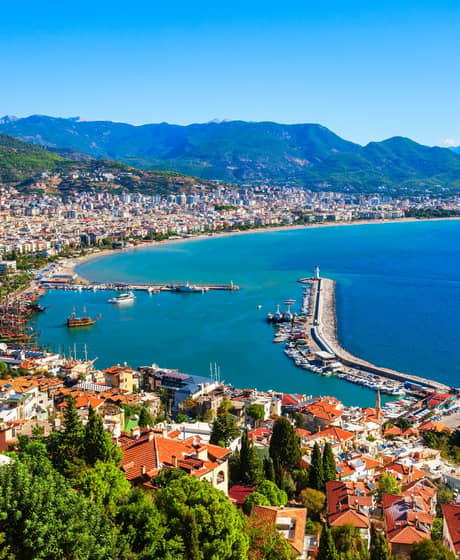
Alanya Harbour and pier
Alanya Observation Terrace
Dim River, Dim Cave, Sapadere Canyon, İncekum and Ulaş Beach can be planned as separate routes outside the main city-centre itinerary.
Yes. Damlataş Cave and Cleopatra Beach are only a few minutes apart on foot, making them easy to combine in the same itinerary. As the cave visit is relatively short, the beach, museum and cable car can form a practical half-day city-centre route.
In summer, consider visiting the cave during the late morning or midday heat and using the beach in the early morning or late afternoon. Damlataş Cave charges an entrance fee, while entry to the public beach is free.
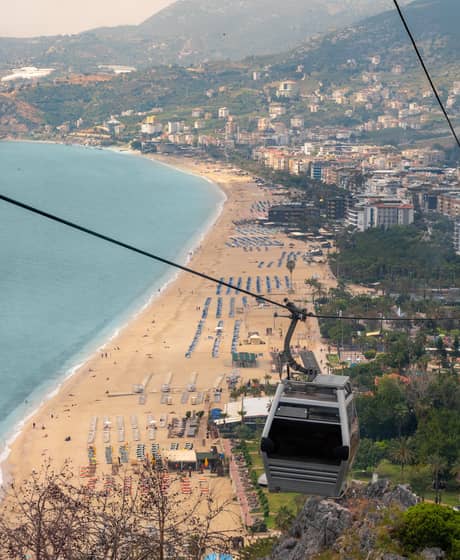
Yes. Cleopatra Beach can be seen in a wide panorama from west-facing viewpoints around Alanya Castle and from the cable car route. The long coastline, cityscape and colour changes in the sea are particularly striking before sunset.
If you combine the castle and beach in one day, avoid long walks on the steep castle roads during the hottest hours and check the time of the final cable car service.
| Feature | Cleopatra Beach | İncekum Beach |
|---|---|---|
| Location | Alanya city centre | West of Alanya, towards Avsallar and İncekum |
| Transport | Easy to reach on foot or by local transport | A car or regional transport is more practical |
| Sea | Can become deep quickly and may be rough | Known for more gently shelving areas |
| Atmosphere | Lively, central and busy | More of a nature and resort-area setting |
| Nearby stops | Cave, cable car, museum and castle | İncekum and Avsallar area |
| Best suited to | A beach day combined with city sightseeing | A quieter, family-focused day by the sea |
Sea conditions change with the weather, so this general comparison does not replace the warning flags and wave information on the day.
Cleopatra Beach extends west of Alanya’s historic peninsula, while Keykubat Beach runs along the eastern coastline. Cleopatra is known for castle views, golden coarse sand and a lively visitor atmosphere. Keykubat provides access to the eastern promenade and neighbourhoods on the Oba side of the city.
The most convenient choice often depends on where you are staying. Cleopatra is closer for visitors based around Saray and Damlataş, while Keykubat may be easier to reach from eastern central Alanya and Oba.
The road distance from Gazipaşa-Alanya Airport to Cleopatra Beach is approximately 40–45 kilometres. Private transfers, taxis, hire cars and shuttle services connecting with central Alanya may be used.
When using public connections, travel first to Alanya city centre or the bus station and continue by municipal bus or taxi. Journey time depends on traffic, hotel stops and the chosen route.
Antalya Airport is approximately 120–130 kilometres from Cleopatra Beach, and the road journey can take several hours when traffic is included. Options include a private transfer, hire car, coach-station connection or shared tourism shuttle.
Remember that Antalya city centre and Alanya are not the same resort centre. Allow sufficient time for traffic, hotel pickups and early arrival at the airport on your return journey.
A balanced city-centre day can be planned as follows:
Swim at Cleopatra Beach early in the morning
Visit Damlataş Cave
Explore Alanya Archaeological Museum
Stop for lunch and a rest
Take the cable car to the castle and Ehmedek
Return to the beach or walk along the promenade
Watch the sunset from the Cleopatra coastline
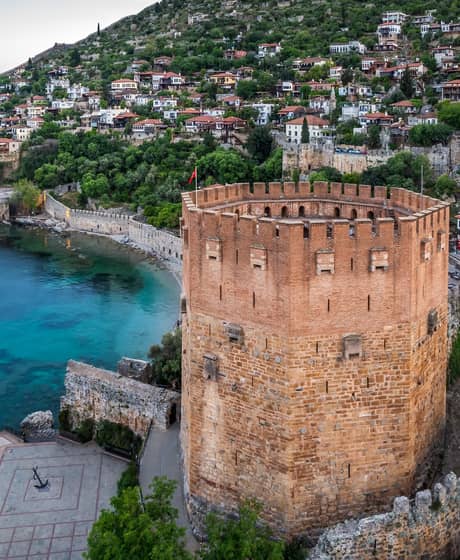
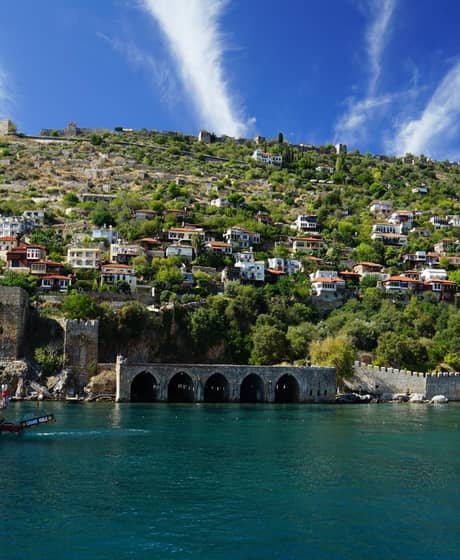
If you also want to see the Red Tower, Seljuk Shipyard and harbour, extend the route to a full day or explore the castle and harbour on another day. For more ideas, read Maxtoria’s guide to the best places to visit in Alanya.
Useful items for your beach bag include:
High-factor sunscreen
A hat and sunglasses
Water in a reusable bottle
A towel or beach mat
Water shoes
A suitable buoyancy aid for children
A bag for wet clothes
A waterproof phone case
A light layer if you plan to stay into the evening
Reduce single-use waste, use the designated bins and do not remove sand or stones from the beach.
Cleopatra Beach is easy to visit independently. Travellers who want to see Alanya’s coast from the sea, view the castle and sea caves from a different perspective or arrange a day with hotel transfers can also consider an organised experience.
Before booking, check:
Hotel pickup and drop-off areas
Harbour or meeting point
Total tour duration
Swimming stops
Lunch and drinks
Child age categories
Music and entertainment style
Cancellation and weather conditions
Whether the tour visits Cleopatra Beach itself
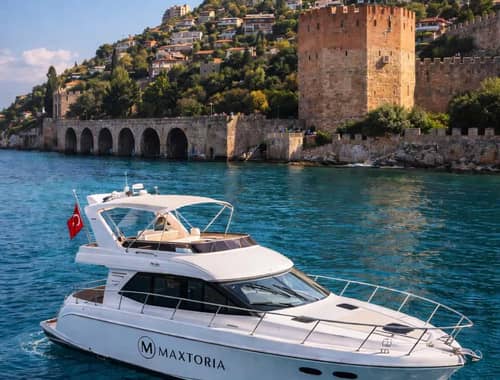
To see the Alanya peninsula and coastal caves from the water, explore the Alanya Pirate Boat Tour with Lunch and Soft Drinks or compare more options on the Alanya boat tours page.
For a wider selection of experiences, visit the Alanya tours and activities page.
Our easy-to-use app offers a comprehensive listing of curated tours, activities, and experiences, all in one place. Whether you’re a thrill-seeker looking for an adrenaline-packed adventure or seeking a more relaxed getaway, Maxtoria has got you covered.





© 2026 Maxtoria Turizm Ticaret A.Ş. — All Rights Reserved
v2.1.2