










 Best Price
Boat Tours
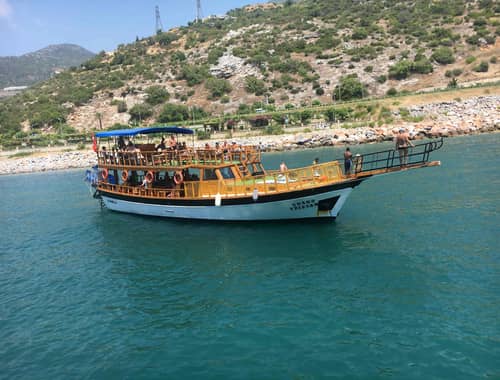
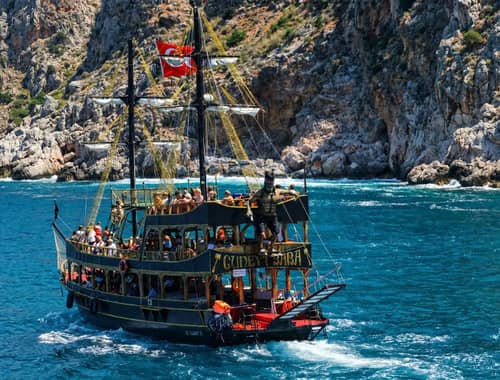
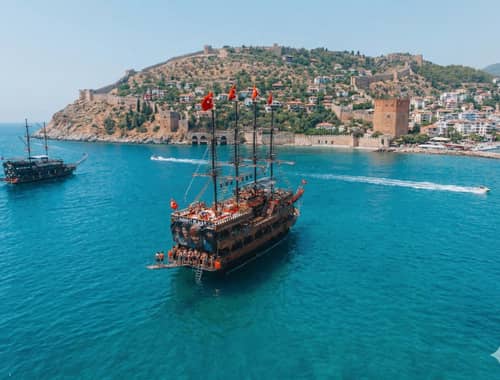
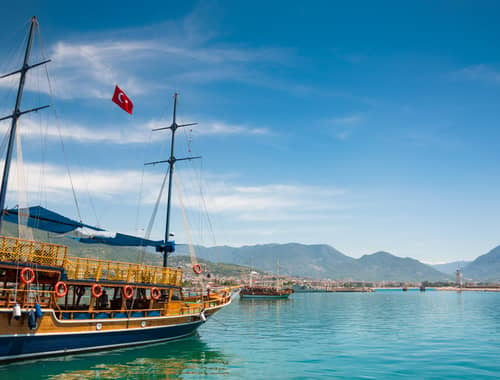
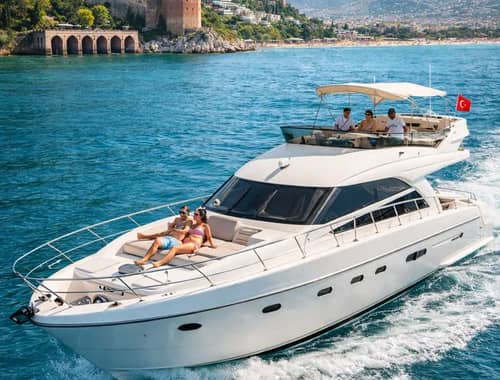
Alanya Luxury Pirate Boat Cruise with Lunch and Drinks
Free Cancellation Free Shuttle
From £20.19 £19.04 Per Person



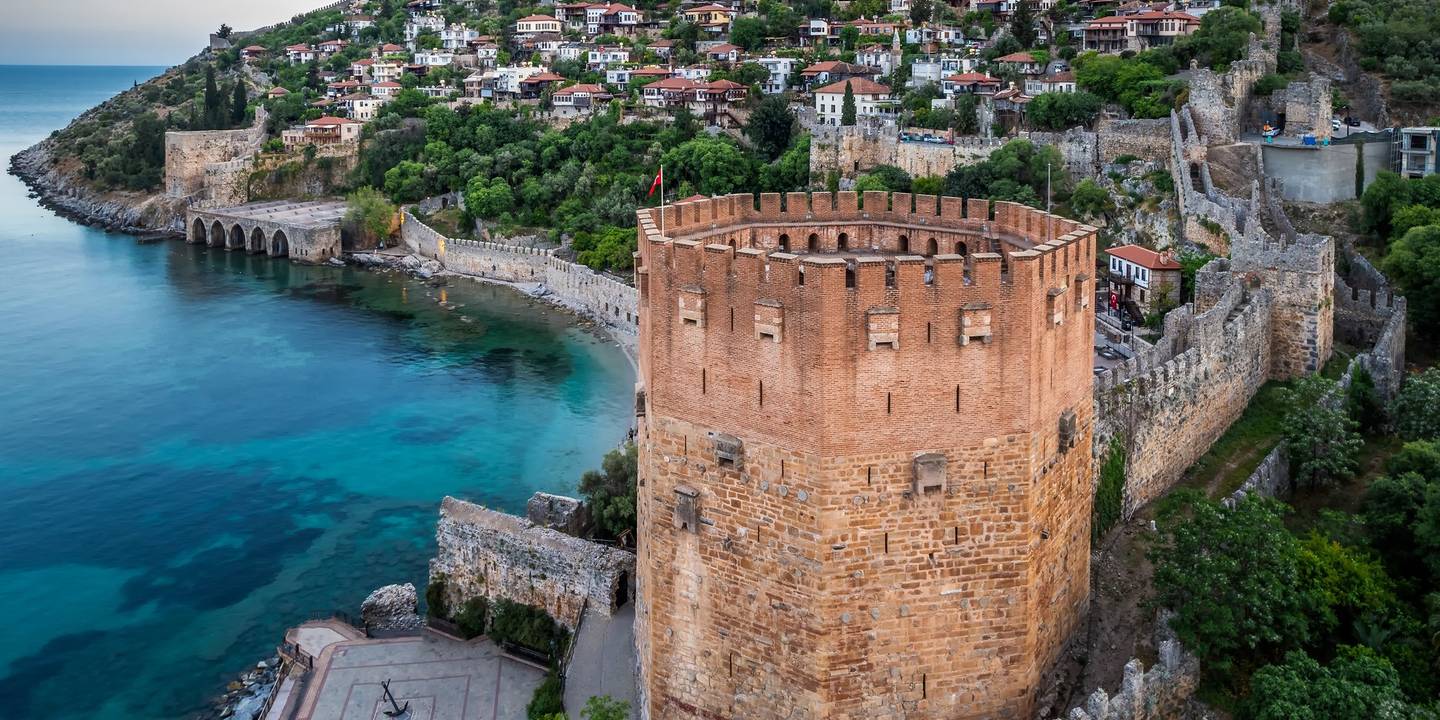
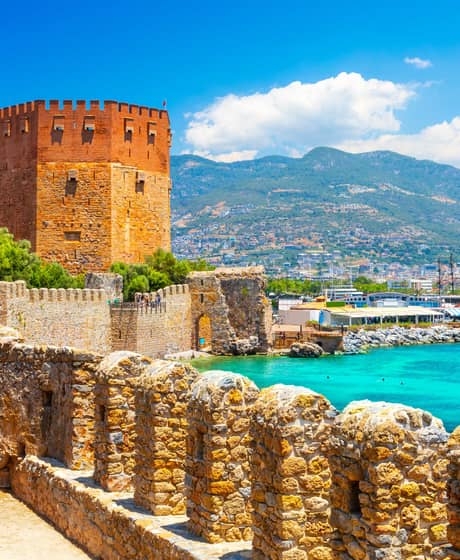
The Red Tower, locally known as Kızıl Kule, is an octagonal defensive tower at Alanya Harbour. It was commissioned by the Anatolian Seljuk Sultan Alaaddin Keykubat I and completed in 1226 to protect the harbour and Alanya Shipyard from attacks by sea. The tower takes its name from the red bricks used in its upper sections and has become one of Alanya’s most recognisable symbols. The five-storey interior, large octagonal central pier, vaulted corridors, arrow slits and water system provide a close look at medieval defensive architecture. The ground floor is used as an exhibition area. The Red Tower can be visited on the same historic route as Alanya Harbour, the Seljuk Shipyard, Tophane and Alanya Castle.
Tours and trips that go here, run by licensed local operators.
The Red Tower is in Alanya, Antalya, beside Alanya Harbour at the eastern foot of the historic castle peninsula. Map services generally place it around Çarşı, İskele or Tersane Street. It is within easy walking distance of the harbour, town centre and shopping streets.
The main transport options are:
On foot: Follow the waterfront from central Alanya, the harbour or the İskele area. Walking from Damlataş usually takes approximately 20–30 minutes.
By public transport: Use a current municipal bus serving the town centre, İskele or harbour area. Routes and stops may change, so check Alanya’s transport system on the day of travel.
By taxi: Direct journeys are available from Cleopatra Beach, Damlataş, Oba, Tosmur and hotels around central Alanya.
By car: Use a designated car park around the harbour or town centre and continue on foot. Vehicle access and parking immediately beside the historic tower may be limited.
By boat tour: Boats leaving Alanya Harbour show the Red Tower from the sea, although seeing its exterior from a boat does not include admission to the museum inside.
Useful navigation terms include Red Tower Alanya, Kızıl Kule, Kızılkule and Kızılkule Ethnography Museum. Check that the result is beside Alanya Harbour, as the site is sometimes confused with Maiden’s Tower in Istanbul.
Admission is charged for the museum inside the Red Tower, and recent 2026 visitor reports list the full ticket at 150 TL and the student ticket at 75 TL. However, a separate tariff for the Red Tower is not consistently published on official websites, so confirm the current price at the ticket office or with the Alanya Museum Directorate on the day of your visit.
| Visitor information | Current position |
|---|---|
| Admission to the Red Tower museum | Ticket required |
| 2026 full ticket | Reported locally as 150 TL |
| 2026 student ticket | Reported locally as 75 TL |
| Museum Pass or MüzeKart | Confirm current acceptance at the ticket office |
| Red Tower and shipyard ticket | Separate or combined tickets may be available |
| Commonly listed opening hours | 08:30–17:30 |
| Summer closing time | May be extended in some periods |
Prices of 10 TL, 20 TL or 30 TL found online refer to previous years. Museum Pass acceptance, discounted entry, free admission for children, student-document requirements and combined tickets may also change. Arrive at least 45–60 minutes before the final admission time, as visitors arriving shortly before closing may not be allowed to climb to the upper floors.
The Red Tower was commissioned by the Anatolian Seljuk Sultan Alaaddin Keykubat I and built in 1226 by the Aleppo architect Ebu Ali Reha el-Kettani. It was designed as the main defensive tower protecting Alanya Harbour and the Seljuk Shipyard completed shortly afterwards.
The principal features inside the tower include:
An exhibition area on the ground floor
A large octagonal supporting pier at the centre
Vaulted corridors around the central pier
Galleries and defensive spaces arranged over five levels
Arrow slits and observation openings
A cistern and channels designed to collect rainwater
An 85-step stone staircase to the upper levels
Views towards the harbour, shipyard, castle walls and Mediterranean Sea
The steps are narrow and high, while lighting and floor conditions reflect the building’s historic character. Wear comfortable, non-slip shoes. Access to the upper level may occasionally be restricted for maintenance, safety or an event.
The Red Tower is one of Alanya’s most important monuments from the Seljuk period and represents the city’s former military and maritime strength. Its position at the entrance to the harbour allowed approaching vessels to be observed, protected the shipyard and completed the coastal section of Alanya Castle’s defensive system.
Its simple, powerful exterior geometry gives way to a more complex interior arrangement. A large central pier, surrounding vaults, stairways between different levels, arrow slits and a rainwater-collection system demonstrate that the tower was designed to withstand a prolonged attack. Today, visitors can examine this architecture and the exhibition area on the ground floor.
The Red Tower is a 13th-century octagonal defensive structure built to protect Alanya Harbour and the Seljuk Shipyard. It forms part of the fortification system descending from Alanya Castle to the Mediterranean coast.
The tower was more than an observation post. Its thick walls, defensive openings, multiple levels and central water system allowed soldiers to remain inside and organise a sustained defence. Its commanding position above the harbour helped guards monitor maritime traffic and potential threats approaching the coast.
The Red Tower is now one of the main symbols of Alanya. It frequently appears in city promotions, on local emblems and flags, on souvenirs and in images of the historic peninsula.
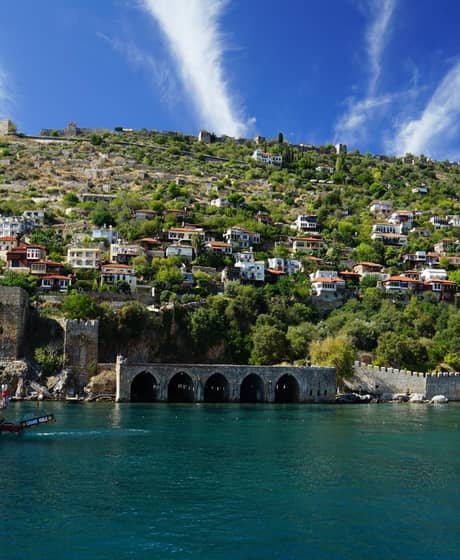
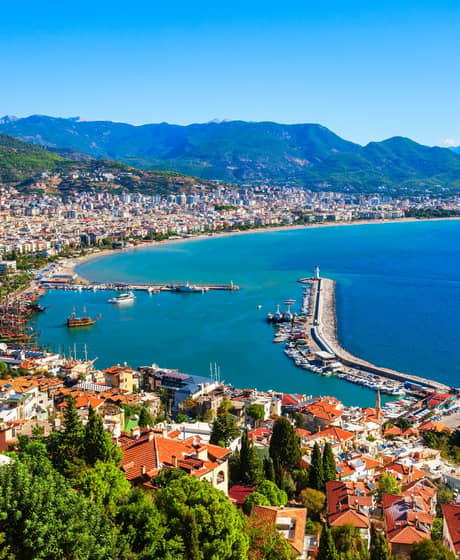
The Red Tower stands in Alanya’s historic harbour, where the eastern slope of the castle peninsula meets the sea. Alanya Harbour and the İskele district are to its north, the Seljuk Shipyard is to the south and the castle walls rise to the west.
The location is close to the modern town centre. Visitors can walk to the tower from the harbour restaurants, shopping streets and İskele without needing the cable car. Unlike the Inner Fortress of Alanya Castle, the Red Tower is close to sea level.
Search results may show Maiden’s Tower in Istanbul, towers in other cities or local businesses with similar names. The correct map entry should show Alanya Harbour, Tersane and Çarşı together.
The Red Tower was completed in 1226 during the reign of the Anatolian Seljuk Sultan Alaaddin Keykubat I. The date is supported by the inscription on the tower’s northern façade and official cultural records.
Alaaddin Keykubat captured Alanya in 1221 and then reorganised the town as a military, commercial and maritime centre. The tower protecting the harbour was completed in 1226, followed by the Seljuk Shipyard in approximately 1227–1228.
The year 2026 marks the 800th anniversary of the tower’s completion. Cultural events and exhibitions highlighting its history and symbolic importance may therefore be organised during the anniversary year.
The Red Tower was commissioned by the Anatolian Seljuk Sultan Alaaddin Keykubat I. The architect named in the inscriptions was Ebu Ali Reha el-Kettani, a master builder from Aleppo.
Ebu Ali Reha el-Kettani is described as an experienced designer of defensive structures. The sultan is believed to have invited him to Alanya to construct the tower protecting the harbour. Its plan, materials and strategic coastal position all reflect its military purpose.
The concise answer is that Alaaddin Keykubat I commissioned the Red Tower and Ebu Ali Reha el-Kettani designed and built it.
The Red Tower was built to defend Alanya Harbour, the nearby shipyard and the coastal section of the castle walls against attacks from the sea. The harbour was strategically important to Seljuk trade and naval activity in the Mediterranean.
The tower’s height and thick walls allowed approaching ships to be detected early and enabled defenders to operate on several levels. Arrow slits and other openings were designed for observation and defence.
The Red Tower and Seljuk Shipyard were complementary parts of one system. The tower provided security, while the shipyard allowed ships to be constructed, repaired and protected.
The Red Tower takes its name from the red fired bricks used in its upper sections. Once construction reached a certain height, lifting heavy stone blocks became difficult, so lighter bricks were used instead.
Dressed stone is visible in the lower walls, while the upper sections have a reddish brick colour. Sunlight makes the contrast between these materials and the tower’s characteristic red tone especially noticeable.
The local and historic name is Kızıl Kule or Kızılkule. Red Tower is the standard English translation, while “Kırmızı Kule” is sometimes used informally in Turkish.
The Red Tower is a monumental Seljuk defensive structure with an octagonal plan, a height of approximately 33 metres, a diameter of 29 metres and five internal levels. Each of its eight façades is approximately 12.5 metres wide.
Its main architectural features include:
An octagonal exterior plan
A height of approximately 33 metres
A diameter of approximately 29 metres
A ground floor, first floor, mezzanine, open level and roof terrace
A large octagonal supporting pier at the centre
A vaulted corridor around the central pier
Dressed stone and red brick construction
Arrow slits for observation and defence
A rainwater-collection and cistern system
An 85-step stone staircase leading upwards
Despite the tower’s imposing exterior, its entrance is small and the access corridor is narrow. This is thought to have been a defensive measure designed to prevent a large group of attackers from entering at once.
The Red Tower is approximately 33 metres high and 29 metres in diameter. Each side of its octagonal exterior is around 12.5 metres wide.
Its height may appear modest beside modern buildings, but its sea-level position, broad body and thick walls give it a powerful presence. In the 13th century, it would have dominated the view for vessels approaching the harbour.
Visitors reach the upper levels using an 85-step stone staircase. The spacing differs from a modern staircase, so the time and effort required depend on each visitor’s mobility.
The Red Tower has five levels, including the ground floor. Official descriptions identify them as the ground floor, first floor, mezzanine, open level and open terrace.
The floors are not arranged like the rooms and corridors of a modern building. The route rises through passages, vaults and stairways around the central octagonal pier. Different levels supported defence, observation, accommodation and the operation of the water system.
The ground floor is now used for exhibitions. Access to every upper level may change according to maintenance and safety arrangements.
The historic stone staircase leading towards the top of the Red Tower has 85 steps. Their height and spacing can vary, making the climb more demanding than a modern museum staircase.
The passages are narrow, and visitors may need to wait for people coming in the opposite direction. Do not run, keep children close and allow others enough room to pass.
Visitors with limited mobility, balance problems or sensitivity to enclosed spaces should ask about access at the entrance. As the tower is a protected historic building, a lift to the upper floors should not be expected.
Inside the Red Tower are an exhibition area, vaulted corridors, a central supporting pier, stone staircases, defensive openings and a historic water system. The ground floor has been used for ethnographic and cultural exhibitions since 1979.
Historical accounts indicate that wooden rooms once extended above parts of the corridors on the ground and first floors, providing resting areas for castle guards. Only traces of these sections can be seen today. Exhibits and information panels may change with the museum programme.
Openings on the upper levels provide views of the harbour, sea, shipyard and castle walls. Do not extend phones or cameras beyond the protected openings when taking photographs.
The feature often described as a well was part of a cistern system that collected and stored rainwater for the tower’s defenders. It helped provide water to soldiers during a siege, when outside access could be cut off.
Rainwater gathered from the roof and upper levels was channelled towards the central storage area. This solution was essential in a fortified building designed to remain operational for an extended period.
Do not throw objects into the well or cistern, and remain behind any protective barriers. The water system is not merely a decorative detail but an important part of the tower’s defensive design.
The inscriptions on the Red Tower identify its Seljuk patron and praise Sultan Alaaddin Keykubat I through his royal titles. Inscriptions on different façades also provide information connected with the architect and construction.
The texts emphasise the sultan’s authority, power and patronage of the building. The name of Ebu Ali Reha el-Kettani is known through these epigraphic records.
The carved writing can be difficult to see from a distance. Visitors interested in the inscriptions should examine the façades from several safe angles without crossing barriers or touching the historic surfaces.
The history of the Red Tower begins with the major Seljuk building programme carried out after Alaaddin Keykubat I captured Alanya in 1221. The tower was completed in 1226, and the shipyard and harbour defences were developed shortly afterwards.
After the Seljuk period, Alanya passed under different regional administrations and later became part of the Ottoman Empire. The tower gradually lost its military importance but remained a defining landmark of the harbour and city.
Major conservation work took place between 1951 and 1953 and played an important role in preserving the monument. The ground floor opened as a museum and exhibition space in 1979.
There is no single founding legend about the Red Tower supported by historical records. Its name, construction date and original purpose are explained through inscriptions and architectural evidence rather than folklore.
Some online pages discussing a “Red Tower legend” confuse it with the princess-and-snake story associated with Maiden’s Tower in Istanbul. Others connect stories from Alanya Castle, including tales of prisoners throwing stones towards the sea or narratives involving Cleopatra, directly to the Red Tower. These are not verified accounts of the tower’s construction.
The documented story is that the tower was commissioned in 1226 to protect the harbour, was built with red brick in its upper sections and formed a defensive system with the nearby shipyard.
No. The Red Tower in Alanya and Maiden’s Tower in Istanbul are completely different monuments. The Red Tower is an octagonal Seljuk defensive structure beside Alanya Harbour, while Maiden’s Tower stands on a small islet in the Bosphorus.
| Feature | Red Tower | Maiden’s Tower |
|---|---|---|
| City | Alanya, Antalya | Istanbul |
| Location | Alanya Harbour | Off the Üsküdar coast |
| Building type | Seljuk defensive tower | Historic tower on an islet |
| Date of present form | 13th century | Rebuilt in several periods |
| Common local name | Kızıl Kule | Kız Kulesi |
Search for Red Tower Alanya or Kızıl Kule Alanya to reach the correct map result.
The Red Tower forms part of the walls and defensive system of Alanya Castle, but it does not share the same entrance as the Inner Fortress. The tower is near sea level at the harbour, while the Inner Fortress stands at the top of the historic peninsula.
Alanya Castle covers a large district of walls, towers, neighbourhoods and individual monuments. The Red Tower is the most important structure protecting its harbour. The Inner Fortress, Ehmedek, Süleymaniye Mosque, Tophane, shipyard and Red Tower are all parts of the wider historic complex.
Both areas can be visited on the same day. Because of the distance and slopes, it may be easier to explore the castle and cable-car route first, followed by the Red Tower at the harbour.
The Red Tower was the main structure defending Alanya Shipyard and the harbour from attacks by sea. The tower was completed in 1226, followed by the shipyard around 1227–1228.
The shipyard can be reached from the tower in approximately 5–10 minutes by following the coastal path beside the walls. This short route helps visitors understand the relationship between the tower’s defensive role and the shipyard’s function in building and repairing vessels.
Ticket arrangements may change. Ask at the first ticket office whether the Red Tower and shipyard require separate tickets or are covered by a combined ticket.
The ground floor of the Red Tower was arranged as an ethnography museum and exhibition space in 1979. The displays aim to explain the tower’s history and aspects of the cultural heritage of Alanya.
The exhibition arrangement may change over time. Visitors may see traditional textiles, handicrafts, historic objects, Seljuk symbols or information panels about the tower’s architecture. The building is worth exploring for its interior design and defensive system as well as its harbour views.
Searches for “Alanya Archaeological Museum Red Tower” reflect the tower’s connection with the Alanya Museum Directorate. The Red Tower is at the harbour, while the main Alanya Archaeological Museum building is a separate site in the Damlataş area.
Online sources provide conflicting information about Museum Pass and MüzeKart acceptance at the Red Tower, so current eligibility should be confirmed at the ticket office or in the official Museum Pass system. Although the tower is connected with the Alanya Museum Directorate, ticket coverage and combined-entry arrangements can change.
Acceptance of a card does not necessarily mean that every additional service or admission to the nearby shipyard is included. Different rules may apply to Turkish citizens, international visitors, students and children.
Before admission, ask whether the pass covers the Red Tower, the shipyard or any available combined ticket. Do not rely solely on old articles claiming that it is always accepted or never accepted.
Current online listings commonly show the Red Tower as open from 08:30 to 17:30, with later closing times possible during the summer. Museum hours can change according to the season, public holidays, maintenance and events.
The exterior and harbour area can still be seen after the museum closes. Visitors who want to enter the tower and explore its levels must arrive before the final admission time.
Some floors may close for restoration, safety work or a special event. Confirm the schedule with the Alanya Museum Directorate, the ticket office or a current official listing on the day of your visit.
Allow approximately 30–45 minutes to explore the interior and exhibition area of the Red Tower. Visitors who want to take photographs, study the inscriptions and spend longer on the upper levels may prefer to allow one hour.
| Visit plan | Suggested duration |
|---|---|
| Exterior and harbour only | 15–20 minutes |
| Tower interior and exhibition | 30–45 minutes |
| Red Tower and Seljuk Shipyard | 1–1.5 hours |
| Tower, shipyard and harbour walk | 2–3 hours |
| Castle, cable car, tower and shipyard | Half or full day |
Summer crowds, ticket queues and waiting on narrow staircases can extend the visit.
Visitors can usually climb the Red Tower using its historic stone staircase, although access to the upper levels may be restricted for maintenance or safety. Ask at the entrance whether the open terrace is accessible that day.
The stairs are steep, narrow and uneven in places. Wear suitable shoes, take your time and leave enough room for people descending. Small children should be kept close on the staircase.
The upper levels provide views towards the harbour, shipyard, sea and the eastern walls of Alanya Castle. Do not cross barriers, lean through openings or extend equipment outside.
The ground floor may be accessible to some visitors, but the historic stairs to the upper levels are not suitable for wheelchair users or many people with limited mobility. A modern lift should not be expected inside the protected monument.
The entrance threshold, stone floor, narrow doorway and exhibition layout can also affect access. Ask the museum about current ramps, companion access and ground-floor conditions before visiting.
Visitors unable to climb the tower can still see its exterior, harbour setting and any accessible areas on the ground floor. The nearby waterfront path provides a flatter alternative.
The Red Tower can be visited with school-age children, but the steep steps, narrow passages and open levels require continuous adult supervision. A pushchair is not practical on the upper floors.
The visit can be made more engaging by explaining why the tower protected the harbour, why red bricks were used and how the central rainwater system worked.
Bring water in hot weather, prevent children from running and allow other visitors room on the narrow staircase. Ask the ticket office about age limits, child admission and student-document requirements.
Spring and autumn, or the morning hours in summer, are the most comfortable times to visit the Red Tower. The harbour area can become hot and crowded around midday during July and August.
Spring: Temperatures are comfortable for walking and the harbour may be quieter.
Summer: Visit early or later in the afternoon and check the museum’s closing time.
Autumn: Cooler conditions make the tower and shipyard walk more comfortable.
Winter: Visitor numbers may be lower, although stone surfaces can be slippery after rain.
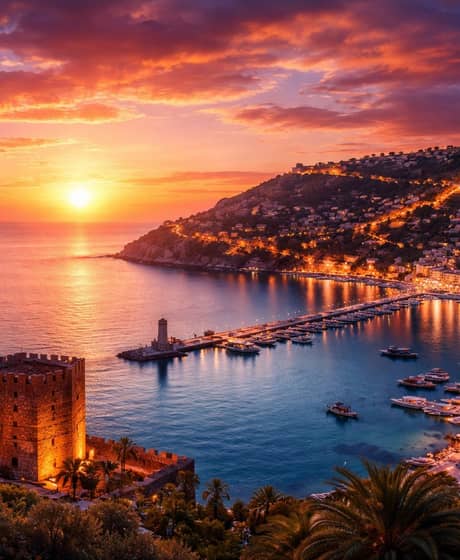
Evening: The illuminated exterior and harbour can be enjoyed, but the museum may already be closed.
Morning light often works well from the harbour side, while late-afternoon light gives the walls and Mediterranean views a different appearance.
Some of the best Red Tower photographs can be taken from the harbour promenade, breakwater, Kızıl Kule Square, shipyard path and the sea. Angled compositions are useful for showing the tower’s complete octagonal form.
Popular photography positions include:
A wide view from the harbour and İskele side
Kızıl Kule Square
The path beside the walls leading to the shipyard
Boats departing from Alanya Harbour
Viewpoints on the castle slopes
Safe window and arrow-slit openings inside the tower
The harbour area after the exterior lighting is switched on
Professional shoots, tripods and drones may require permission. Check current flight restrictions around the harbour, castle and historic monuments before using a drone.
A verified official webcam showing the Red Tower continuously may not always be available. Searches for “Red Tower Alanya live webcam” can return harbour cameras, hotel webcams or previously recorded videos presented as live streams.
Check the displayed date and time, whether the footage is genuinely live and the direction in which the camera is pointing. A current feed from the municipality, tourism authorities or a recognised harbour operator is generally more reliable.
A webcam may help with a general view of the weather or crowds, but it cannot confirm that the museum is open, show the ticket queue or guarantee access to the upper floors.
Concerts and cultural events associated with the Red Tower may take place on the ground floor, inside the tower or in Kızıl Kule Square outside. There is no fixed year-round event programme.
Music events, exhibitions, anniversary celebrations and municipal cultural programmes may use the tower or surrounding square. Special events may be announced in 2026 because it marks the monument’s 800th anniversary.
Standard museum visits, closing times and pedestrian access may change on event days. Check the official announcement from Alanya Municipality, the cultural venue or the event organiser.
Reviews of the Red Tower frequently praise its Seljuk architecture, harbour views, octagonal interior and proximity to the historic shipyard. Visitors also value its central location and easy access from Alanya town centre.
Commonly praised features include:
Its imposing appearance as a symbol of the city
The central pier and vaulted interior
Views of the harbour, sea and shipyard
A relatively short visiting time
Easy combination with an Alanya Castle itinerary
Exterior lighting in the evening
Common concerns include steep stairs, hot weather, limited accessibility, crowds and outdated ticket information online. Confirming prices and opening hours before visiting helps avoid some of these issues.
Alanya Shipyard, Tophane, Alanya Harbour and the lower castle walls are all within a short walk of the Red Tower. A longer central itinerary can also include Damlataş Cave, Cleopatra Beach and Alanya Cable Car.
Nearby places to consider include:
Alanya Shipyard
Tophane and the harbour walls
Alanya Harbour and İskele
Alanya Castle
Ehmedek
Süleymaniye Mosque
Damlataş Cave
Cleopatra Beach
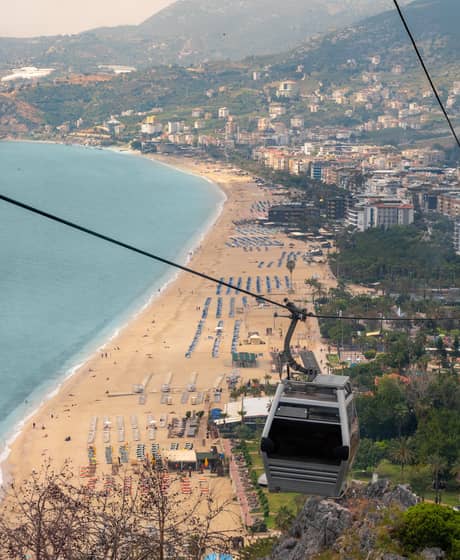
Alanya Cable Car
Alanya Archaeological Museum
The shipyard is the most natural next stop after the Red Tower. Visitors can then return to the harbour or continue towards the steeper castle routes. Read the Alanya Castle visitor guide for more information about the wider fortress.
The Red Tower and Alanya Castle can be visited on the same day, with the upper castle in the morning and the harbour, tower and shipyard in the afternoon. This schedule places the steepest part of the route in the cooler hours.
A sample half-day itinerary:
Take Alanya Cable Car to the upper castle district in the morning
Walk around Ehmedek and the historic streets
Return to Damlataş by cable car
Walk or take a short taxi ride to the harbour
Visit the Red Tower
Continue to the Seljuk Shipyard and Tophane
A shorter harbour itinerary:
View the tower’s exterior and inscriptions
Explore the interior and exhibition area
Walk 5–10 minutes to the shipyard
Stop for a meal or coffee around the harbour
See the exterior lighting in the evening
Bring water, a hat and sun protection in summer. If walking all the way between the harbour and upper castle, consider the slopes, stone surfaces and total distance.
For more ideas, explore Maxtoria’s guide to the best places to visit in Alanya.
Visitors who want to see the Red Tower as part of an organised Alanya itinerary can compare city tours and boat trips departing from the harbour. City tours focus on exploring the historic peninsula from land, while boat tours provide views of the tower and castle walls from the sea.
Before booking, check:
Whether the programme includes entry to the Red Tower
Whether the tower is only seen from outside
Whether museum admission is included in the price
The Alanya Castle and cable-car itinerary
Any visit to the shipyard or Tophane
The guiding language
The amount of free time
Hotel pickup areas
Child ticket conditions
Cancellation and route-change policies
The Alanya City Tour with Cable Car, Castle and Panoramic Sea Views is an option for visitors who want to explore Alanya’s historic peninsula from land.
Visitors who prefer to see the tower and castle walls from the sea can consider the Alanya Boat Trip with Swimming Stops and Kids’ Entertainment. Compare more Alanya city tours or browse all Alanya tours and activities.
Our easy-to-use app offers a comprehensive listing of curated tours, activities, and experiences, all in one place. Whether you’re a thrill-seeker looking for an adrenaline-packed adventure or seeking a more relaxed getaway, Maxtoria has got you covered.





© 2026 Maxtoria Turizm Ticaret A.Ş. — All Rights Reserved
v2.1.2