












City Tour
Alanya City Tour at Its Best: Cable Car and Lunch Included
Free Cancellation Free Shuttle
From £35.80 £31.79 Per Person



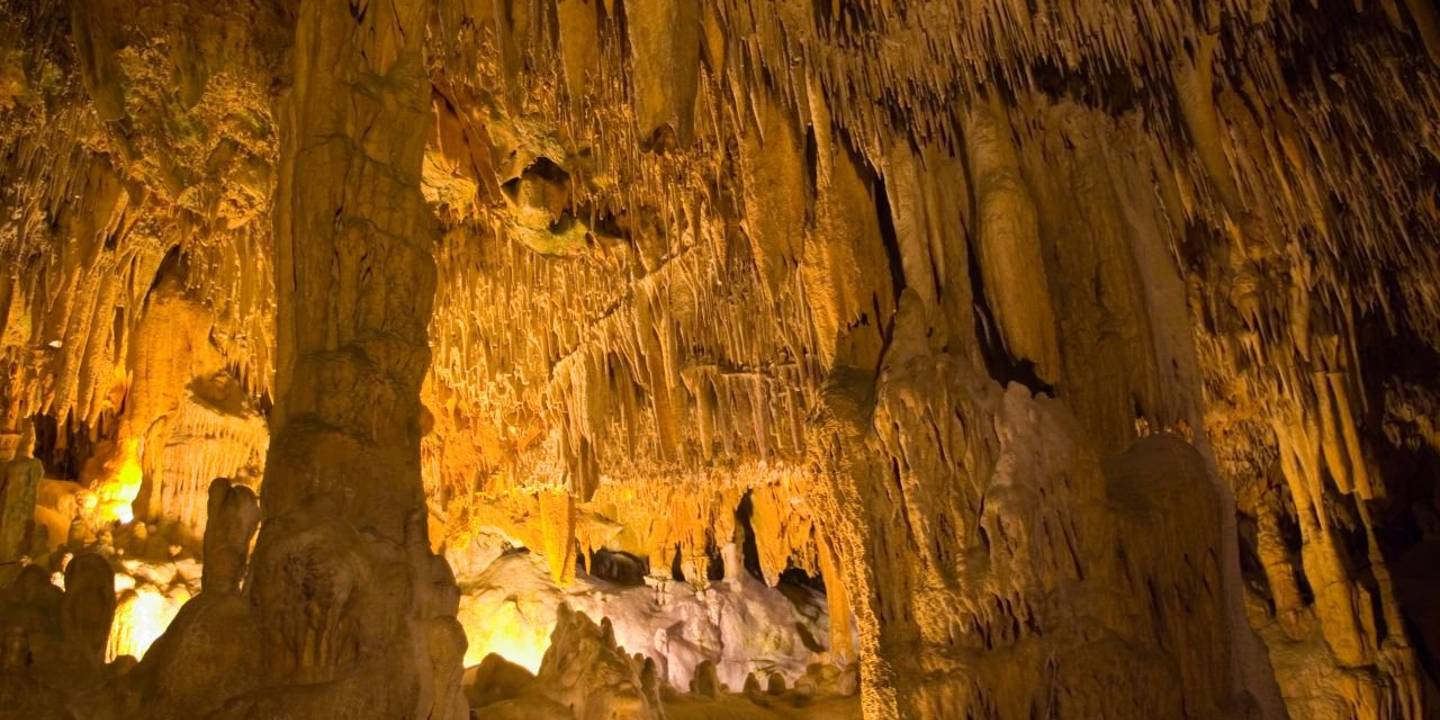
Damlataş Cave is a natural karst cave in Alanya, Antalya, located at the western foot of Alanya Castle beside Damlataş and Cleopatra beaches. Discovered accidentally in 1948 during quarrying for the construction of Alanya Harbour, the cave is known for its stalactites and stalagmites, its highly humid interior that remains at approximately 22°C throughout the year, and its easily accessible city-centre location. Damlataş is not a large underground route; most visitors can see its main section in approximately 10–20 minutes. The cave is a ticketed attraction operated by Alanya Municipality. Recent visitor reports from summer 2026 state a full entrance fee of TRY 225, but the current official tariff and opening hours are not published clearly online. Confirm the price, discounts and closing time again on the day of your visit.
Tours and trips that go here, run by licensed local operators.
Damlataş Cave is in Alanya, Antalya, on the western side of the historic peninsula at the beginning of Cleopatra Beach in the Damlataş area. It is easy to reach from central Alanya on foot, by local bus, taxi or car.
The main transport options are:
On foot: The cave is approximately a 15–30-minute walk from Alanya bazaar and the harbour area, depending on your starting point.
By public transport: Use local buses travelling along Atatürk Boulevard and through the Damlataş area. Routes and schedules may change, so check Alanya’s current transport information on the day.
By taxi: The cave is a short taxi ride from central Alanya, the bus station and city-centre hotels.
By car: Search for “Damlataş Cave” or “Alanya Cable Car Damlataş Station” in your navigation app. Nearby parking can fill quickly in summer.
By organised tour: Some Alanya city tours combine Damlataş Cave with the cable car, castle and Cleopatra Beach.
Approximate distances:
| Starting point | Approximate distance to Damlataş Cave |
|---|---|
| Beginning of Cleopatra Beach | 100–300 m |
| Alanya Archaeological Museum | 200–400 m |
| Alanya Harbour | 1–2 km |
| Alanya Bus Station | 2–3 km |
| Red Tower | 2–3 km |
| Dim Cave | 12–15 km |
| Gazipaşa-Alanya Airport | 40–45 km |
| Antalya city centre | 125–135 km |
The entrance is on the Damlataş Street side, close to the lower cable-car station and the seafront park. Search results may show other caves or places with similar names, so confirm that the map points to Alanya, Antalya.
Damlataş Cave is a ticketed attraction. Recent visitor reports from summer 2026 state a full entrance fee of TRY 225. This price could not be confirmed against a clearly published current official online tariff and may change, so the rate displayed at the ticket office should be treated as authoritative.
| Service or subject | Current planning information |
|---|---|
| Full entrance ticket | TRY 225 in summer 2026 visitor reports |
| Student or discounted ticket | Ask at the ticket office for current conditions |
| Museum Pass | Generally not accepted |
| Opening and closing times | May vary by season; confirm on the day |
| Payment method | Check card and cash acceptance at the entrance |
| Parking | Separate paid options may be available nearby |
| Guided city tour | Charged according to the tour package |
Online sources give conflicting schedules, including 09:00–19:00, 10:00–19:00 and extended summer hours. Instead of relying on a fixed closing time for a late visit, check with Alanya Municipality, your tour operator or the ticket office on the same day.
The cave closed temporarily for 45 days from 14 March 2026 while its entrance area was renovated. Visitor reports from summer 2026 show that people were visiting again, but it is still sensible to confirm its current status in case of maintenance or exceptional closures.
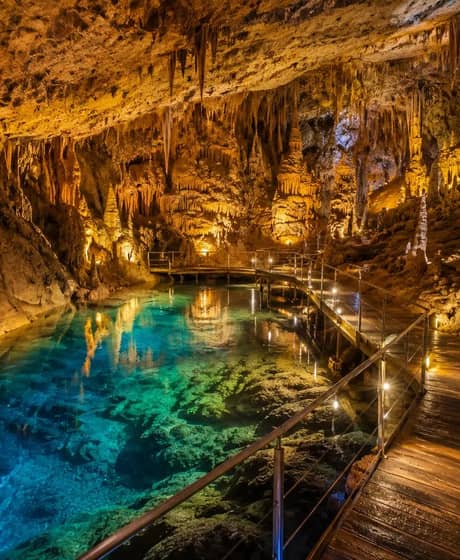
Damlataş Cave is known for an entrance passage of approximately 50 metres, a chamber reaching about 15 metres in height, stalactites and stalagmites, and a highly humid microclimate that remains close to 22°C. The visitor area is small and arranged around one main chamber, so the tour is relatively short.
Key features include:
It was discovered accidentally in 1948.
It is promoted as the first cave opened to tourism in Türkiye.
It is a natural karst cave.
Its dripstone formations developed as limestone dissolved and minerals were redeposited by water.
The interior temperature remains approximately 22°C throughout the year.
Relative humidity is reported to be about 95 per cent.
Visitors can see stalactites, stalagmites and column-like formations.
The main section is compact and reached by steps.
Cleopatra Beach, Damlataş Beach, the cable car and Alanya Archaeological Museum are very close.
The cave’s air has long been associated with asthma, but it should not be regarded as a medical treatment centre. Visitors with respiratory or cardiac conditions should ask their doctor whether a highly humid enclosed environment is suitable for them.
Damlataş Cave is one of the easiest places in central Alanya to combine nature, the coast and a historic sightseeing route. Within a few minutes of leaving the cave, visitors can reach Cleopatra Beach, Damlataş Beach, Alanya Archaeological Museum or the lower station of Alanya Cable Car.
The interior does not offer a long cave trail. However, its accessible location, illuminated stalactites and stalagmites, and distinctive microclimate make it easy to include in a short Alanya itinerary.
Damlataş Cave is a natural karst cave formed as groundwater dissolved limestone. Mineral-rich water dripping from the ceiling gradually deposited calcium carbonate, creating stalactites, stalagmites and other dripstone formations.
In addition to tourism, the cave is known for its stable temperature and high humidity. Its reputation for respiratory benefits should not be treated as a replacement for modern medical diagnosis or treatment.
Damlataş Cave is in the Alanya district of Antalya Province. It is not in Antalya city centre; it lies in central Alanya, east of the provincial capital.
Searches for “Antalya Damlatas Cave” refer to the province. A day trip from central Antalya involves a road journey of approximately 125–135 kilometres, so traffic and tour duration should be considered.
The cave is at the western foot of the historic Alanya Castle peninsula, immediately behind Damlataş and Cleopatra beaches. The lower cable-car station, Alanya Archaeological Museum and the seafront park are within walking distance.
Its central position makes it one of Alanya’s easiest natural attractions to visit without a car.
Damlataş Cave was discovered accidentally in 1948 during quarrying for stone needed to construct Alanya Harbour. After the newly revealed chamber was examined and visitor arrangements were introduced, it opened to the public.
The discovery played an important role in developing cave tourism in Alanya. Damlataş is widely presented as the first cave opened to tourism in Türkiye.
The cave’s story begins with a quarry blast for harbour construction that revealed a previously unknown underground chamber. Workers noticed the stalactite- and stalagmite-filled space, after which the area was studied, protected and prepared for visitors.
Its accidental discovery and rapid development into one of Alanya’s landmarks make the cave important to both the city’s tourism history and its geology.
The name Damlataş comes from the water droplets that continue to fall from the formations on the cave ceiling and the mineral deposits created by dripping water. In Turkish, “damlataş” is a general geological term for cave deposits such as stalactites and stalagmites rather than the name of one specific rock.
Formations growing down from the ceiling are stalactites, while those growing upwards from the floor are stalagmites. When the two join, they can form a column.
Damlataş Cave is natural. Water, limestone and long geological processes created the cave; quarrying in 1948 did not form it but exposed the entrance that led to its discovery.
Visitor steps, lighting, railings and the entrance arrangement are human additions. The infrastructure is artificial, but the cave and its formations are natural.
In geographical terms, Damlataş Cave is a natural feature. Its chamber, stalactites and stalagmites developed through natural processes.
The ticket office, steps, lighting and visitor facilities are human-made elements. The correct classification depends on whether the question refers to the cave itself or its tourism infrastructure.
Damlataş is an important natural formation and tourist cave, but not every natural attraction has the formal legal status of a “nature monument”. Official descriptions emphasise its identity as a natural cave and tourism site.
The phrase “natural monument” may be used informally, but current official inventories should be consulted when referring to a specific legal protection category.
No. Damlataş Cave is not a national park. It is a ticketed cave attraction in central Alanya operated by the municipality.
National-park admission, Museum Pass rules and the cave’s own ticket system are different. Damlataş has its own entrance and operating arrangements.
Damlataş Cave is not an independent property on the UNESCO World Heritage List. Alanya’s historic urban landscape may appear in other heritage and tentative-list contexts, but this does not make the cave itself a UNESCO World Heritage Site.
Unverified descriptions such as “UNESCO cave” should be avoided.
The cave formed as mildly acidic water dissolved limestone and minerals were later redeposited inside the resulting cavities. Rainwater absorbs carbon dioxide as it moves through soil and rock, gradually widening cracks in the limestone.
After the chamber developed, water dripping from the ceiling left behind dissolved calcium carbonate. Over thousands of years, this process formed stalactites, stalagmites and columns.
Limestone is the principal rock involved in the formation of Damlataş Cave. Limestone is a carbonate rock that can be dissolved chemically by water, making it central to the development of karst caves.
Many of the light-coloured deposits inside the cave developed when calcium carbonate precipitated again. Variations in colour may relate to other minerals in the water and local environmental conditions.
Yes. Damlataş is a karst cave. Karst features develop when water interacts over long periods with soluble rocks such as limestone.
The chamber, stalactites, stalagmites and columns are different products of this karst process.
According to Alanya Municipality’s visitor information, the entrance section includes a passage of approximately 50 metres, and the cave reaches a height of about 15 metres. Beyond the passage, visitors reach a cylindrical chamber and descend to the main floor by steps.
| Feature | Approximate information |
|---|---|
| Entrance passage | 50 m |
| Height | Up to 15 m |
| Interior temperature | 22°C |
| Relative humidity | 95 per cent |
| Pressure | 760 mm |
| Standard visit time | 10–20 minutes |
Measurements can vary slightly depending on the points used by each source.
The stalactites and stalagmites inside the cave are commonly described as having developed over approximately 15,000 years. This figure should not be interpreted as the exact age of the entire geological structure; it is a widely used estimate for the development of visible dripstone formations.
Dating results can depend on the method and sampled section, so “approximately” should be retained.
The interior temperature of Damlataş Cave is reported to remain at approximately 22°C throughout the year. It can therefore feel cooler than the outdoors in summer and milder in winter.
Relative humidity approaches 95 per cent, so the air may feel humid and heavy rather than simply cool. Visitors may notice perspiration, damp surfaces or fogging on glasses and camera lenses.
Damlataş Cave has long been promoted as a place visited by people with asthma because of its distinctive microclimate, but a cave visit is not a substitute for asthma treatment. Alanya Municipality states that some visitors have historically followed 21-day cave programmes under medical supervision.
The cave has high humidity, a stable temperature and a gas composition that differs from outdoor air. These conditions do not affect everyone in the same way. Anyone with asthma, COPD, heart disease, panic disorder or another health condition should consult their own doctor before entering for therapeutic purposes.
Stopping medication, postponing treatment or relying only on cave air is unsafe. Leave the cave and seek assistance if you experience shortness of breath, dizziness or discomfort.
The cave is most commonly associated with asthma and respiratory complaints, but no treatment result can be guaranteed for every visitor. A short tourist visit should primarily be planned to see the natural formations.
Any health-related programme should be considered only after a current medical assessment and professional advice. Definite claims that the cave “cures asthma” or “provides healing” should not be used.
Recent visitor reports from summer 2026 state a full Damlataş Cave entrance fee of TRY 225. The price may change because an accessible current municipal tariff could not be located online.
Ask at the entrance about student discounts, age limits for children, free-admission categories and payment methods. Low prices shown in older articles should not be treated as current.
No. Damlataş Cave is a paid attraction. Using the public section of Damlataş Beach and entering the cave are separate services.
If you book a city tour, check whether the cave ticket is included in the tour price.
Museum Pass is generally not accepted at Damlataş Cave. The cave is operated by Alanya Municipality rather than as a conventional museum or archaeological site managed through the Ministry of Culture and Tourism ticket system.
Discounted or free admission may follow rules separate from Museum Pass. Confirm the latest conditions at the ticket office.
Opening hours can vary by season and operational decisions. Outdated online sources list schedules such as 09:00–19:00, 10:00–19:00 or later summer closing times.
Check the current map listing, an Alanya Municipality announcement or the ticket office on the day. Arriving at least 30–45 minutes before the advertised closing time is safer than planning a last-minute visit.
The cave closed temporarily for 45 days from 14 March 2026 because its entrance and reception area were being renovated and modernised. The closure was not intended to be permanent; the work aimed to provide a safer and more comfortable entrance.
Old closure reports do not show the present status by themselves. Visitor reports from summer 2026 indicate that the cave was being visited again, but same-day confirmation is still recommended for maintenance or exceptional closures.
Visitor records from summer 2026 indicate that Damlataş Cave reopened after the planned renovation period. However, the official web page does not provide a live operating-status display, so check before travelling.
If you are travelling a long distance specifically for the cave, obtain confirmation from the municipality or a current local contact.
From Alanya bazaar, walk west towards Cleopatra Beach and the cable car to reach Damlataş Cave. The walk from the harbour area is approximately 1–2 kilometres and follows streets through the city centre.
Visitors who prefer not to walk can take a short taxi ride or use local buses serving the Damlataş area. Shade, water and sun protection are important during the hottest part of a summer day.
From Antalya city centre, follow the D400 road east towards Alanya. Depending on your starting point, the road distance is approximately 125–135 kilometres, and the drive can take around 2–2.5 hours with traffic.
Intercity buses connect Antalya Bus Station with Alanya. From Alanya Bus Station, continue by local bus or taxi. If choosing a day tour from Antalya, check the total transfer time and whether the cave is explicitly included.
Municipal and private paid parking may be available around the cave, but there is no guarantee of a large free car park reserved for cave visitors. Damlataş, the beaches, museum and cable car share the same busy district, so demand is high in summer.
Arriving early or leaving the car elsewhere in the centre and walking may be easier. Do not park in restricted areas or block pedestrian access.
Most visitors can see the interior in approximately 10–20 minutes. Ticket queues, photographs, seating and crowds can increase the total stop to 30–45 minutes.
| Visit plan | Recommended time |
|---|---|
| Cave interior only | 10–20 minutes |
| Standard visit including ticketing and surroundings | 30–45 minutes |
| Cave and Archaeological Museum | 2–3 hours |
| Cave, beach and cable car | Half day |
| Damlataş, castle and harbour route | Full day |
Groups can cause short waits in narrow parts of the route.
Damlataş Cave can be visited with children because the route is short. Families should nevertheless take care on steps and damp surfaces and in narrow or crowded sections.
Children should not climb the railings, touch the formations or run inside. A pushchair may not be suitable for the main descent; ask at the entrance about storage and carrying arrangements.
The steps leading to the main chamber may make access difficult for wheelchair users and visitors with significant mobility limitations. Ask how the 2026 entrance renovation affected accessibility before travelling.
Confirm step-free access, companion policies, accessible toilets and suitable parking directly with the operator.
Although the cave is illuminated, the narrow entrance passage, steps, high humidity and underground setting may be uncomfortable for people with claustrophobia. The short route may feel manageable to some visitors, but experiences differ.
Anyone with severe anxiety, shortness of breath or a history of panic should not force themselves to continue. Assess the crowd level and exit route before descending.
Choose comfortable shoes with non-slip soles and light clothing suitable for high humidity. The temperature is around 22°C, so a heavy coat is usually unnecessary during a summer visit.
Bring swimwear, a towel and sun protection if combining the cave with the beach. For the castle route, walking shoes, a hat and water are useful.
The cave can be visited throughout the year, but summer mornings are generally cooler outdoors and less busy. It is also useful as an indoor stop on rainy days, although crowds may increase.
Spring: Comfortable weather for a city and castle walk
Summer: Easy to combine with the beach, but busiest
Autumn: Balanced conditions for sightseeing
Winter: Quieter, but seasonal hours should be checked
Visitors seeking any special asthma-related schedule should request current information separately from general tourist hours.
The illuminated stalactites and stalagmites in the main chamber, the stairway and the entrance sign are the most common photo locations. Outside, the castle cliffs, Damlataş Beach and cable car add different subjects to the same visit.
Ask about flash, tripod and professional photography rules. Do not touch the formations, block narrow passages or extend phones beyond railings.
Reviews often praise the central location, stalactites and stalagmites, distinctive interior atmosphere and easy combination with the beach. The most frequent criticism is that the cave is smaller and the visit shorter than some travellers expect.
Common review themes include:
Easy access and a central location
Attractive illuminated formations
An interior climate different from the summer heat
A short visit
Steps and damp surfaces
Crowding at busy times
Value for money in relation to the visit length
Ticket prices and opening times in old reviews should not be treated as current.
Many major Alanya attractions are within walking distance or a short journey from Damlataş Cave. Nearby places include:
Cleopatra Beach
Damlataş Beach
Lower station of Alanya Cable Car
Alanya Archaeological Museum
Alanya Castle and Ehmedek
Süleymaniye Mosque
Alanya Harbour
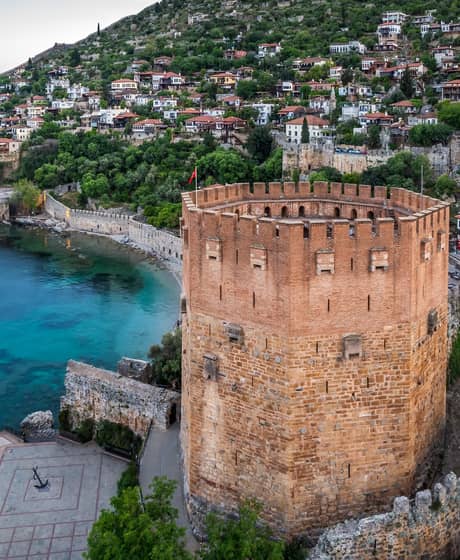
Red Tower
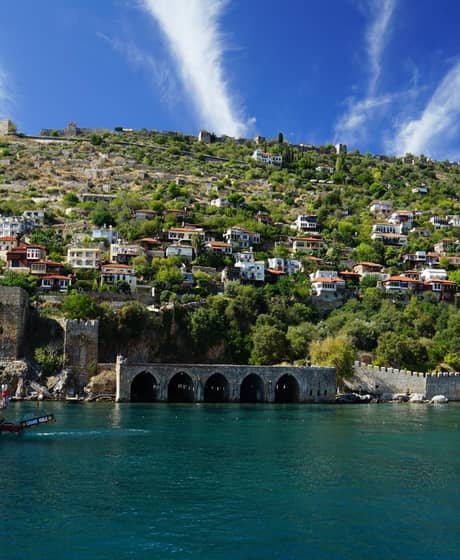
Seljuk Shipyard
Alanya bazaar
For a wider itinerary, see Maxtoria’s guide to the best places to visit in Alanya.
Yes. Damlataş Cave and Cleopatra Beach are close enough to combine very easily. Visiting the cave in the morning and continuing to the beach is a practical half-day summer plan.
The sea can be wavy and may deepen quickly on some days. Families should follow lifeguard advice and assess current sea conditions.
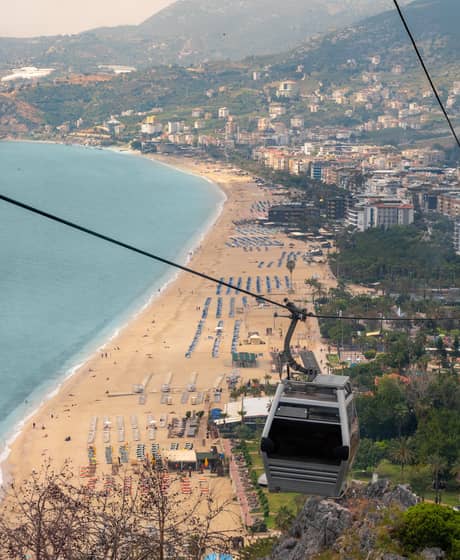
Yes. Damlataş Cave is very close to the lower station of Alanya Cable Car and can be planned with the castle district. After the cave, take the cable car towards Ehmedek and explore the castle streets and viewpoints.
The cable-car ticket is separate from cave admission. Check both operating schedules because wind, maintenance and seasonal arrangements can affect the cable car.
Damlataş is a small city-centre cave designed for a short visit. Dim Cave is in the mountains east of Alanya and offers longer galleries, more steps and extensive views from the surrounding area.
| Feature | Damlataş Cave | Dim Cave |
|---|---|---|
| Location | Central Alanya, beside the beach | Mountainous area near Kestel |
| Visit time | Approximately 10–20 minutes | Approximately 45–90 minutes |
| Access | Easy on foot or by local transport | Car, taxi or tour is more practical |
| Main appeal | Central location and microclimate | Longer cave route and views |
| Steps | Yes | Usually more steps |
| Easy to combine with a beach | Yes | Requires additional driving |
Choose Damlataş for a short central itinerary and Dim Cave for a more extensive cave excursion.
Example central itinerary:
Visit Damlataş Cave in the morning
Continue to Alanya Archaeological Museum
Stop at Cleopatra or Damlataş Beach
Take the cable car to the castle district
Explore Ehmedek and the castle viewpoints
Return by cable car or walk towards the centre
For a full-day itinerary, add the Red Tower, Seljuk Shipyard, harbour and bazaar in the afternoon. Tickets and opening hours for each stop are independent.
Visitors booking an organised tour should check whether Damlataş Cave admission, the cable-car ticket and castle stops are included in the package. Tours marketed as an “Alanya city tour” do not all follow the same itinerary.
Before booking, check:
Whether Damlataş Cave is included
Whether cave admission is included in the price
The cable-car ticket and one-way or return arrangement
Time allowed in the castle district
A stop at Cleopatra Beach
Hotel pickup and drop-off areas
Guiding language
Lunch and drinks
Child and discounted-ticket conditions
Changes caused by weather, maintenance or closures
To visit Damlataş Cave, Cleopatra Beach and the castle district in one itinerary, review the Alanya City Tour, Cable Car Ride and Castle Experience. Confirm the current cave stop and ticket inclusions before booking. Compare other options on the Alanya tours and activities page.
Our easy-to-use app offers a comprehensive listing of curated tours, activities, and experiences, all in one place. Whether you’re a thrill-seeker looking for an adrenaline-packed adventure or seeking a more relaxed getaway, Maxtoria has got you covered.





© 2026 Maxtoria Turizm Ticaret A.Ş. — All Rights Reserved
v2.1.2