














- Places to SeeThings to DoDownload the App


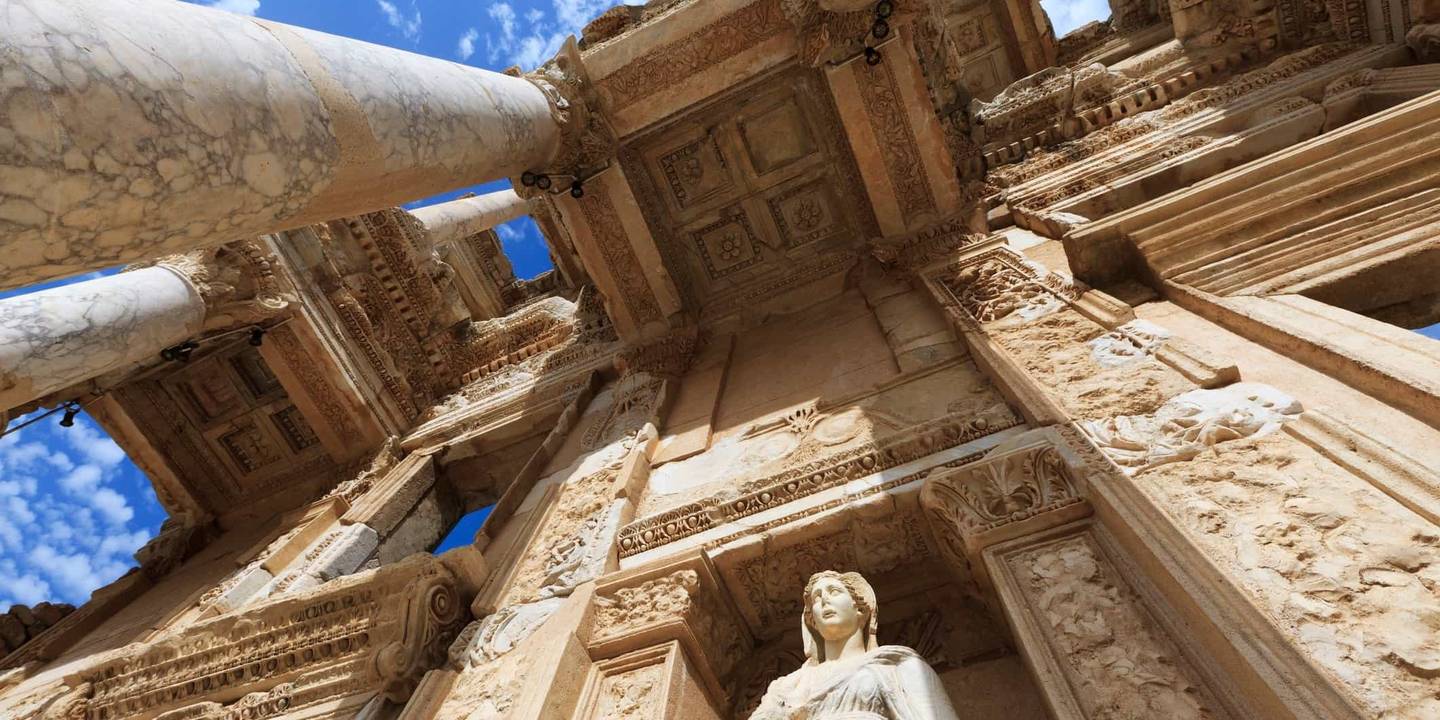
About Ephesus Ancient City
Ephesus Ancient City is a UNESCO World Heritage Site located near Selçuk in İzmir Province, Türkiye. Famous for the Library of Celsus, Great Theatre, Curetes Street and remarkably preserved Terrace Houses, Ephesus offers one of the most impressive journeys into the ancient world. Travellers staying in Marmaris can visit the site on a full-day guided Ephesus tour with planned transport.
No trips to this one just yet
Have a look at everything else you can book in Marmaris.
All activities in MarmarisWhere Is Ephesus and How Do You Get There?
Ephesus Ancient City is located near Selçuk in İzmir Province, on the Aegean coast of western Türkiye. Its official address is Efes Harabeleri, 35920 Selçuk/İzmir. Although Ephesus is listed among the day trips available from Marmaris, the archaeological site itself is not in Marmaris.
Approximate distances and journey times:
From Selçuk: 3–4 km, approximately 5–10 minutes
From Kuşadası: 20 km, approximately 25–35 minutes
From İzmir city centre: 80–85 km, approximately 1–1.5 hours
From İzmir Adnan Menderes Airport: 60–65 km, approximately 50–70 minutes
From Marmaris: 210–220 km, approximately 3–3.5 hours each way
Travellers arriving from İzmir can take a regional train or bus to Selçuk and continue to the Ephesus entrance by taxi or local minibus. From Marmaris, a guided Ephesus day trip with hotel transfers is often the most practical option because of the long driving distance.
Ephesus History and Essential Facts
Ephesus was not built by a single ruler or civilisation. Settlement in the wider area stretches back thousands of years, while many of the monumental ruins visible today were developed during the Hellenistic and Roman periods.
Under Roman rule, Ephesus became one of the most important cities in the province of Asia. Its position near a major harbour helped it develop into a powerful centre of trade, politics, culture and religion.
The city’s best-known monuments include the Library of Celsus, Great Theatre, Curetes Street, Temple of Hadrian, Odeon, commercial and state agoras, ancient baths and Terrace Houses. Ephesus and its surrounding cultural sites were inscribed on the UNESCO World Heritage List in 2015.
Ephesus Tickets, Entrance Fee and Opening Hours
Ephesus is a ticketed archaeological site. Entrance fees can change during the year and may vary according to nationality, ticket type and the areas included. Visitors should therefore check the current official ticket price before travelling.
The main Ephesus ticket and the following attractions may have different admission conditions:
Terrace Houses: Located inside Ephesus but require separate admission.
Ephesus Experience Museum: Access conditions depend on the selected ticket package.
Ephesus Night Museum: Night entry is priced separately from daytime admission.
Ephesus Archaeological Museum: Located in Selçuk and requires a separate visit.
Museum Pass Türkiye may cover the main archaeological site, but the Terrace Houses and seasonal night visits can require additional tickets.
As of 26 August 2026, Ephesus is open every day from 8:00 AM to 6:45 PM. During the seasonal Night Museum programme, the site is open on Wednesday, Thursday, Friday and Saturday from 7:00 PM to 11:00 PM, with the night ticket office closing at 10:00 PM.
The Terrace Houses are currently open from 9:00 AM to 6:00 PM. Night visits are available on selected evenings from 7:00 PM to 9:30 PM. Opening hours may change because of concerts, restoration work, seasonal arrangements or special events, so they should be checked again on the day of your visit.
More to see around Marmaris



Ephesus Ancient City Visitor Guide
Which civilisation built Ephesus?
Ephesus does not belong to only one civilisation. The wider settlement area contains evidence from prehistoric, Ionian, Hellenistic, Roman, Byzantine, Anatolian Beylik and Ottoman periods. However, most of the monumental buildings seen along the main visitor route date from the Roman era.
Who built Ephesus Ancient City?
There is no single person who can be described as the builder of Ephesus. The city was established, expanded, rebuilt and restored over many centuries. Emperors, governors and wealthy citizens funded temples, fountains, libraries, baths and public buildings that gradually shaped the city.
The Library of Celsus, for example, was constructed in the 2nd century AD in honour of the Roman senator Tiberius Julius Celsus Polemaeanus.
What can you see at Ephesus?
The main attractions and ruins at Ephesus include:
Library of Celsus
Great Theatre
Curetes Street
Temple of Hadrian
Terrace Houses
Odeon
Commercial and State Agoras
Bath complexes
Church of Mary
Ancient Harbour Street
The ruins of the Temple of Artemis, one of the Seven Wonders of the Ancient World, are located near Selçuk as part of the wider Ephesus heritage area. The Basilica of St John, Ayasuluk Castle, House of the Virgin Mary and Ephesus Archaeological Museum can also be added to a full-day itinerary.
Why was Ephesus abandoned?
Ephesus was not abandoned because of one single event. The silting of its harbour by sediment carried through the Küçük Menderes River gradually weakened maritime trade. Earthquakes, political instability, changing trade routes and military conflicts also contributed to the city’s decline.
As the ancient harbour became increasingly difficult to use, settlement gradually moved towards Ayasuluk Hill and the area occupied by modern Selçuk.
How long do you need at Ephesus?
Allow at least 2.5 to 3 hours for the main Ephesus route. Travellers who plan to visit the Terrace Houses, take photographs and explore at a slower pace may need approximately four hours.
A complete Selçuk itinerary including the Ephesus Archaeological Museum, Temple of Artemis, Basilica of St John and House of the Virgin Mary can easily take a full day.
What is the best time to visit Ephesus?
Spring and autumn usually provide the most comfortable conditions for exploring Ephesus. During summer, the marble streets receive limited shade and can become extremely hot around midday.
An early-morning visit offers cooler temperatures and fewer crowds. The seasonal Ephesus Night Museum is another attractive option for seeing the Library of Celsus and the lower part of the ancient city illuminated after sunset.
Visitors should bring comfortable footwear, water, sun protection and a hat. Much of the route follows uneven and sometimes slippery marble surfaces.
Is Ephesus worth visiting from Marmaris?
Ephesus is one of the best cultural day trips for travellers staying in Marmaris. However, because the journey takes approximately three to three and a half hours each way, the excursion should be planned as a full-day experience.
Before booking, check whether the tour includes hotel pickup, entrance tickets, the Terrace Houses, lunch and a licensed guide. You can compare available experiences on the Marmaris tours and activities page and use the best places to visit in Marmaris guide to plan the remaining days of your holiday.
Our easy-to-use app offers a comprehensive listing of curated tours, activities, and experiences, all in one place. Whether you’re a thrill-seeker looking for an adrenaline-packed adventure or seeking a more relaxed getaway, Maxtoria has got you covered.





© 2026 Maxtoria Turizm Ticaret A.Ş. — All Rights Reserved
v2.1.2