










Pamukkale Travertines FAQ: Shoes, Swimming, Tickets and Best Time
Can you swim at Pamukkale? Must you take your shoes off? Clear answers about the travertines, Hierapolis, Cleopatra's Pool, tickets and day trips.
The white terraces of Pamukkale are one of the most photographed places in Türkiye, and almost every visitor arrives with the same questions. Do you have to take your shoes off? Can you swim? Is the water warm? Is it worth the long drive from the coast? This guide answers them clearly, so you know what to expect before you go.
General information about the site is marked as such. Details that depend on your tour, such as meals, entrance tickets and timing, are based on the Pamukkale day trips we offer from Antalya, Side, Alanya and Kemer, and they can differ from one tour to another.
Location: Denizli Province, south-western Türkiye
UNESCO status: World Heritage Site (Hierapolis-Pamukkale) since 1988
What you see: white travertine terraces, thermal pools and the ancient Roman city of Hierapolis
Shoes: not allowed on the travertines; you walk barefoot
Swimming: only in Cleopatra's Pool, with a separate ticket
About the Pamukkale travertines
What are the Pamukkale travertines?
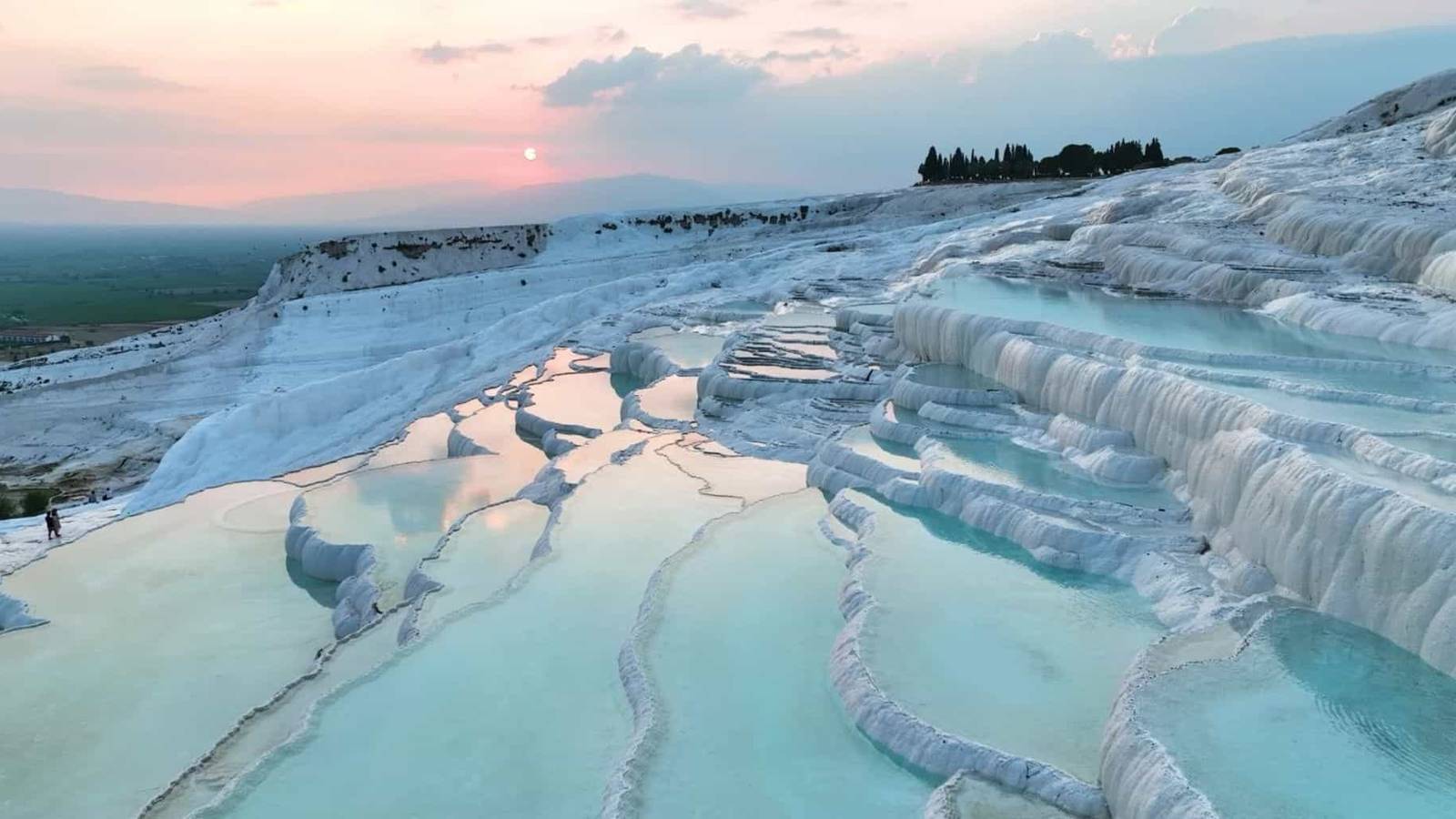
They are natural terraces of white limestone called travertine, running down a hillside above the village of Pamukkale. Shallow pools of thermal water sit on the terraces, which is why the slope looks like a frozen white waterfall from a distance.
How were the travertines formed?
Hot springs at the top of the hill bring up water rich in dissolved calcium carbonate. As the water flows down and cools, carbon dioxide escapes from it and the calcium carbonate is left behind as a white mineral layer. Over thousands of years these layers built up into the terraces and pools you see today, and the process is still going on.
What does "Pamukkale" mean?
Pamukkale means "cotton castle" in Turkish, a name that comes from the bright white, soft-looking slope.
Where is Pamukkale?
Pamukkale is in Denizli Province in south-western Türkiye, a short drive from the city of Denizli. It is inland, several hours by road from the Mediterranean resorts, so most holidaymakers visit on an organised day trip.
Is Pamukkale a UNESCO World Heritage Site?
Yes. The travertines and the ancient city of Hierapolis above them are listed together as "Hierapolis-Pamukkale", a UNESCO World Heritage Site since 1988.
Walking on the terraces
Do you have to take your shoes off at Pamukkale?
Yes. To protect the travertine, shoes are not allowed on the terraces, and you walk barefoot along the permitted path. Bring a small bag to carry your shoes. Many terraces are closed to visitors to protect them, so stay on the open route and follow the guards' instructions.
Is it hard or slippery to walk barefoot?
The surface is ridged and can feel rough under your feet, while wet or smooth patches can be slippery. Walk slowly and watch your step. Anyone with mobility problems should keep in mind that the path runs up or down a slope.
Can you swim in the Pamukkale travertines?
No. You can paddle in the shallow pools along the open path, but you cannot swim in the terraces. If you want a real swim in thermal water, go to Cleopatra's Pool (see below).
Is the water warm?
The spring water is naturally warm, around 35 °C at the source. It cools as it flows down, so the pools on the terraces are usually lukewarm, and they feel cooler on winter days.
Why do some terraces look dry?
The flow of water across the terraces is managed to protect them, so not every pool is full at the same time. Depending on when you visit, some sections may look dry or less bright than in photos.
Cleopatra's Pool and Hierapolis
What is Cleopatra's Pool?
Cleopatra's Pool, also called the Antique Pool, is a thermal pool at the top of the site where you swim in warm water among fallen Roman columns. It needs a separate ticket, and it is not included in any of the Pamukkale tours we offer. If you plan to swim, bring swimwear and a towel, and budget extra money for the entrance.
What can you see in Hierapolis?
Hierapolis was an ancient spa city built next to the thermal springs. Its highlights include the large Roman theatre, the Roman baths, the old city streets and one of the largest ancient cemeteries (necropolis) in Anatolia. Allow time for it: many visitors spend so long on the terraces that they see very little of Hierapolis.
Do you need one ticket or two?
The main entrance ticket covers the travertines and Hierapolis. Cleopatra's Pool is paid separately. Whether the main ticket is included in your tour depends on the operator, so check the tour page before you book.
Planning your visit
When is the best time to visit Pamukkale?
Spring (April–June) and autumn (September–October) are the most comfortable, with mild temperatures. In summer the white terraces reflect the sun strongly, so midday can be very hot and bright. Winter is quieter, but walking barefoot on the terraces is cold.
What time of day is best?
If you visit on your own, go early in the morning or later in the afternoon for softer light, fewer people and less heat. On a day trip from the coast, the tour sets the arrival time.
How much time do you need at Pamukkale?
Plan for at least two to three hours to walk the terraces and see part of Hierapolis, and more if you want to swim in Cleopatra's Pool.
What should you bring?
Sunglasses, sunscreen and a hat: the white surface reflects a lot of light.
A bag for your shoes.
Comfortable walking shoes for Hierapolis.
Swimwear and a towel if you plan to use Cleopatra's Pool.
Your passport or ID card (at least one tour asks for it).
Cash for drinks, the pool ticket and any optional extras.
A waterproof pouch for your phone.
Visiting Pamukkale from the coast
Can you visit Pamukkale on a day trip from Antalya, Side or Alanya?
Yes, but it is a long day with several hours on the road each way. Our tours from Antalya are listed at about 14 to 15 hours from hotel to hotel, from Side about 16 hours, and from Alanya up to about 20 hours. Pickups are early in the morning, and you return in the evening or at night.
From Antalya: Pamukkale & Hierapolis Day Tour or the Pamukkale and Salda Lake Day Tour with Lunch
From Side: Pamukkale & Salda Lake Guided Day Trip
From Alanya: Pamukkale & Salda Lake Day Trip
From Kemer: Kemer Pamukkale Tour
Several of these tours also stop at Salda Lake, known for its white shore and turquoise water, which breaks up the journey.
What is included in a Pamukkale day trip?
It varies more than you might expect. Here is what our tours list:
Tour | Salda Lake | Meals | Pamukkale entrance | Cleopatra's Pool |
|---|---|---|---|---|
From Antalya (Pamukkale & Hierapolis) | No | Lunch not included | Included with the matching option | Extra |
From Antalya (with Salda Lake) | Yes | Buffet lunch | Included | Extra |
From Side | Yes | Breakfast, lunch and dinner | Included | Extra |
From Alanya | Yes | Lunch | Not included | Extra |
From Kemer | No | Lunch | Depends on the package | Extra |
The Kemer tour also includes shopping stops and a visit to a traditional wine cellar. Hotel transfers, a guide and insurance are included on all of them. Check the tour page for the current details before booking.
Is a Pamukkale day trip worth it?
If you want to see the travertines and Hierapolis and don't mind a long day on the bus, yes: it is the easiest way to reach an inland site from a beach holiday without arranging transport yourself. If long journeys tire you, or you travel with small children, think carefully, because most of the day is spent on the road. Choosing a tour with a Salda Lake stop gives you a second highlight and a break on the way.
Plan your Pamukkale trip
Now you know what to expect, compare the Pamukkale tours from Antalya, Side, Alanya and Kemer on Maxtoria and choose the one whose meals, tickets and stops suit you. For more on the day itself, read our Pamukkale tour travel guide. If you like long-distance day trips, see what to expect on an Antalya to Cappadocia tour, and check the best time to visit Antalya when planning your holiday.
Alanya
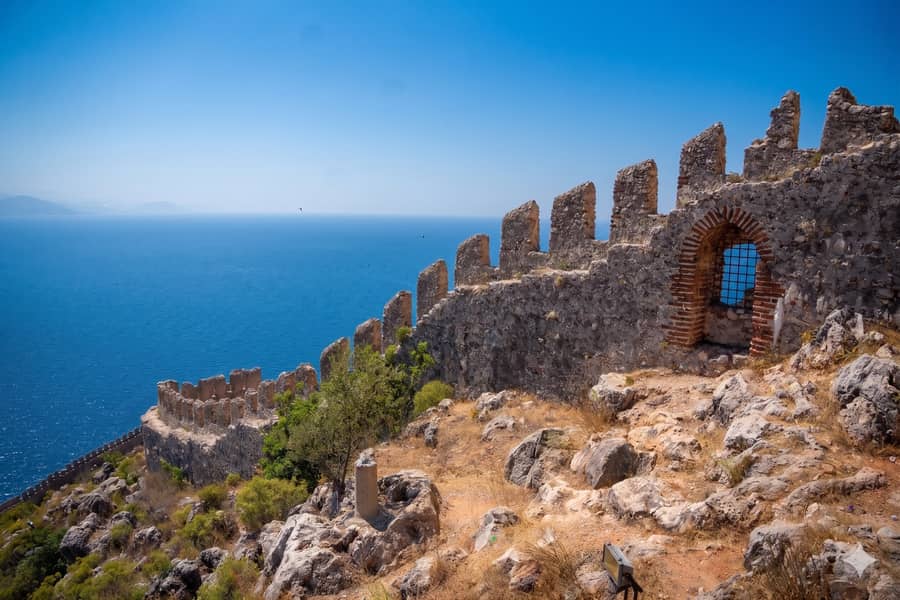
Compare Alanya tours, boat trips, jeep safaris, rafting experiences, and city tours on Maxtoria. Review prices, durations, dates, and hotel transfer options to find the right tour for you.
68 activities