









 Best Price
Demre Myra & Kekova
Demre Myra Kekova Boat Tour with Lunch and Transfer
Free Cancellation Free Shuttle
From £57.53 £51.09 Per Person



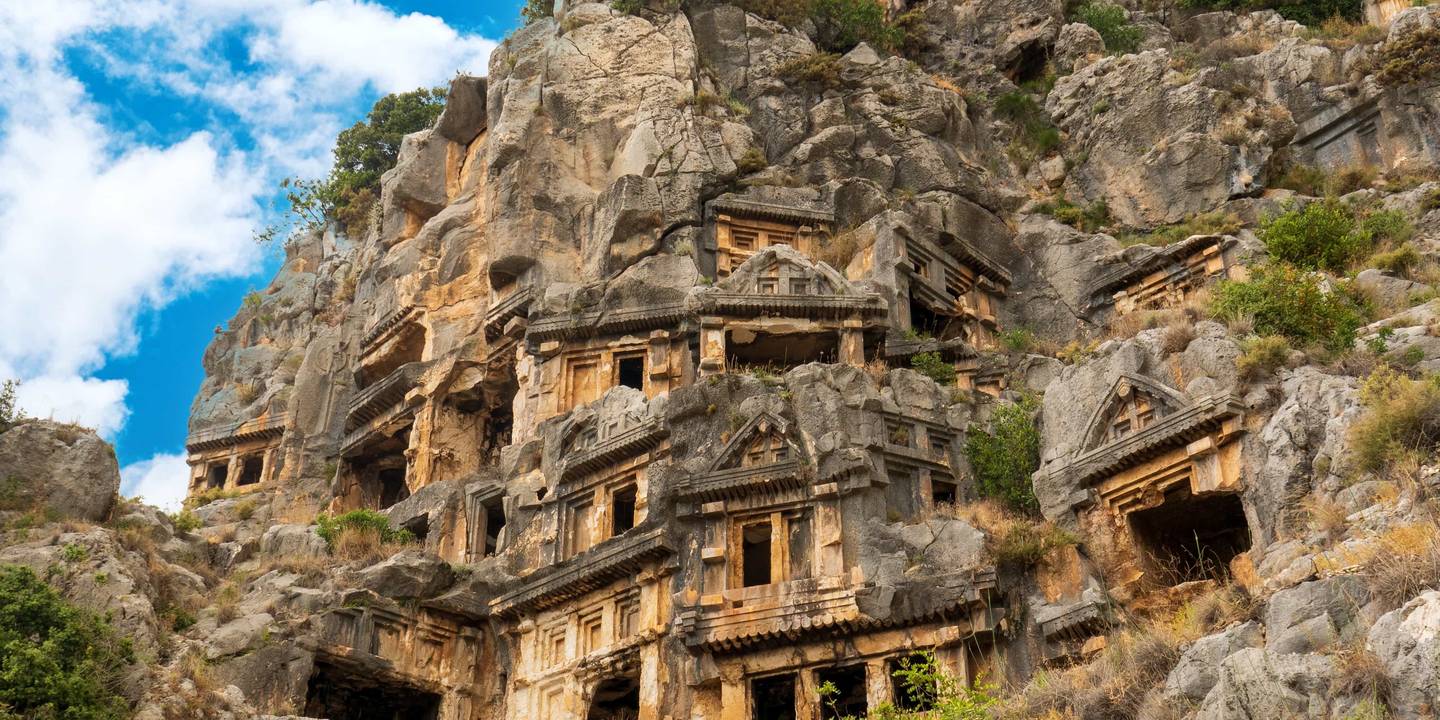
Myra Ancient City, also known as the Myra Ruins , is an important Lycian archaeological site in Demre, Antalya. Its dramatic rock-cut tombs, well-preserved Roman theatre and connection with Saint Nicholas make it one of the most remarkable historical attractions in southern Turkey.
Tours and trips that go here, run by licensed local operators.
Myra Ancient City is located in Demre, in Antalya Province on Turkey’s Mediterranean coast. It lies close to Demre town centre but is approximately 145 kilometres from central Antalya.
Address: Myra Archaeological Site, Alakent, Dağ Dibi Mevkii, 07570 Demre, Antalya, Türkiye
Approximate road distances are:
Departure point | Approximate distance | Typical journey |
|---|---|---|
Demre town centre | 2 km | 5–10 minutes |
St Nicholas Memorial Museum | 3 km | 5–10 minutes |
Andriake Ancient City and Museum of Lycian Civilisations | 7 km | 10–15 minutes |
Kaş | 45 km | 50–60 minutes |
Kemer | 100 km | 1 hour 45 minutes–2 hours |
Antalya city centre | 145 km | 2 hours 45 minutes–3 hours 30 minutes |
Visitors driving from Antalya can follow the coastal route through Kemer, Kumluca, Finike and Demre. After reaching Demre, local signs lead towards the archaeological site.
Buses and minibuses operate between Antalya Bus Station and Demre. From Demre town centre, visitors can continue to Myra by taxi or local transport.
Because the journey from central Antalya is long, an organised Demre, Myra and Kekova tour can be more practical for visitors who want to combine transport, historical attractions and a boat trip in one day.
Myra was not constructed on a single date. Lycian inscriptions, coins, rock tombs and surviving fortification remains indicate that the settlement existed from at least the 5th century BC.
Myra was one of the six principal cities of the Lycian League and held three votes in the federation. The city flourished particularly during the 2nd century AD, when important buildings were constructed or restored with the support of wealthy Lycian citizens.
During the Byzantine period, Myra became an important administrative and religious centre. Its international fame is closely connected to Saint Nicholas, who served as Bishop of Myra during the 4th century AD.
Earthquakes, flooding, alluvial deposits carried by the Demre River and Arab raids caused the city to decline from the 7th century onwards. Much of ancient Myra was gradually buried, while its rock tombs and Roman theatre remained visible.
In short: Myra is primarily a Lycian city, but its surviving heritage also reflects the Roman and Byzantine periods.
Admission to Myra Ancient City is ticketed. The official museum page confirms that Müzekart is valid for Turkish citizens. International visitors should check the current admission fee and Museum Pass coverage before travelling.
Ticket prices may change according to official regulations, so adding a fixed fee to the page could quickly make the information outdated.
Current official visitor information:
Visitor information | Current status |
|---|---|
Opening time | 08:00 |
Closing time | 21:00 |
Ticket office closing time | 20:30 |
Open days | Every day |
Müzekart | Valid for Turkish citizens |
Audio guide | Available |
What time does Myra Ancient City close? According to the current official schedule, the archaeological site closes at 21:00, while the ticket office closes at 20:30.
Opening hours may change seasonally or because of official arrangements and conservation work. Visitors should therefore confirm the timetable shortly before their trip.
Myra Ancient City is one of the most significant archaeological attractions in Demre and one of the best-known examples of Lycian heritage in Antalya Province. The site is particularly famous for its rock-cut tombs, Roman theatre and historical connection with Saint Nicholas.
The Myra ruins reveal several stages of the city’s history. Lycian burial traditions can be seen in the cliffside tombs, Roman influence is represented by the monumental theatre, and the city’s later religious importance developed during the Byzantine period.
Myra was originally an important Lycian city. It was one of the six leading members of the Lycian League and had three votes within the federation, demonstrating its political importance.
The city continued to develop under Roman rule and later became an influential administrative and religious centre during the Byzantine period. Visitors can therefore see traces of Lycian, Roman and Byzantine history within the wider Demre area.
There is no single construction date for Myra Ancient City. Archaeological evidence indicates that the settlement existed from at least the 5th century BC, although the city expanded and changed over several historical periods.
The rock tombs reflect Lycian traditions, while much of the visible theatre belongs to the Roman period. This layered history is why Myra cannot be attributed to only one century or civilisation.
The Myra rock tombs were carved directly into the cliff above the ancient city. Their façades resemble wooden Lycian houses, reflecting the belief that the dead should be provided with a familiar home-like structure in the afterlife.
Some tombs feature reliefs depicting the deceased and their relatives. The combination of rock-cut architecture and surviving relief decoration makes the Myra tombs some of the site’s most distinctive remains.
The tombs are viewed from the archaeological site below. Visitors are not permitted to enter or climb into the protected burial chambers.
Located below the cliffside tombs, the ancient theatre is one of the most impressive structures at Myra. Its seating areas and a substantial section of the stage building have survived, allowing visitors to understand the scale of public entertainment during the Roman period.
The theatre and the rock tombs behind it form the most recognisable view of the Myra ruins in Turkey. Around one to one and a half hours is usually sufficient to explore the main archaeological site at a relaxed pace.
Saint Nicholas served as Bishop of Myra during the 4th century AD. Known for his generosity and charitable acts, he later became associated with the historical tradition that inspired the modern figure of Santa Claus.
The St Nicholas Memorial Museum is not located inside the Myra archaeological site. It is a separate attraction in Demre town centre. Visitors commonly combine Myra Ancient City and St Nicholas Church within the same itinerary.
Myra can be combined with several historical and coastal attractions around Demre:
St Nicholas Memorial Museum
Andriake Ancient City
Museum of Lycian Civilisations
Çayağzı Harbour
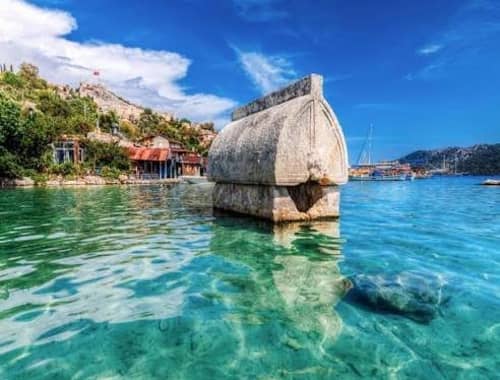
Kekova Sunken City
Simena Ancient City and Kaleköy
Üçağız village
Demre Bird Sanctuary
Combining Myra with St Nicholas Church and a Kekova boat trip provides a balanced full-day experience covering Lycian archaeology, Byzantine history and Mediterranean scenery.
Independent travel from Antalya is possible, but the long journey requires an early departure. Visitors who prefer hotel transfers and a pre-arranged itinerary can join a Demre, Myra and Kekova day trip from Antalya.
The programme combines the Myra rock tombs, ancient theatre, St Nicholas Church and a Kekova boat trip. Before booking, check whether admission to Myra and the St Nicholas Memorial Museum is included in the selected package.
Travellers planning a wider itinerary can also explore Maxtoria’s guide to the best places to visit in Antalya.
Opening hours and Museum Card information were checked on the official Myra Archaeological Site page. Historical details were verified through the Ministry of Culture and Tourism’s Myra Ancient City resource.
Our easy-to-use app offers a comprehensive listing of curated tours, activities, and experiences, all in one place. Whether you’re a thrill-seeker looking for an adrenaline-packed adventure or seeking a more relaxed getaway, Maxtoria has got you covered.





© 2026 Maxtoria Turizm Ticaret A.Ş. — All Rights Reserved
v2.1.2