


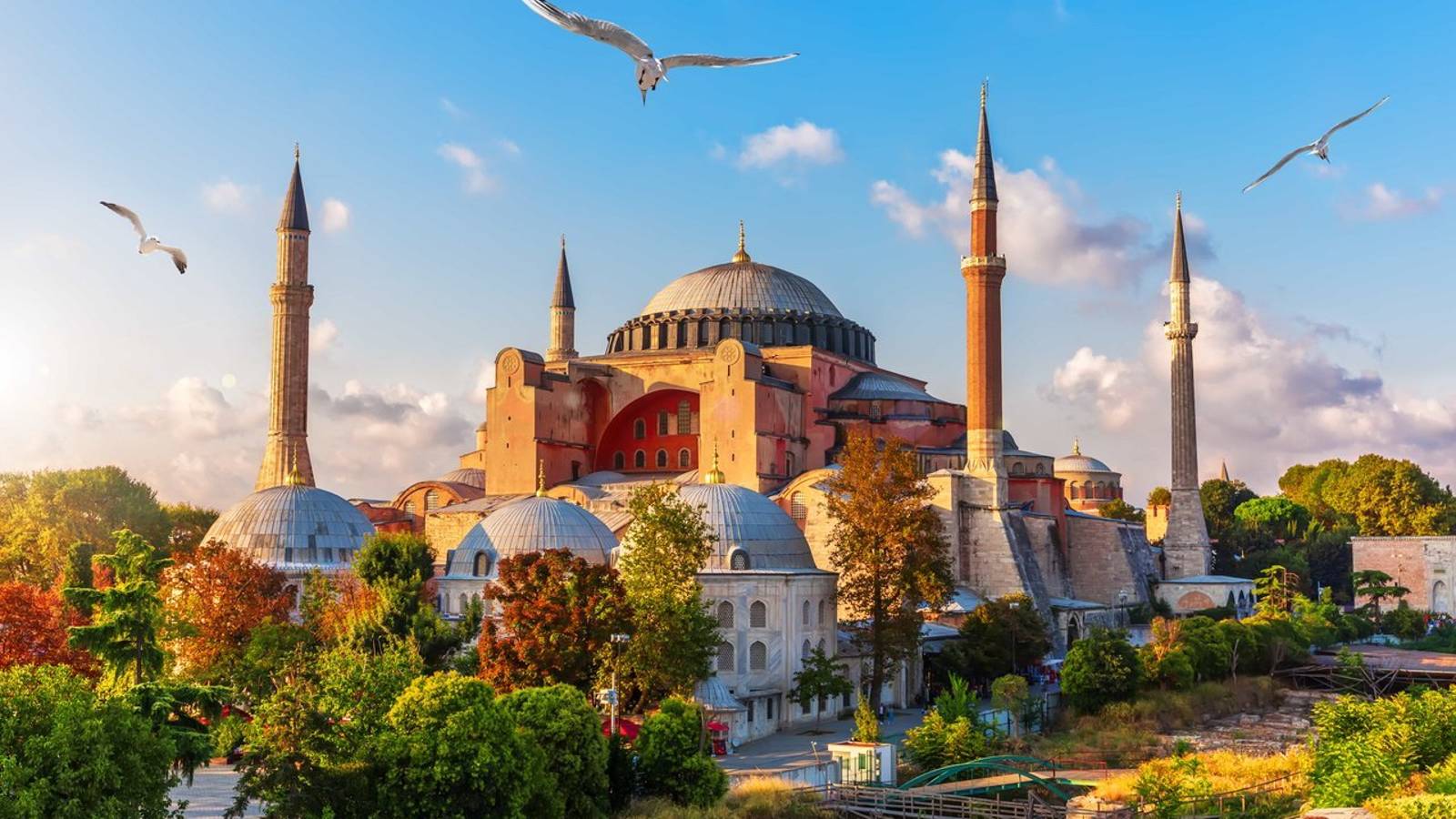
イスタンブールの歴史的スポット:スルタンアフメト、宮殿、旧市街ガイド
イスタンブールの代表的な歴史的スポットをご紹介します。アヤソフィア、ブルーモスク、トプカプ宮殿、バシリカ・シスターン、グランドバザールを巡るルートを計画しましょう。
目次 7
- Istanbul Historical Landmarks: Closed Days, Dress Rules & Time Needed
- Byzantine Masterpieces of the Old City
- Ottoman Imperial Monuments and Bazaars
- Topkapi Palace vs Dolmabahce Palace: How Do They Differ?
- Choosing Between Half-Day, Full-Day and Private Historical Tours
- Frequently Asked Questions
- Explore Istanbul's Historical Heritage
The most important historical places in Istanbul are concentrated in the UNESCO-listed Sultanahmet district—home to Hagia Sophia, the Blue Mosque, Topkapi Palace, Hagia Irene, the Basilica Cistern, the Hippodrome of Constantinople and the Grand Bazaar—alongside nineteenth-century Dolmabahce Palace on the European Bosphorus shore. Because these monuments span over 1,600 years of Roman, Byzantine and Ottoman rule and follow different weekly closing days and prayer schedules, planning your sequence in advance saves hours of queuing.
Walking through Sultanahmet means moving directly from fourth-century Roman obelisks and sixth-century Byzantine brick domes into sixteenth- and seventeenth-century Ottoman courtyards decorated with blue İznik tiles. While the exterior plazas are always open, interior visits require knowing which monuments require tickets, which close on Mondays, Tuesdays or Sundays, and how dress rules work at active mosques.
This guide covers the essential historical places in Istanbul, provides a practical opening-days reference table, and compares half-day, full-day and private guided walking tours across the Old City and royal palaces.
Istanbul Historical Landmarks: Closed Days, Dress Rules & Time Needed
Check the table below before locking in your daily schedule so you never arrive at a major palace or market on its weekly closing day.
Historical site | Era & heritage | Weekly closed day | Entry & dress rule | Recommended visit |
|---|---|---|---|---|
Hagia Sophia (Upper Gallery) | Byzantine (537 AD) & Ottoman | Open daily (Pause at Friday midday prayer) | Ticketed gallery; shoulders/knees covered & headscarf | 60–90 minutes |
Blue Mosque (Sultanahmet) | Ottoman Imperial (1616) | Open daily (Closed during 5 daily prayers) | Free entry; modest clothing & shoes removed at door | 45–60 minutes |
Topkapi Palace, Harem & Hagia Irene | Ottoman (1460s–1856) & Byzantine | Closed every Tuesday | Combined museum ticket; modest cover for Sacred Relics | 2.5–3.5 hours |
The Basilica Cistern Museum | Byzantine Justinian Era (532 AD) | Open daily | Museum entry ticket; non-slip walking shoes advised | 45–60 minutes |
Hippodrome of Constantinople | Roman & Byzantine (203–330 AD) | Open 24 hours daily | Free open-air public square | 30–45 minutes |
Grand Bazaar (Kapalıçarşı) | Early Ottoman (1461) | Closed every Sunday & religious holidays | Free entry; comfortable shoes for 61 covered alleys | 1.5–2 hours |
Dolmabahce Palace | Late Ottoman Empire (1856) | Closed every Monday | Palace & Harem ticket; shoe covers provided inside | 1.5–2 hours |
Byzantine Masterpieces of the Old City
When Emperor Constantine the Great proclaimed Constantinople the new eastern capital of the Roman Empire in 330 AD, his architects laid out a ceremonial centre whose footprint still defines Sultanahmet Square today.
1. Hagia Sophia and Its Upper Gallery Mosaics
Built in just five years by the mathematicians Isidore of Miletus and Anthemius of Tralles, Haghia Sophia crowned Constantinople with a thirty-one-metre central dome pierced by forty arched windows that make the canopy appear suspended from above. In the visiting gallery upstairs, you can stand face to face with the thirteenth-century Deësis mosaic—celebrated for its subtle shading and facial expression—alongside portraits of Emperor Constantine IX Monomachos, Empress Zoe, Emperor John II Komnenos and Empress Irene. For a guided explanation of both the Christian mosaics and the subsequent Ottoman additions by master architect Mimar Sinan, join the Hagia Sophia and Blue Mosque Tour with a Basilica Cistern Visit.
2. The Hippodrome of Constantinople
Running directly alongside the western courtyard wall of the Blue Mosque, the Hippodrome once held up to 100,000 spectators watching four-horse chariot teams compete around a central divider (spina). Three original monuments still stand along the ancient track level: the 3,500-year-old red granite Obelisk of Thutmose III brought from Karnak in Egypt and erected on a carved marble base by Emperor Theodosius in 390 AD; the intertwined bronze Serpent Column cast by Greek city-states after the Battle of Plataea in 479 BC; and the tenth-century Walled Obelisk. At the northern entrance stands the octagonal German Fountain, gifted by Kaiser Wilhelm II in 1900.
3. The Basilica Cistern Museum and Hagia Irene
Beneath a former Roman stoic basilica courtyard lies The Basilica Cistern Museum, engineered to store up to 80,000 cubic metres of water carried via aqueducts from the Belgrade Forest nineteen kilometres north of the city. Its 336 columns—arranged in twelve rows of twenty-eight pillars—include tear-patterned column shafts and the two famous upturned and sideways Medusa heads in the back corner. A few hundred metres away inside the first outer courtyard of Topkapi Palace stands Hagia Irene, the oldest church structure in the city, which was never converted into a mosque and retains its austere brick атриum and synthronon steps.
Ottoman Imperial Monuments and Bazaars
After Sultan Mehmed II conquered Constantinople in 1453, Ottoman architects transformed the skyline with cascading domes, pencil-slim minarets, commercial bedestens and garden palaces.
4. The Blue Mosque (Sultan Ahmed Mosque)
Designed by Sedefkâr Mehmed Ağa, a pupil of Mimar Sinan, the Blue Mosque is the only imperial mosque in Istanbul built with six minarets. Stepping from the arcaded stone forecourt into the prayer hall reveals 260 stained-glass windows and thousands of blue, turquoise and green İznik tiles across the gallery walls. You can combine the mosque, Hagia Sophia and the historic market on the Hagia Sophia and Blue Mosque Tour with Grand Bazaar Stroll.
5. Topkapi Palace and the Imperial Harem
Unlike single-building European palaces, Topkapi Palace was designed as a sequence of four progressively restricted garden courtyards linked by monumental gates—mimicking an imperial tent encampment in stone and marble. Highlights include the Divan-ı Hümayun (Imperial Council Hall) with its gilded lattice window where the sultan listened above the viziers; the Imperial Harem with over 300 tiled rooms housing the Queen Mother (Valide Sultan), concubines and princes; the Chamber of Sacred Relics; and the fourth-courtyard terraces overlooking the Golden Horn and Bosphorus. To explore the palace in depth without rushing, book the Topkapi Palace Afternoon Tour with Harem and Hagia Irene or the Istanbul Old City Full Day Tour with Topkapi and Harem.
6. The Grand Bazaar (Kapalıçarşı)
Founded in 1461 around two vaulted stone warehouses (bedesten) built to fund the upkeep of Hagia Sophia, the Grand Bazaar grew into a roofed commercial district with twenty-two gates, sixty-one streets and around 4,000 shops once organised by craft guild—goldsmiths, carpet weavers, leatherworkers, copper smiths and ceramic painters. Walking the bazaar with a local guide on the Old City Morning Tour in Istanbul with Grand Bazaar Visit helps you navigate the oldest inner bedestens and hidden artisan courtyards (han).
Topkapi Palace vs Dolmabahce Palace: How Do They Differ?
First-time visitors often ask whether to visit Topkapi Palace, Dolmabahce Palace or both. They represent two entirely different chapters of Ottoman history:
- Topkapi Palace (1460s–1856): Classical Ottoman courtyard architecture in Sultanahmet, open pavilions, İznik tilework, the Harem apartments and the medieval Imperial Treasury.
- Dolmabahce Palace (1856–1922): A grand European-style waterfront palace on the Bosphorus at Beşiktaş, featuring gilded ceilings, crystal staircases, formal ceremonial halls and rooms where Mustafa Kemal Atatürk spent his final days in 1938. You can visit it on the Dolmabahce Palace Morning Tour with Camlica Hill Panorama.
Choosing Between Half-Day, Full-Day and Private Historical Tours
- Half-Day Morning or Afternoon Walks (4 hours): Ideal if you prefer to split your sightseeing across two days or keep half the day free for cafés and cruising. Choose between the Old City Morning Tour and the Topkapi Palace Afternoon Tour.
- Full-Day Old City Programmes (6 to 8.5 hours): Covers the entire Sultanahmet core in a single day with a licensed guide. Compare the Istanbul Old City Tour with Lunch and Hotel Pickup and the Istanbul Old City Full Day Tour with Topkapi and Harem.
- Custom Private Guided Day Tour (8 hours): Families and small groups who want to set their own departure time and pace can book the Istanbul Private Guided Day Tour with Licensed Guide.
Frequently Asked Questions
Can you visit all the main historical places in Sultanahmet in one day?
Yes. Because Hagia Sophia, the Blue Mosque, the Hippodrome, the Basilica Cistern and Topkapi Palace all border Sultanahmet Square, and the Grand Bazaar is a fifteen-minute walk up Divanyolu street, an early-morning start or a full-day guided tour lets you visit all of them in a single day.
What should I wear when visiting historical mosques in Istanbul?
At active mosques such as the Blue Mosque and Hagia Sophia, both men and women must wear clothing that covers their shoulders and knees. Women also need a headscarf to cover their hair, and everyone removes their shoes before stepping onto the carpeted floor (carry a small bag in your daypack for your shoes).
Is the Harem included in Topkapi Palace tours?
Yes, when you select a dedicated Harem itinerary such as the Istanbul Old City Full Day Tour with Topkapi and Harem or the Topkapi Palace Afternoon Tour with Harem and Hagia Irene, your guide leads you directly through the Imperial Harem chambers as well as the main palace courtyards.
Why should I avoid planning my Old City tour on a Tuesday or Friday midday?
Topkapi Palace is closed every Tuesday, so you would miss the primary Ottoman palace in Sultanahmet. On Fridays, both the Blue Mosque and Hagia Sophia close to sightseeing visitors during the extended midday communal prayer; if you visit on a Friday, schedule palace or cistern visits around midday and enter the mosques in the afternoon.
How long does it take to walk from the Blue Mosque to the Grand Bazaar?
Walking uphill along Divanyolu Caddesi past the Column of Constantine (Çemberlitaş) takes about 12 to 15 minutes on foot, or two stops on the T1 Bağcılar–Kabataş tram from Sultanahmet to Beyazıt-Kapalıçarşı.
Are licensed tour guides allowed to skip ticket lines at Istanbul museums?
Licensed Turkish national tour guides enjoy priority group ticket processing and direct entry privileges at major state museums and palaces, saving considerable waiting time during busy spring, summer and autumn travel months.
Explore Istanbul's Historical Heritage
View all half-day and full-day historical itineraries on our Istanbul tours page, or read our full overview of the best places to visit in Istanbul to plan the rest of your stay. You can also read our Bosphorus Cruise in Istanbul: Dinner Cruises, Sunset Yachts & Route Guide and our Princes' Islands Boat Tour from Istanbul: Büyükada, Heybeliada & Day Trip Tips to coordinate your daily schedule.
イスタンブール
Maxtoriaで、イスタンブールツアー、ボスポラス海峡クルーズ、歴史観光、ディナークルーズ、日帰りツアーを比較できます。料金、所要時間、日程、ホテル送迎オプションを確認して、あなたに合ったツアーをお選びください。
32件のアクティビティ